
Comics Are Trying to Break Your Heart #230: An Article About a Comic About Gender
While Pride Month may be over, considering recent Supreme Court decisions, it looks like we’re in Wrath Month for the time being. And yet despite governmental efforts at the state and national level, we’re all still here. So while we can still persist in public spaces, let’s talk about another aspect of queer life that is being dog-pilled by the right just because they can: gender. How we interact and engage with gender is a multi-faceted and deeply personal experience—something that is unique to how we all look at ourselves. And while it is complex, it’s made easier through the interviews and art of Rhea Ewing and their comic, Fine.
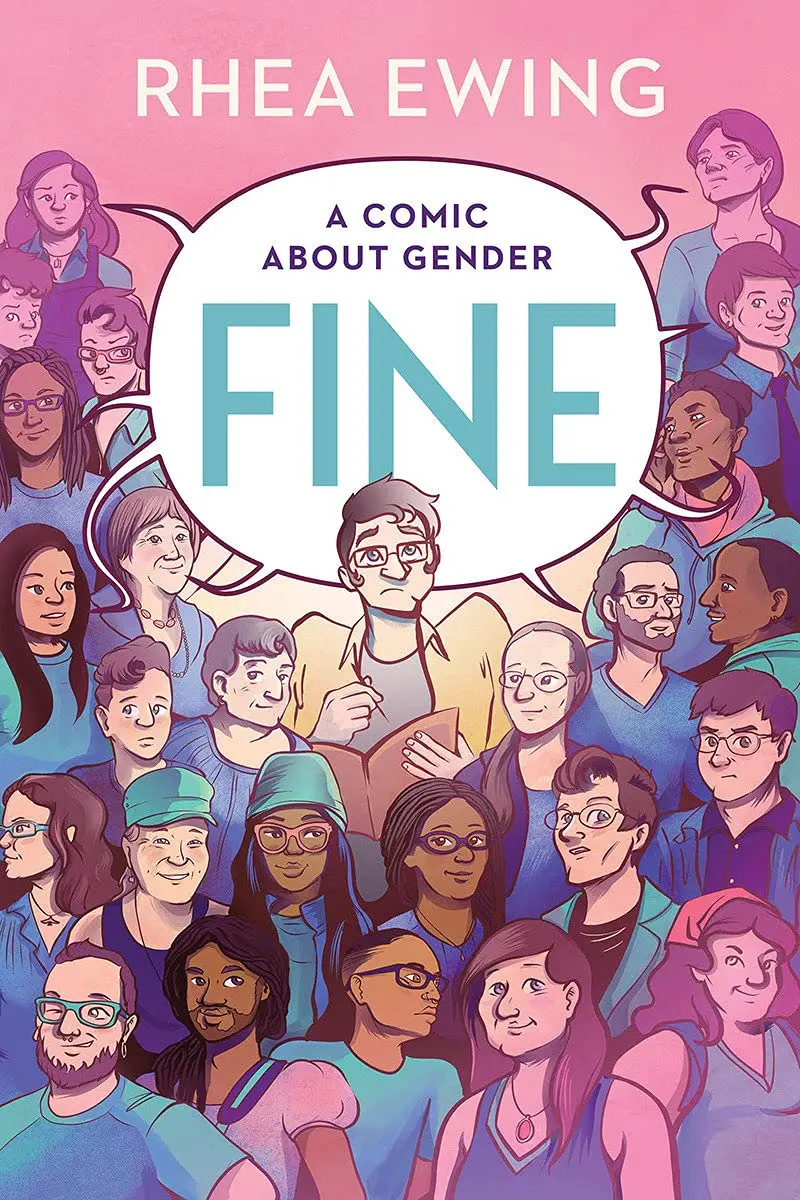
Fine is exactly what it says on the cover: it’s a comic about gender. But it’s about gender, transness, and gender expression in the same way that private conversations with your closest friends would go as it is primarily a log of interviews Ewing conducted over a period of years along with their own experiences coming to terms with their own gender identity. Each story here is unique—from those who knew right away that they identified differently from an early age to those who didn’t know until they were much older, and the euphoria and dysphoria that comes with differing gender identities. But what had started as an attempt by Ewing to chart, very literally, gender experiences to find where they fit in with everything, became a much more personal journey as the book goes on. While we skip around between times and experiences, the one consistent is Ewing’s own steady acceptance of themselves as their own journey mirrors readers’ understanding of all the different facets of gender and the individual experiences that constitute it.

Fine, more than anything, is a record—concrete proof that these people existed, that their experiences mattered, that their stories are both common and uncommon, and that who they are can’t be erased despite the best efforts of those in power. It’s a conversation about what gender can mean to many people and the ways in which they’ve explored it throughout their lives. It’s also the dispelling of any kind of monolith in how trans individuals’ stories are perceived—even people with similar backgrounds can come into their own identities in very different ways. It tells us that not only do the stories matter and that each one is unique, but that our own can help contribute to a better understanding even outside of ourselves.
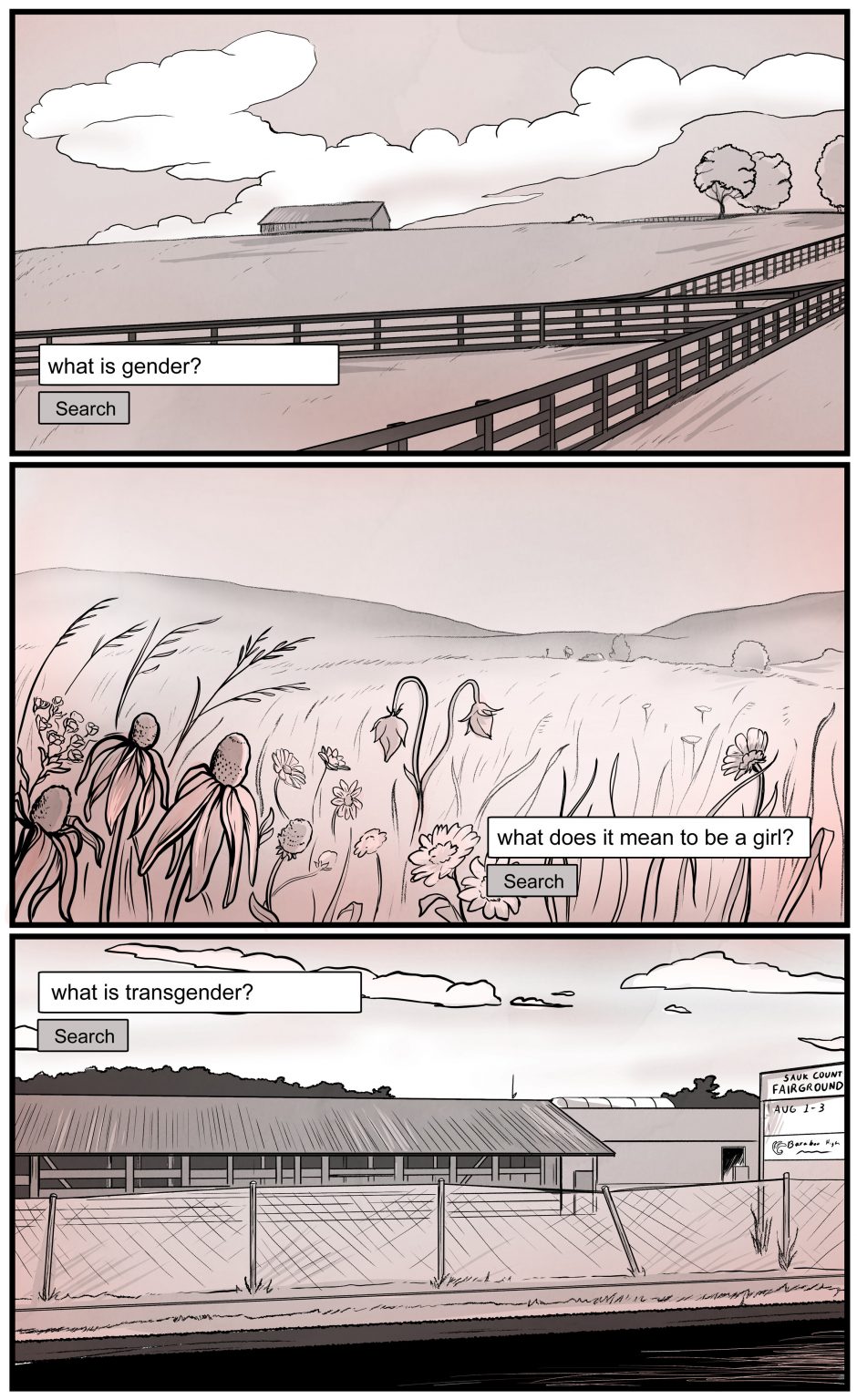
Comics like Fine feel essential at this moment. Without these archives, it feels like these histories and stories could be easily erased as many before likely have been. Ewing’s almost journalistic approach in these panels etches every person they interviewed into our consciousness as readers—no matter what, we’re going to remember them. At the same time, it feels euphoric to have this many people gathered in one volume to talk about their experiences with being trans and their relationships to how their gender has shaped their lives But keeping these stories going, in our minds or otherwise, is the only way to make sure they survive.
Get excited. Get talking.
_______
Drew Barth (Episode 331, 485, & 510) resides in Winter Park, FL. He received his MFA from the University of Central Florida.


 The Drunken Odyssey
Leave a comment