
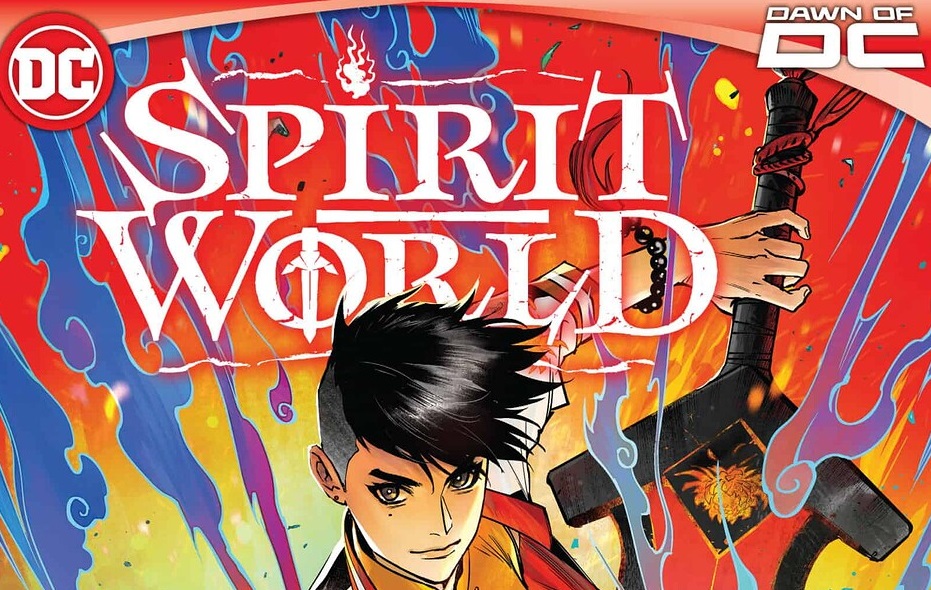
At the dawn of the Golden Age, Superman and Batman were the biggest heroes. Other publishers wanted to capture that lightning in the bottle with their own sci-fi or detective stories. Only when Fawcett Comics debuted their own super-clone, this time with a magical incantation, did the full fantasy of comics really arrive. Shazam was the phrase, and Shazam is the name now (due to Marvel problems), but this kind of magical fantasy opened up more of what these superhero comics could do. That tradition continues both in Mark Waid, Dan Mora, Alejandro Sánchez, and Troy Peteri’s new Shazam series as well as Alyssa Wong, Haining, Sebastian Cheng, and Janice Chiang’s even newer Spirit World.
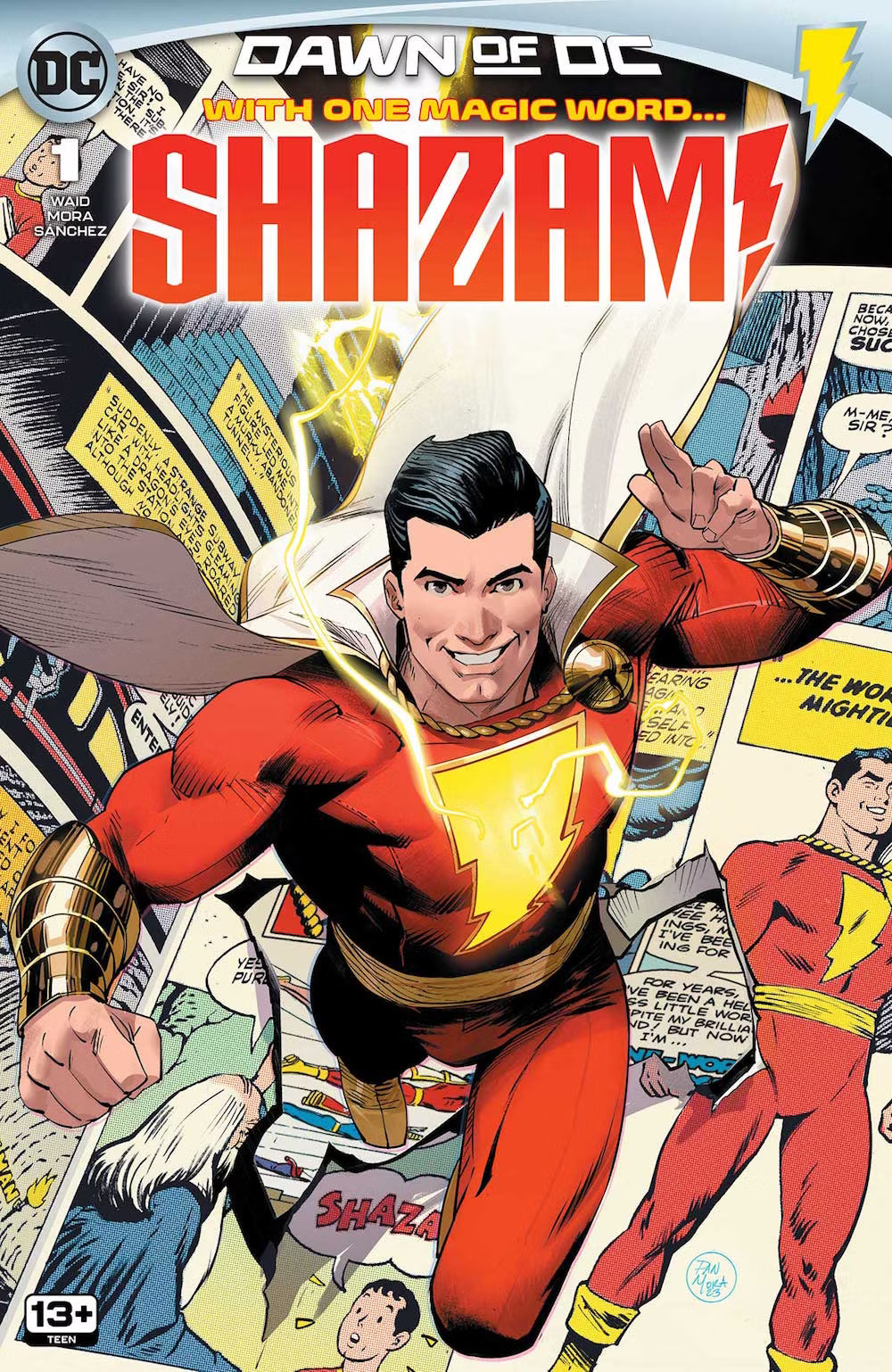
While Shazam shows us the continuing adventures of Billy Batson, the Marvel Shazam family, and Tawny the Talking Tiger, it also hints at the weirdness of the magic in the world and how that’s been failing many of Billy’s friends. And while Billy still has his powers and the ability to save anyone on Earth—be it alien dinosaurs or earthquake victims—its the final image of his facade snapping that resonates hardest.
Spirit World, by contrast, comes at us from a different direction. We’re not familiar with Xanthe Zhou, their situation, or their powers (unless you’re one of the five people that read the Lazarus Planet event series) and so we need an introduction. But this introduction drops us immediately into the kind of person Xanthe is, the dangers they face as a result of being a Spirit Envoy in the land of the living, and the danger faced by a Spirit World-trapped Cassandra Cain.
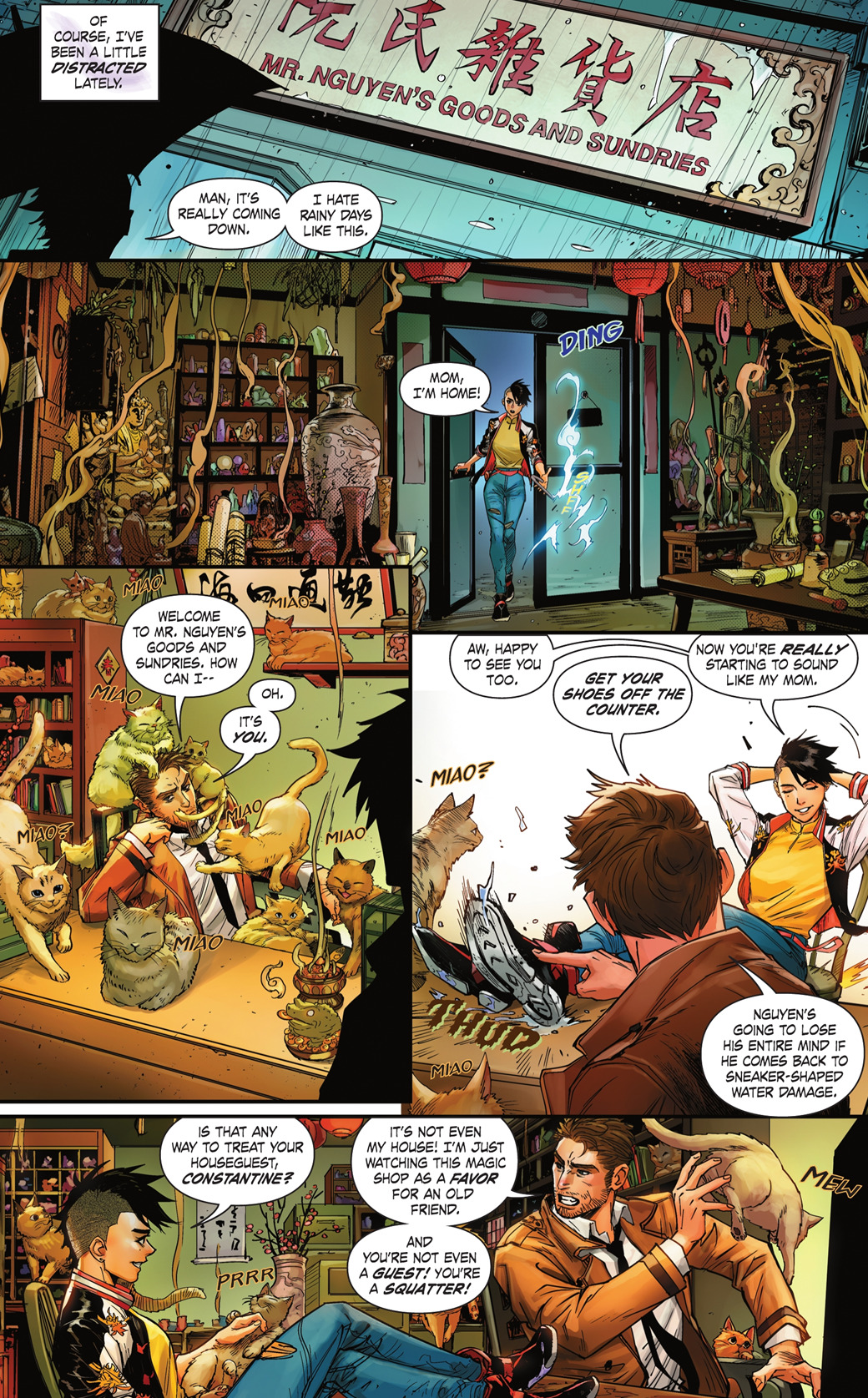
While Shazam blends its Golden Age sensibilities between the transformative phrase, the Rock of Eternity, and the gods that control Billy’s powers, Spirit World instead has strict rules for and structures around its magic. A rigid set of enchantments, incantations, and papers that help Xanthe navigate the troubles of living world. That Constantine shows up in Spirit World cements this fact further. Magic, as in many stories, is rather nebulous in the DC Universe. And yet we know it well just from the first issues these two series had released.
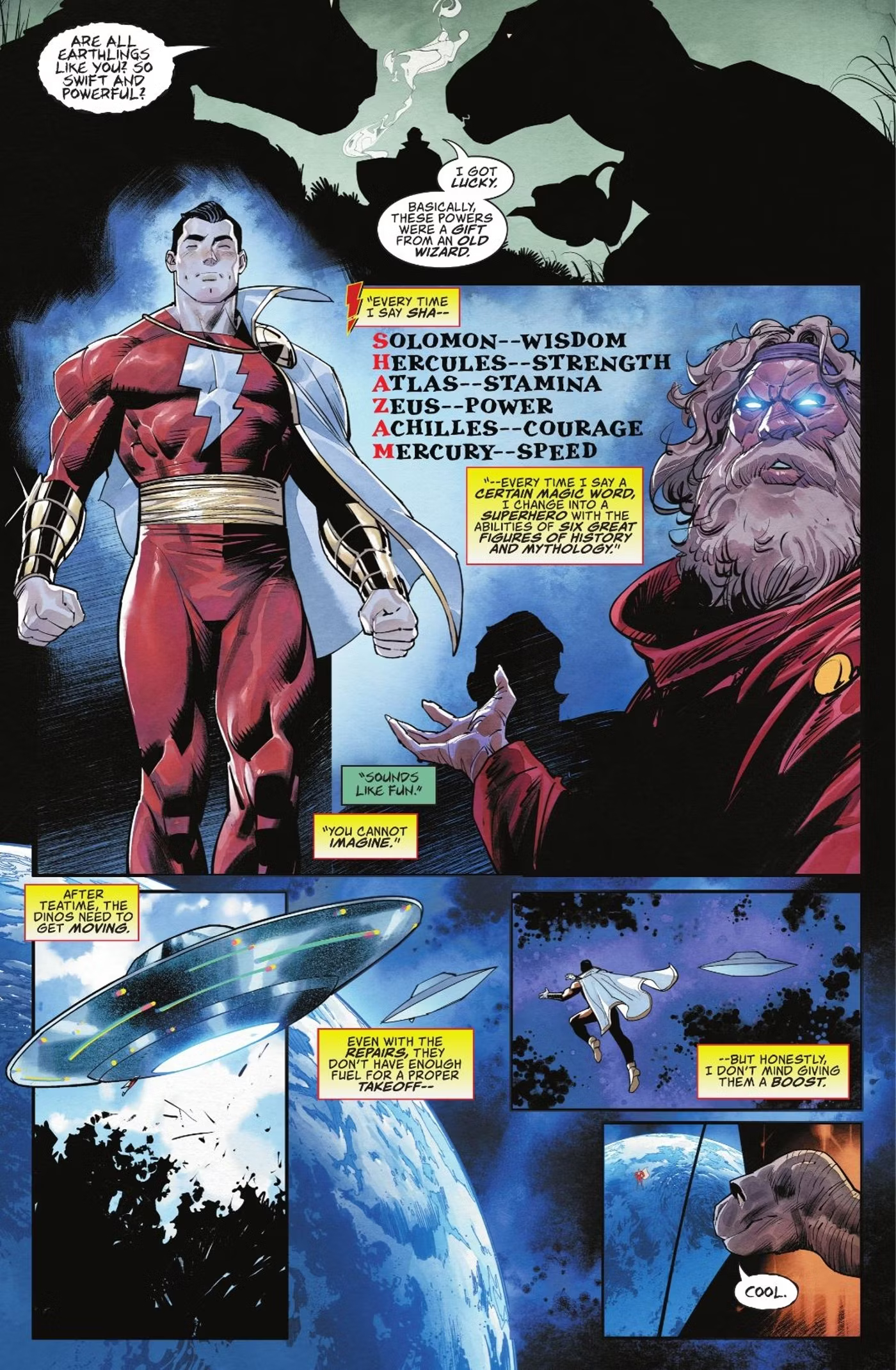
The approach each team takes when constructing these stories and their magic feels like different eras coming together. The Golden Age never needed an explanation for where magic came from—wizards just gave those powers to orphans. But the Modern Age needs that explanation and limits—we need to know how far this magic can go. These series are testaments to how each creative team can look at something as simple as magic in the DC Universe and come out with stories that are different, but still feel like they’re in the same realm.
Get excited. Get magical.

Drew Barth (Episode 331, 485, & 510) resides in Winter Park, FL. He received his MFA from the University of Central Florida.

 The Drunken Odyssey
Leave a comment