
When we consider Scott McCloud’s definition of what graphic literature is, the definition gets held up by texts that may tell their stories in a single panel or not be presenting a narrative in a chronological order. Rose Metal Press’s Field Guide to Graphic Literature fills in those gaps wonderfully.
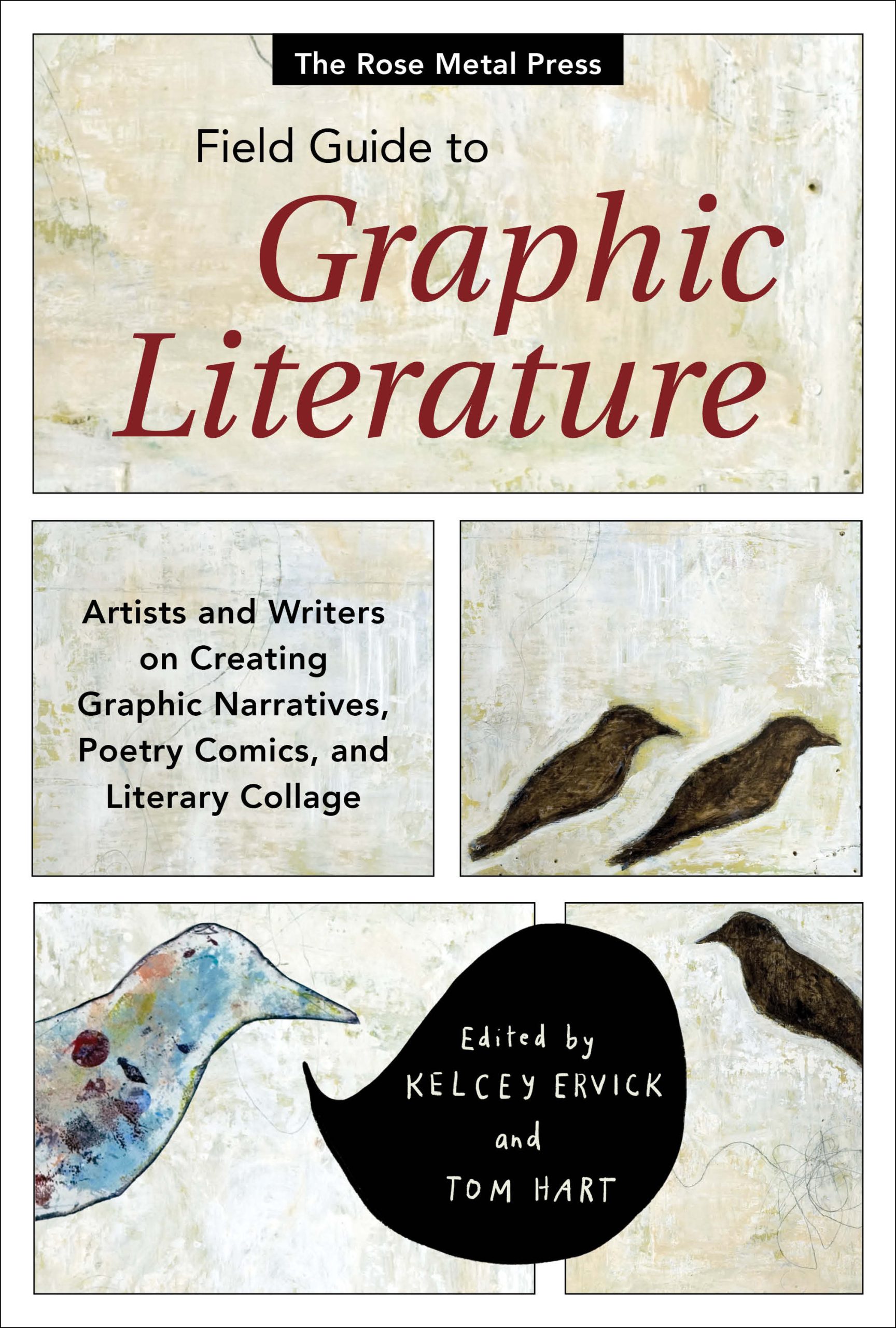
Edited by Kelcey Ervick and Tom Hart, the Field Guide to Graphic Literature breaks down all of the different ways graphic narratives can be made. Working with graphic poetry, literary collages, and various styles of graphic narratives, we can expand our perspective of comics. Through craft essays from twenty-eight different creators as well as examples of their works, the guide shows us how typical definitions of comics can be broken down to their component parts. And those component parts can be anything from comic panels taking up entire pages to a photograph with illustration filling in where it cuts off to images created with graphs.
What works best in the Field Guide to Graphic Literature is that it’s not looking to actually create hard definitions for each piece of work included in its pages. Even some of the craft essays don’t attempt to define what they’re doing into a specific category as the act of creating these works is based more on intent on the artist’s behalf. If you say you’re creating comics and are using some kind of visual in your work, then you’re creating comics. Graphic narratives don’t need to be limited by convention, especially in the case of many of these pieces as they continually push through the boundary of what would be considered comics in most circles, but they’re unmistakably comics regardless.
Rose Metal Press, Kelcey Ervick, and Tom Hart have compiled one of the most accessible compendiums of graphic literature in this decade. Every page isn’t simply the work themselves, but explanations and breakdowns of the work from the creators. We can see into their process, know how they approach their craft, and have the opportunity to follow with the exercises they’ve devised. It’s an artifact for graphic literature in the moment as well as one of the best textbooks for the medium to help push students and veterans further in their craft.
Get excited. Get making.

Drew Barth (Episode 331, 485, & 510) resides in Winter Park, FL. He received his MFA from the University of Central Florida.

 The Drunken Odyssey
Leave a comment