
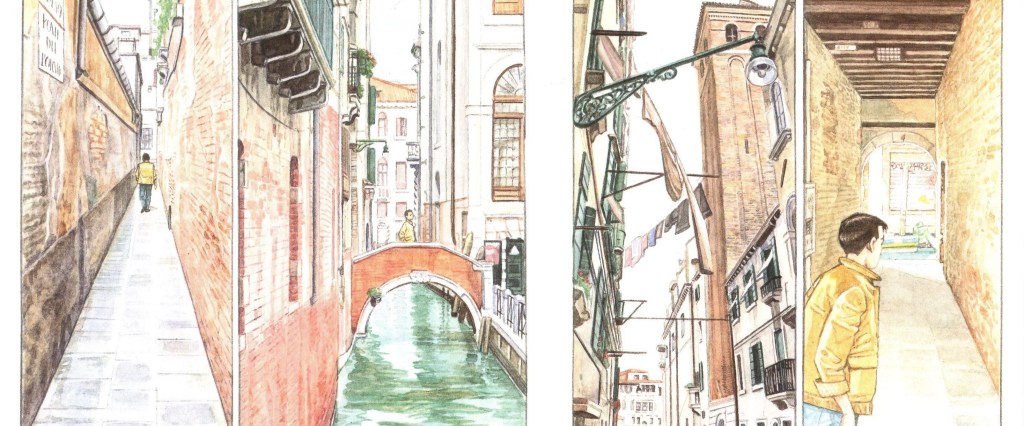
Often when vintage shopping, I find boxes of old photos and postcards that remind me of old photos my parents squirreled away in their armoire. I can recognize their faces in the yellowing pictures, but others I can’t quite place. My parents tell me names of great aunts and uncles, family friends, and the vacations they had, but I can’t follow along. In Venice, Jiro Taniguchi experiences the same as he attempts to retrace his postcards and photos throughout the floating city.
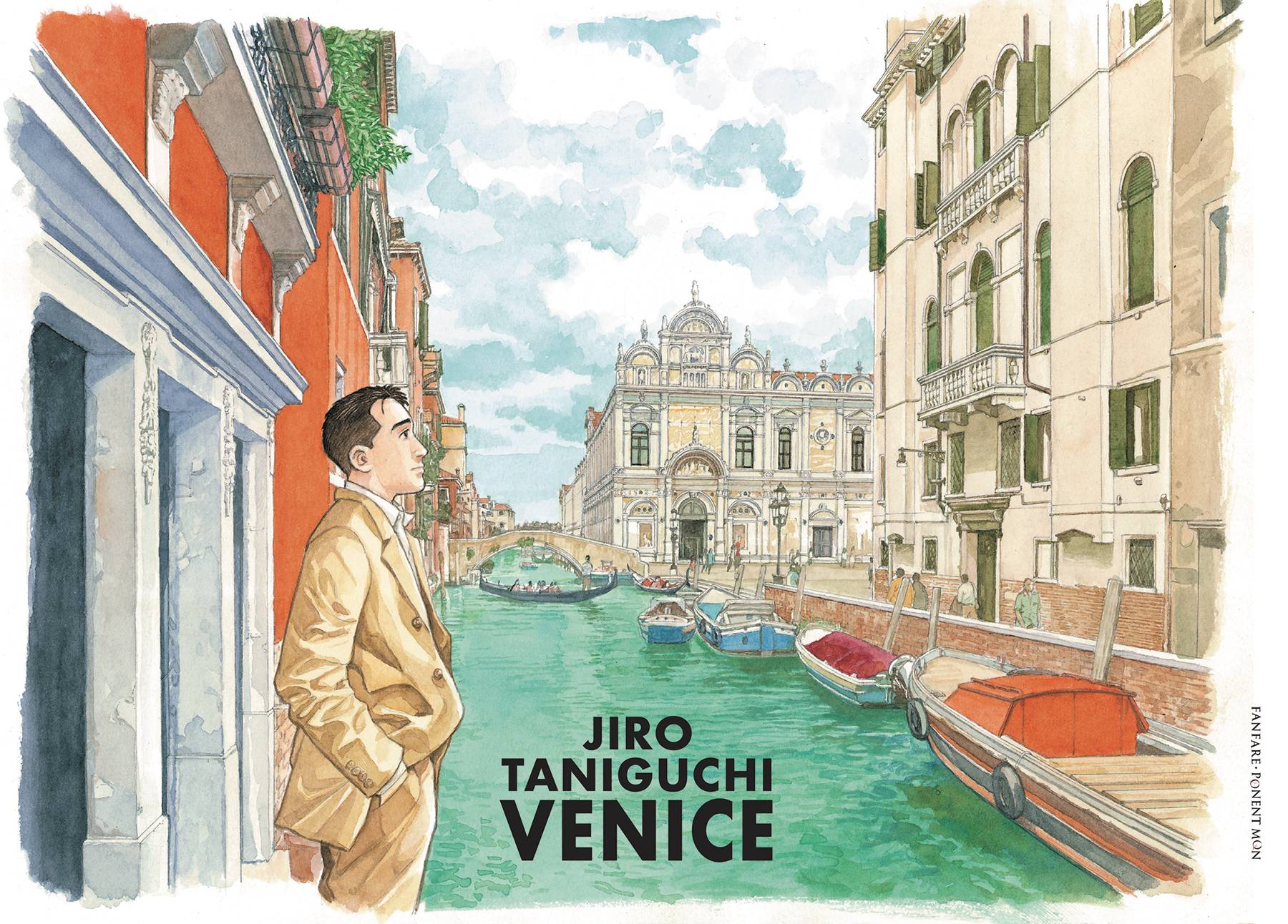
Venice is a travelogue and memoir for people that Taniguchi has either never met or only has the most fleeting or memories about. When his mother passed, he inherited a box of old photos and postcards—things he had never seen before or had heard his mother talk about. In this box, he sees what he believes is his mother as a child, his grandmother who he had only met briefly, and a man he believes to be his grandfather. Using these photos and postcards, Taniguchi retraces their steps through the city while attempting to recreate much of what they had seen in his own art. In this slow, methodical walk through the city, he feels a connection to grandparents who eluded him his whole life.
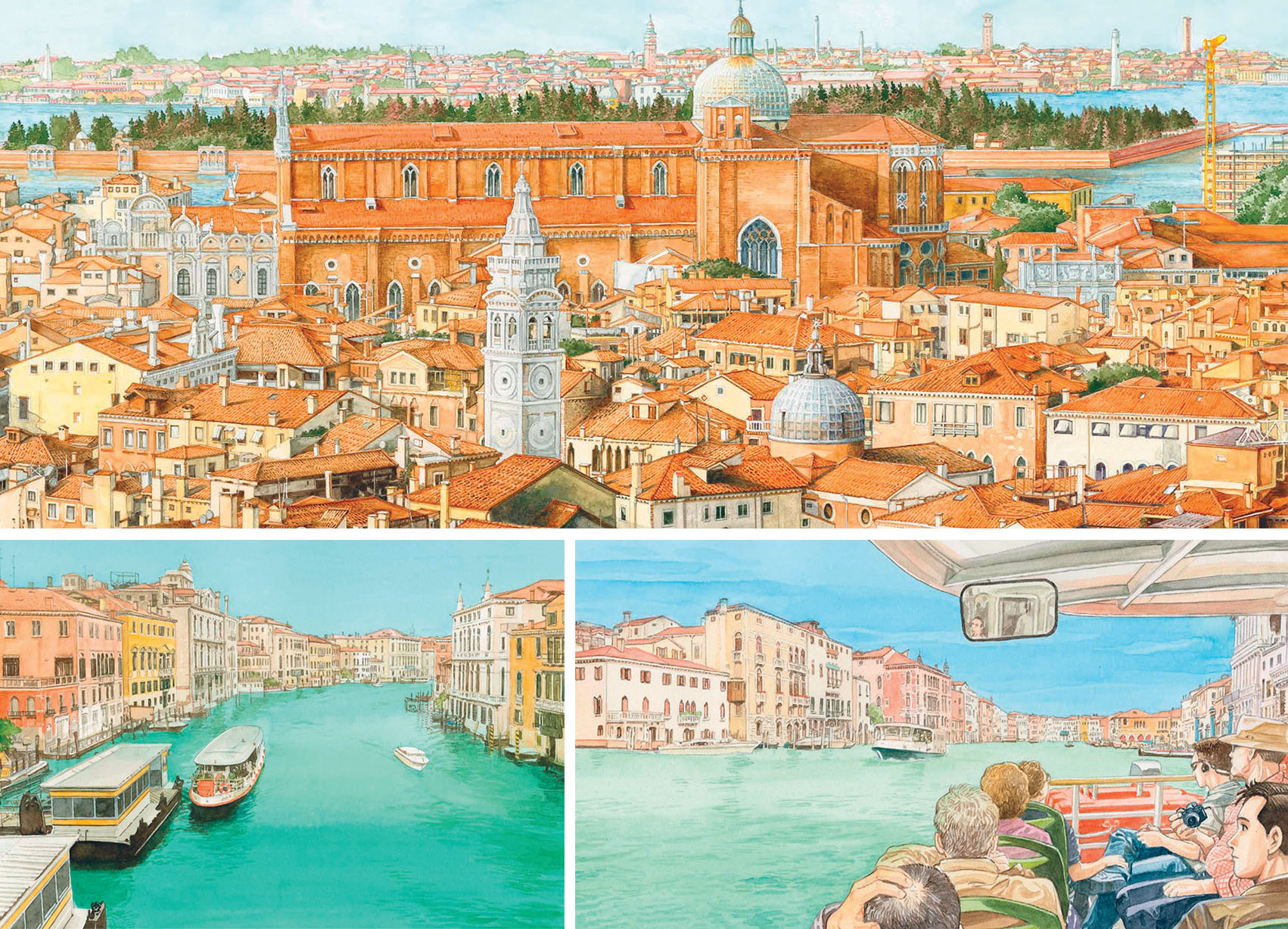
While reading, there’s a nostalgia for a place you’ve never been and never will be. Even in recreating postcards, Taniguchi envelops you into their space so completely that you can taste the salt in the air and hear the waves lapping against the aged stone pathways. Despite the precision in his line, the watercolor he utilizes adds a haziness that makes ever panel feel more like a memory. We see sharp lines, but in the distance they lose focus like our own recollection failing to capture the moment perfectly. In this way, the assemblage of panels feels like he’s spread out the postcards of his mother’s youth, waiting for you to flip them over to read the message on the other side. But as you turn the page, you’re only given another batch of memories and landscapes. As much as you want to feel like you’re thumbing through your own postcards, the story continues without you.

Venice is one of the quietest graphic novels I’ve read. It’s methodical in its approach—the sparseness of captions and lack of dialogue compel you to stop and take in each page and panel as if you were traveling with Taniguchi himself. He wants you to sit and observe, to breathe in the space within the city, and feel through visuals only the experience of stepping through Venice. With only the momentum of a stroll, you are immersed into the moment.
Get excited. Get walking.

Drew Barth (Episode 331, 485, & 510) resides in Winter Park, FL. He received his MFA from the University of Central Florida.

 The Drunken Odyssey
Leave a comment