
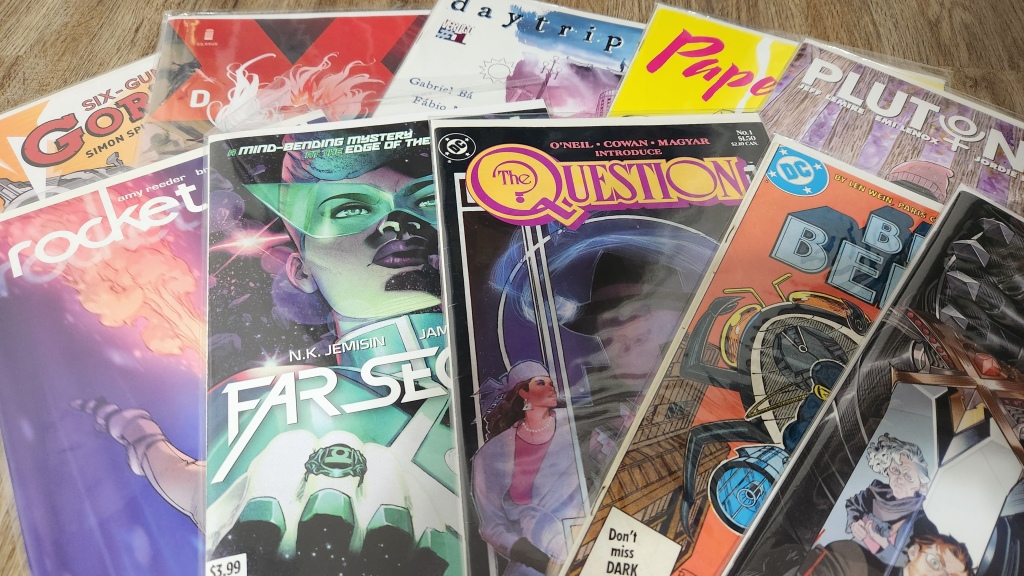
Earlier last year, I had looked at the first issue of Spirit World in conjunction with the recent re-launch of Shazam. I had looked at the ways in which each series approached magic and how they differed in their overall structures. Since then, Spirit World has reached its six-issue conclusion and showed us how Alyssa Wong, Haining, Sebastian Cheng, and Janice Chiang wrapped up Xanthe Zhou’s story and established a new pantheon within the DC Universe.

Since we had last left Xanthe, they were on the search for Cassandra Cain in the titular spirit world and had exorcised an old acquaintance of John Constantine’s—who had turned into a mass of bitter souls known as a Collective—before being reunited with the mother who had long assumed they died. After this, we have an almost vertical escalation in tension as we’re introduced more fully the spirit world and the gods and demons who reside within. It is a world that is like an odd mirror to our own—a built-up, urban environment with all manner of spirit that looks to eat the humanity from your bones or concoct deals for your blood. But even more threatening is the massive Collective that has been hunting the streets and absorbing more souls into its malcontented mass. It’s even torn its way into the line of souls waiting for reincarnation to consume them before Xanthe, Constantine, and Batgirl are able to exorcise the forgotten spirit at its core.
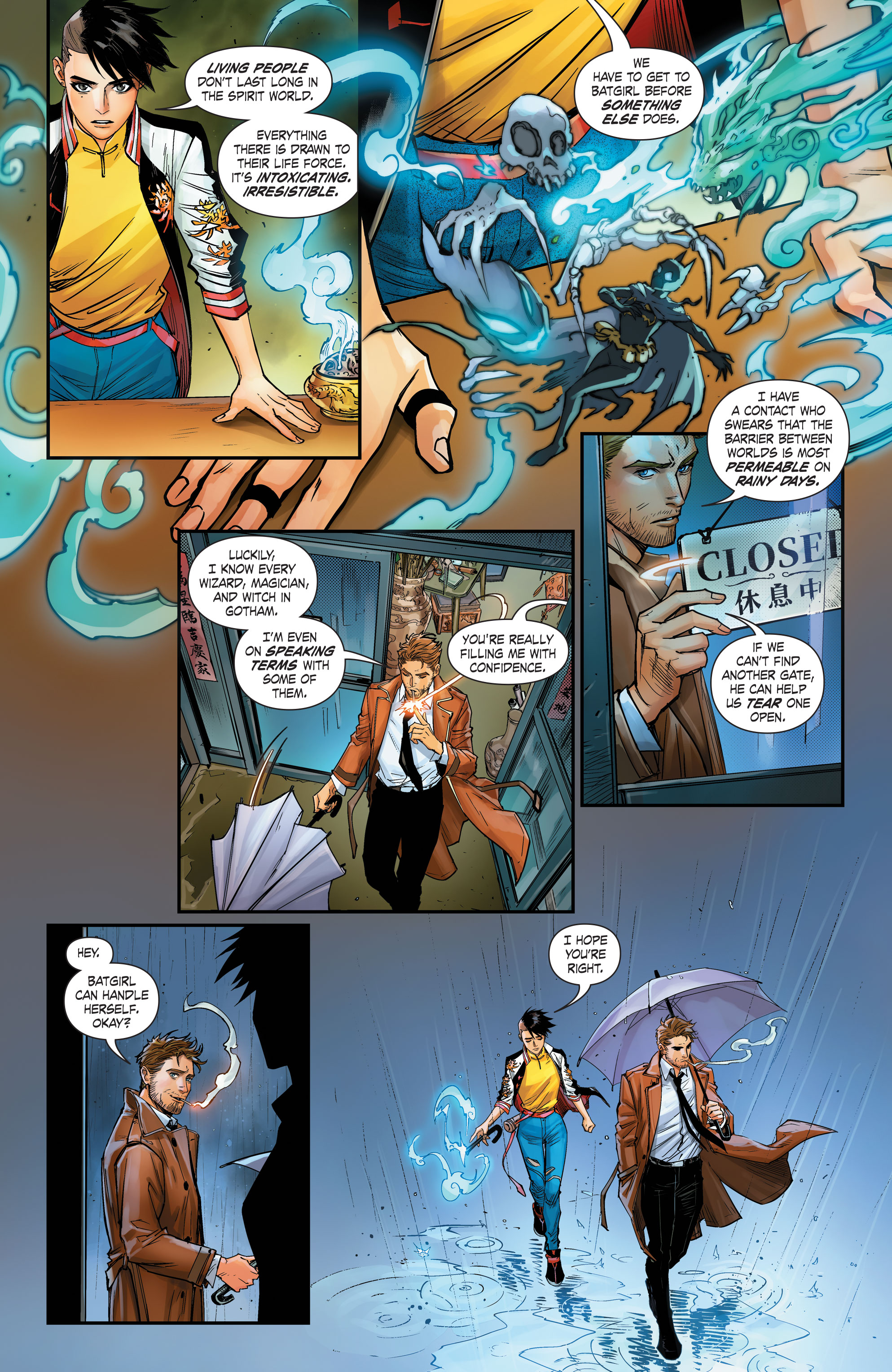
I mentioned how Spirit World handles its magic in the previous article, but what it does as the story progresses is push this new magic and world forward. Toward the end of the story, we’re introduced to the Jade Court—a collective of deities that oversee the spirit world and control the flow of reincarnation. And the introduction of this pantheon highlights one of the more enjoyable things with DC’s broader universe: the canonization of every religious practice and pantheon that has ever existed. Instead of having to decide on which ones hold weight in the universe, it just lets everything happen and the creators can do with that freedom what they wish. For Spirit World, Wong, Haining, Cheng, and Chiang work syncretic religious ideas to bring together Taoist, Buddhist, and Chinese folk religions to make the Jade Court feel like a pantheon that is part of a broader religious tradition, but also able to slot right into the universe.
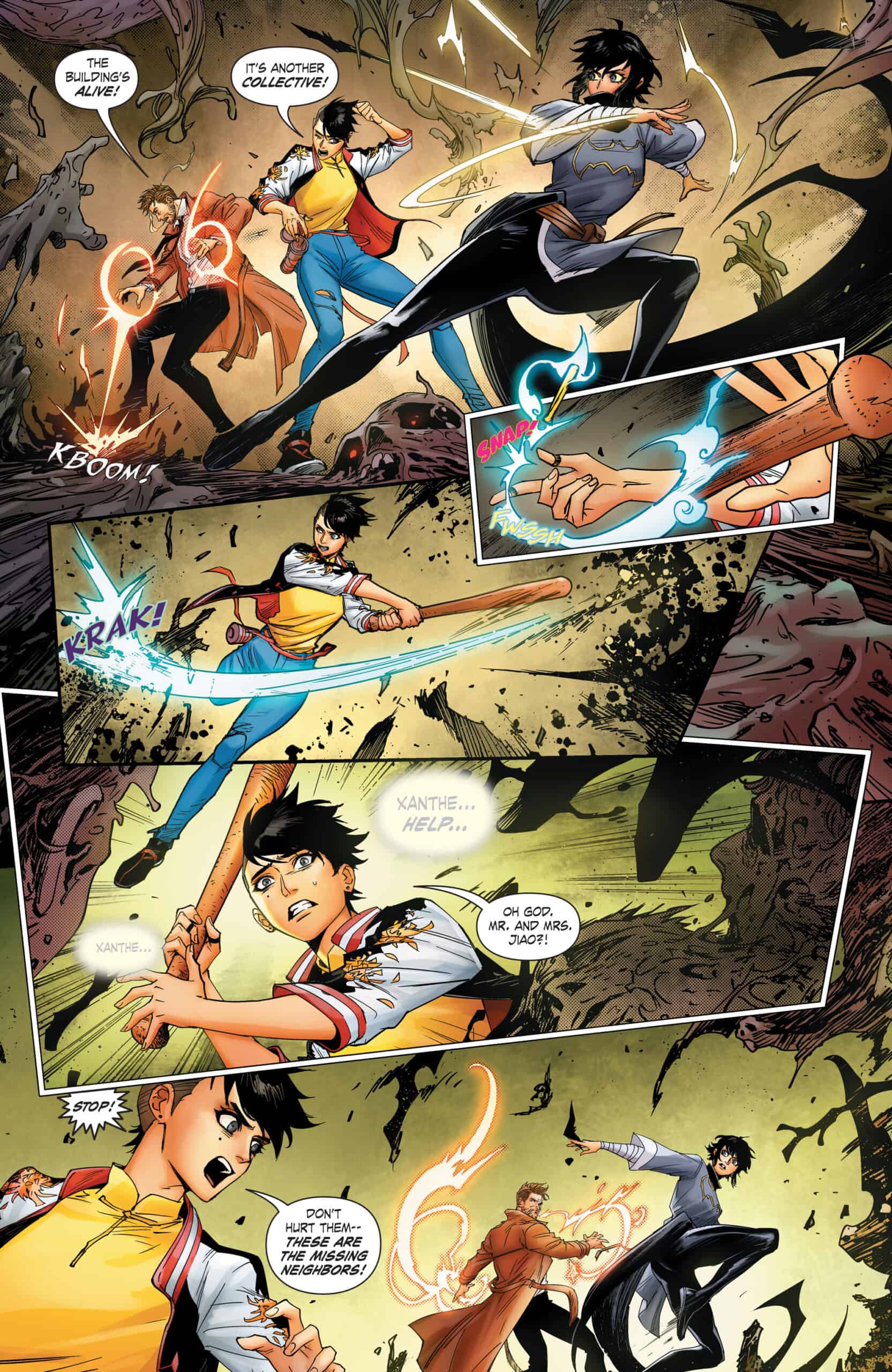
Spirit World knows how to build. In each issue of this series, we’re introduced to new characters, concepts, and ideas that make this series feel like a jumping-off point for the team to return back to later. Or it’s a point for other creators to explore the world further. For a miniseries in a broader comic canon, it’s helping to make more than just another character study or one-off conflict—it’s giving us more depth to the world that we’re already familiar with.
Get excited. Get offering.
Drew Barth (Episode 331, 485, & 510) resides in Winter Park, FL. He received his MFA from the University of Central Florida.

 The Drunken Odyssey
Leave a comment