
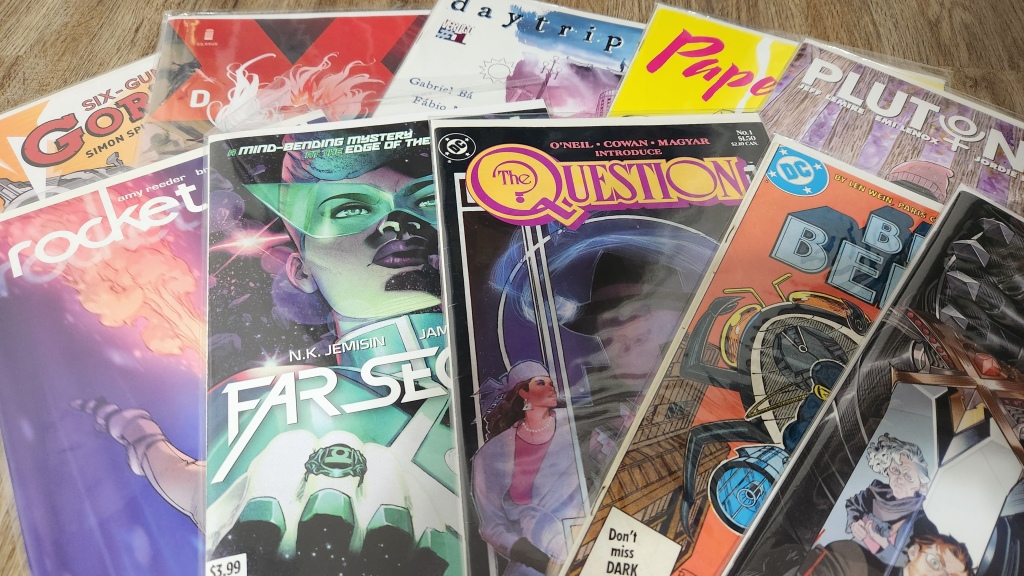
And if you can believe it, my pile of comics to be read doesn’t just extend to the monthly issues I’ve been chipping away at—there’s graphic novels here too. How long have I had some of these? Hey, man, don’t even worry about that part. But I’ve been holding onto them a while either because I was waiting for the next couple volumes to come out so I could complete the collection or because I forgot. This week I’ll look at something that ended up falling into both categories by diving into the first volume Grant Morrison’s first serialized story, Zenith, with Steve Yeowell and Mark King.
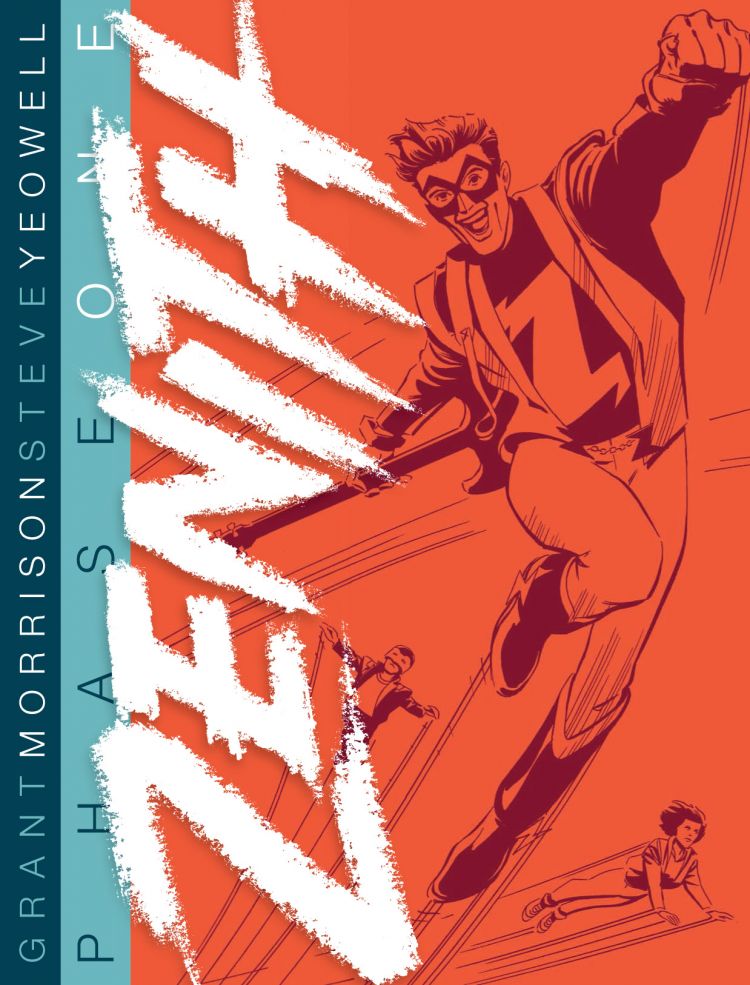
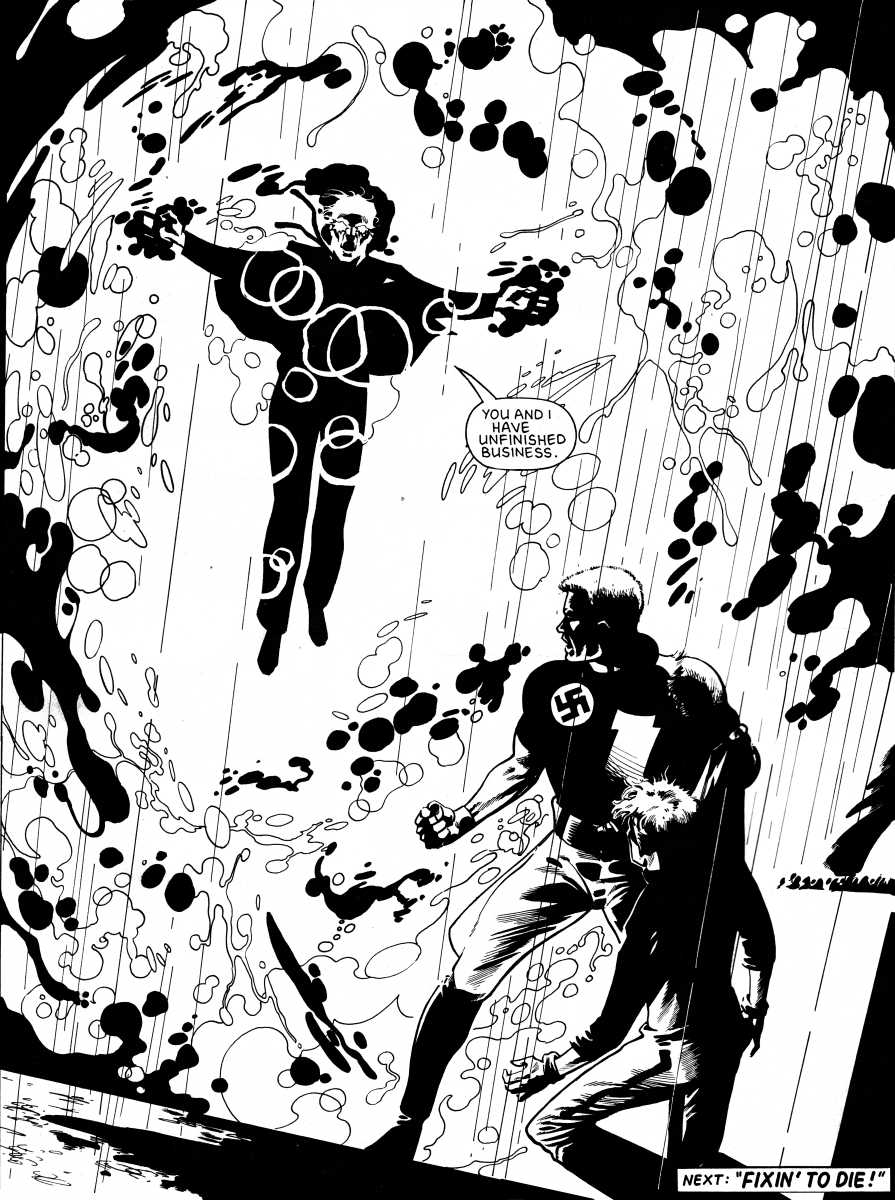
In the midst of Thatcher’s England, the hero, Zenith, emerges. One of the only superheroic beings still active, he’s more of a pop star than a hero. But Nazi cultists from The Order of the Black Sun are awakening the back-up of their supersoldier from WWII, Masterman, to be the emissary of the great, old Many-Angled Ones from a higher dimensional plane. Now is the moment for Zenith to actually become the hero he’s meant to be, but not without rousing some of the heroes from a previous age—Cloud 9, a kind of hippie hero collective—who had lost their powers decades ago. But even through the concerted effort of himself and two of the previous Cloud 9 members—Ruby Fox and Siadwel Rhys—he’s barely able to survive the assault of Masterman and the Many-Angled One inhabiting his body.
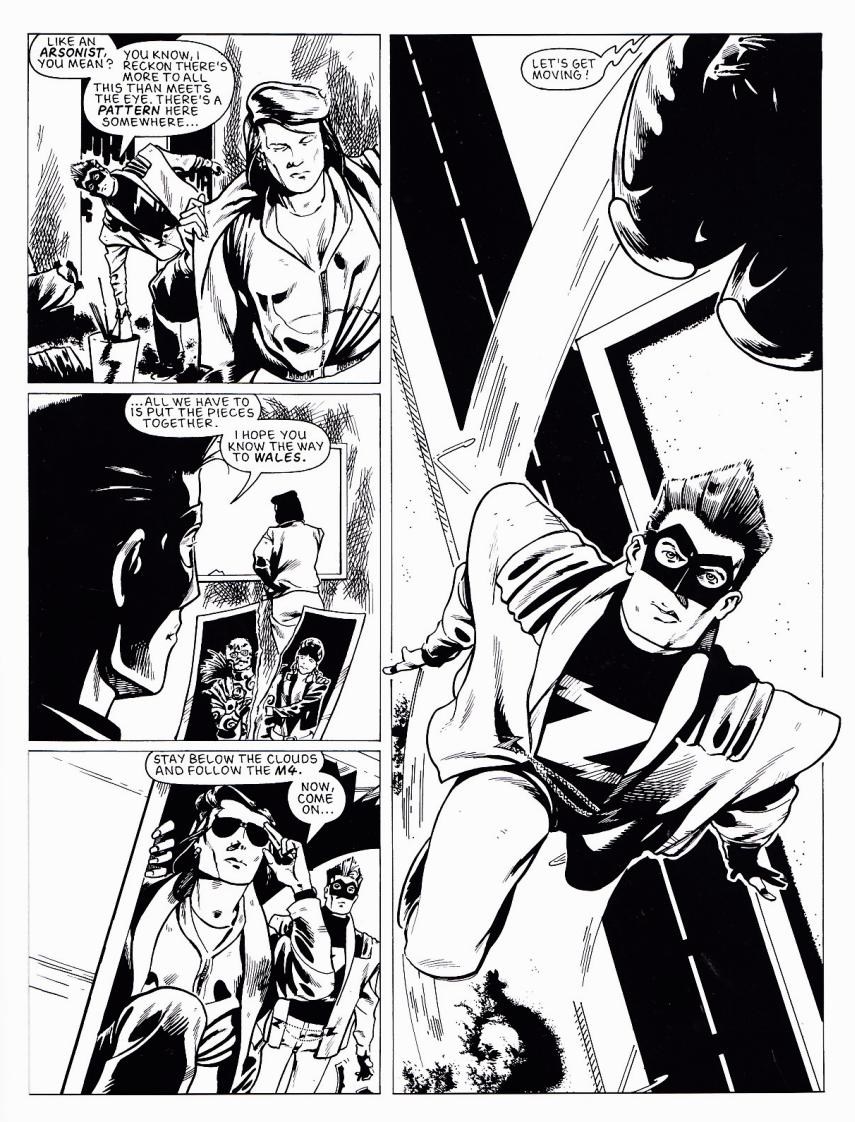
As one of Morrison’s earliest works, we can see much of the groundwork for what would be their signature subjects across their career: higher dimensional beings, invasion of our three-dimensional space, old vs. new, superhero as cultural figure, the past reaching its tendrils into the unwilling present. Their work with Yeowell later on The Invisibles is an expansion on many of these same themes, but to see it so succinctly presented in a 2000 AD serial feels like peeking at the blueprints before the final draft in 1994. And even more so than the subject matter, we get to see the condensed nature of Morrison’s storytelling as it was limited by the anthology presentation of its original publication. With only five or so pages to play with at a time, learning the beats of comic storytelling and what works best on that limited time frame shows up more and more in their work throughout their career—works like JLA and New X-Men are prime examples—and Zenith was that genesis.
After reading Morrison’s historical work/biography, Supergods, we can see where the idea of the comics rock star persona comes from in that era. With the serialization of Zenith, we see the groundwork for the next decade in Morrison’s career beginning to germinate before becoming one of the biggest writers in the medium. Some early work can feel clumsy knowing what comes next in that person’s career, but somehow Zenith could slot into nearly any era of Morrison’s career and fit right in.
Get excited. Get ruminating.

Drew Barth (Episode 331, 485, 510, & 651) resides in Winter Park, FL. He received his MFA from the University of Central Florida.

 The Drunken Odyssey
Leave a comment