

with Dmetri Kakmi
Peeping Tom
England, 1960
Director: Michael Powell
Cast: Carl Boehm, Anna Massey, Moira Shearer, Maxine Audley
1960 must have been quite the year for cinema. That’s when Psycho, Les Yeux Sans Visage and Peeping Tom were released. (Les yeux sans visage was released in March, Peeping Tom in April and Psycho in June.) Movie goers must have been stunned but also strangely elated. Hitherto taboo subject matter was being openly depicted on the big screen and the camera did not look away. It must have seemed that a glaring light was turned on a hidden aspect of human behaviour and nothing would be the same again.
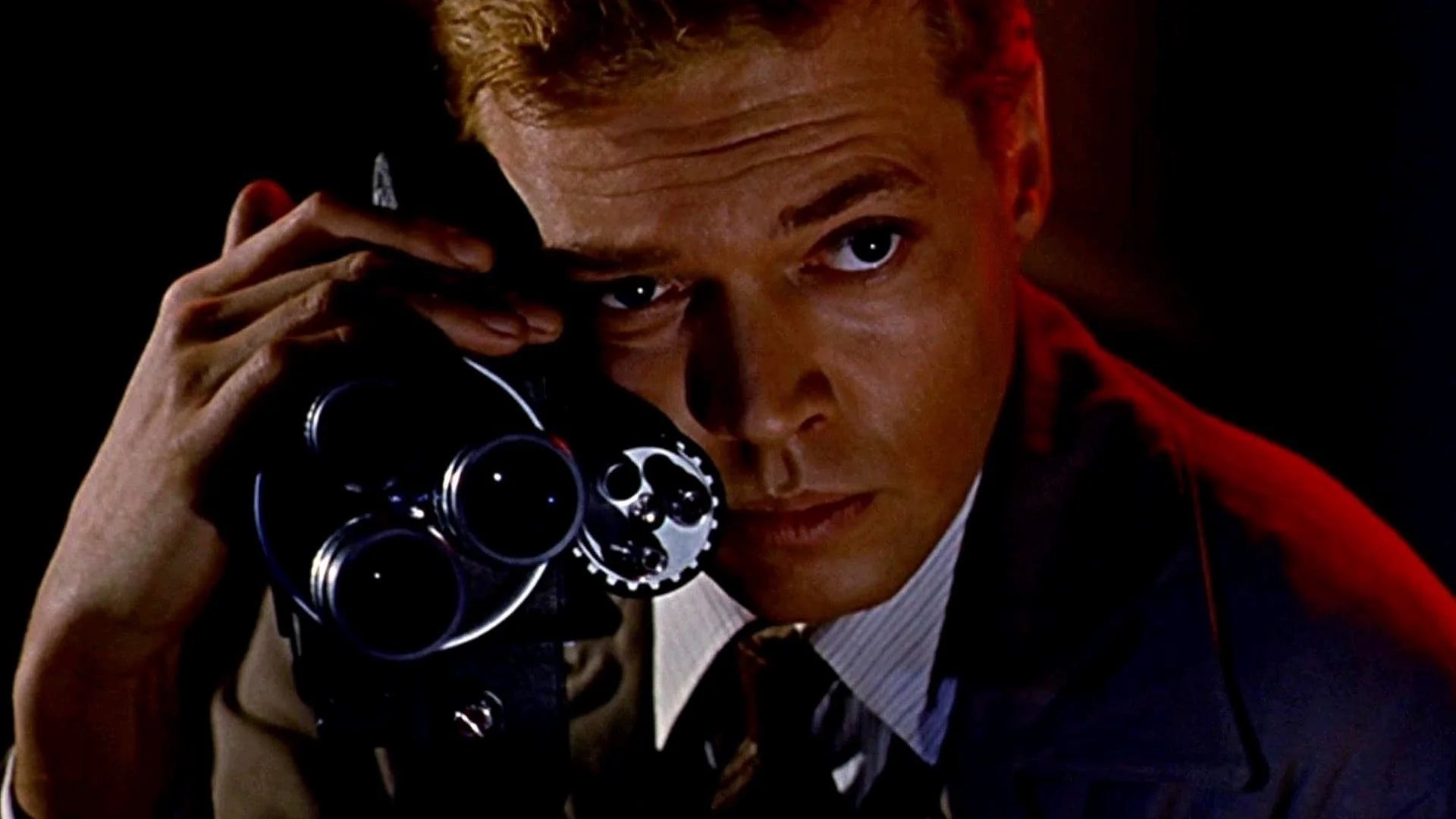
Contemporary critical response was hostile to all three films. Only later were they reappraised and deemed “classics”. But only one has the distinction of destroying the director’s career: Peeping Tom.
Michael Powell went from being the premier British filmmaker of the age to persona non grata overnight. One critic compared him to the Marquis de Sade, which is high compliment in my books. “Disgusting”, “nauseating”, “revolting” were some of the responses from both sides of the Atlantic. One outraged soul even suggested “flushing [the film] swiftly down the nearest sewer”. My favourite and possibly the most English response came from The Observer newspaper: “A beastly film,” cried Caroline Lejeune. Hopefully smelling salts were at hand to revive refined sensibilities.

It’s true to say Peeping Tom is tawdry. When it gets going, it really scrapes the bottom of the barrel with its depiction of human detritus. And with its garish splashes of reds and blues it even looks lurid, like a porno or a 1980s slasher film. But it’s also lush, fascinating and transfixing, like a car crash from which you can’t look away.
In hindsight we can see its depiction of child abuse, overt sexuality and voyeurism was so groundbreaking that few saw the film actually playing before their eyes. Rather they saw their own moral universe collapse and mingle with the popcorn at their feet. Almost two decades had to pass before critics and audiences could appreciate the film for what it is: a comment on cinema and the act of watching itself.
I recall the first time I saw Peeping Tom. It was a packed screening in the early 1990s. Words such as “scopophilia”, “fetishism”, “misogyny” and “Hitchcockian” were being thrown around with gay abandon by diehards fed on on a diet of Cinema Papers. The auditorium darkened and for the next hour and a half the rapt silence was broken only by the occasional nervous titter.
When light returned, I thought, “The film is as much about the movie-going audience’s own blood lust as it is about a man who can only achieve orgasm when he watches filmed footage of himself killing women.”
Through clever juxtaposition and manipulation of images within images, Peeping Tom suggests more than it openly declares, along the way turning viewers into voyeurs and implicating them in the sexual aggression depicted on screen. You are not merely watching a psychopath in action. A hidden aspect of your own being is causing the disturbing images to manifest on screen because you derive secret pleasure from them. Furthermore, like the killer, you paid good money to sit in a dark auditorium and watch.
An uncomfortable thought for a rational mind. No wonder audience turned away. In that sense Peeping Tomis an example of an acknowledge masterwork being ahead of its time. It would take another twenty years before the world caught up with it, and processed this disturbing element of the filmgoing experience.
One of the things I love about it is that it’s a very self-reflexive and knowing film — so self-reflexive that Powell cast himself as the deranged father in the film within the film Mark, the sympathetic murderer, screens for his amour, Helen. And so knowing is it that one character drolly remarks, “All this film watching, it can’t be good for you.” Indeed it is not, dear lady, as you shall soon find out!
There are many such moments. My favourite is the casting of Moira Shearer as one of Mark’s victims. Shearer had the distinction of being the lead in Powell’s dance masterpiece The Red Shoes more than a decade earlier. Here, yet again, her frantic need to gyrate leads to certain disaster. Powell even goes so far as to reference, perhaps unconsciously, the unhinged watcher in The Spiral Staircase (1945).
Throughout, Powell shows how an accomplished filmmaker edits film stock to manipulate an audience and arouse certain emotions. Manipulation is the end game of all cinema. You are either being manipulated to cry or scream. It amounts to the same thing, which is why I don’t understood critics who condemn this or that director for manipulating them to take pleasure in say the torment of a possessed child. (This moronic barb was lobbed at Robert Wise when he directed Audrey Rose in 1977.)
Peeping Tom is undoubtedly complex and multilayered. The prowling camera creates an unholy alliance between killer and audience, both predatory and phallic. It’s the only way Mark can penetrate and make sense of the world, literally and figuratively. But what does that imply about the audience? What are we watching? Is the film holding up a mirror to our own darkness, or is it a mediation on cinematic language?
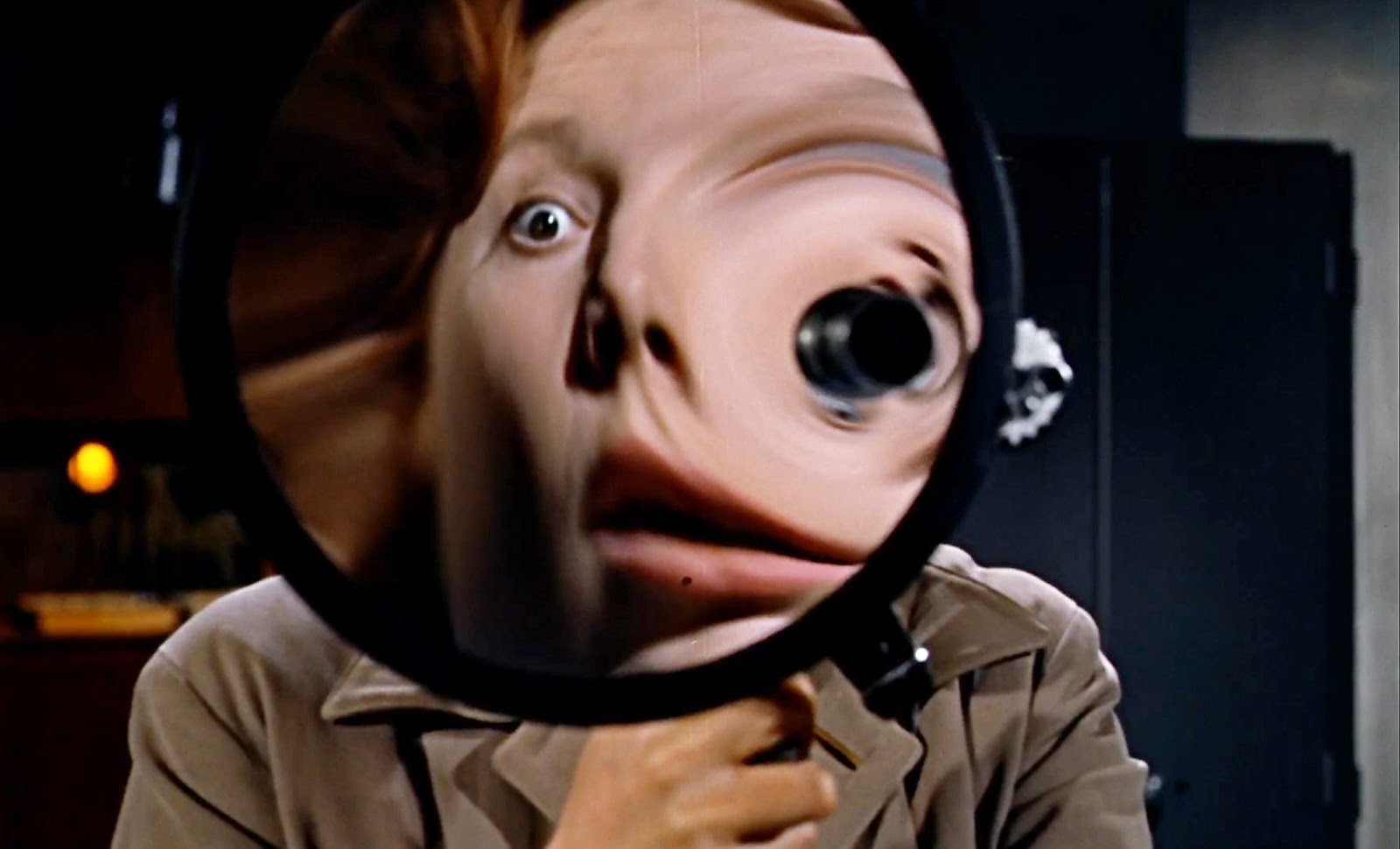
We will not see such divisiveness and self-reflexivity again until Brian De Palma shows up on the scene with his “red phase” pictures.
Dmetri Kakmi is the author of The Woman in the Well, The Door and Other Uncanny Tales, Mother Land, and When We Were Young (as editor). He is now working on a crime novel called The Perfect Room.

 The Drunken Odyssey
Leave a comment