
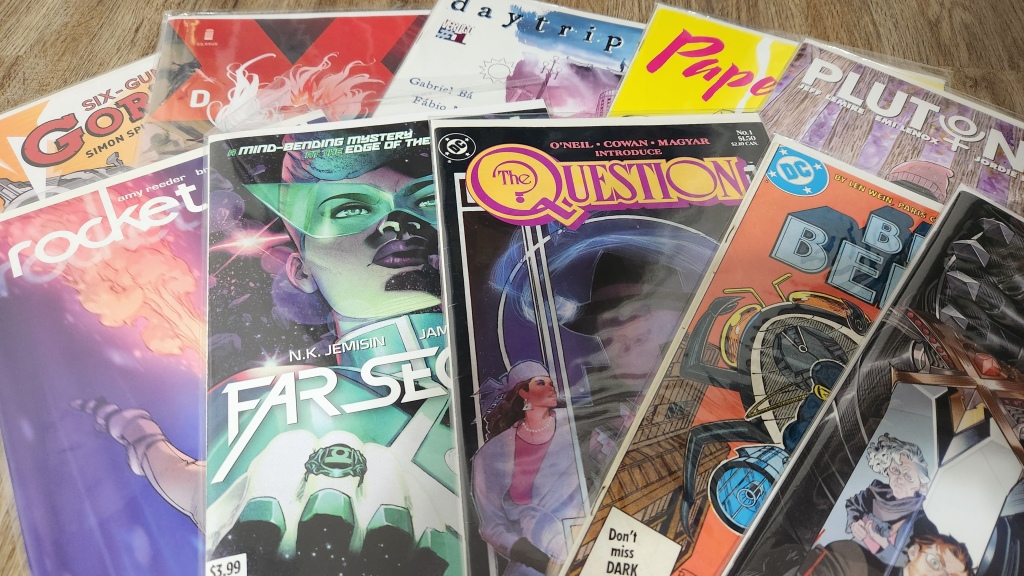
I’ve talked about anthologies multiple times in this article in the past—there’s very little to not like about them. But when it comes to American comics culture, there hasn’t really been a mainstream anthology series that’s been consistently published. We have our shorter anthologies here and there for a few years, but there’s nothing here with the impact and longevity of 2000 AD. At over 2000 issues since 1977, there’s a lot to dig through to find some of the best stories. But, for the Americans who may have been missing out, their publisher, Rebellion, has been putting out a series of anthologies of their anthology for our perusal.
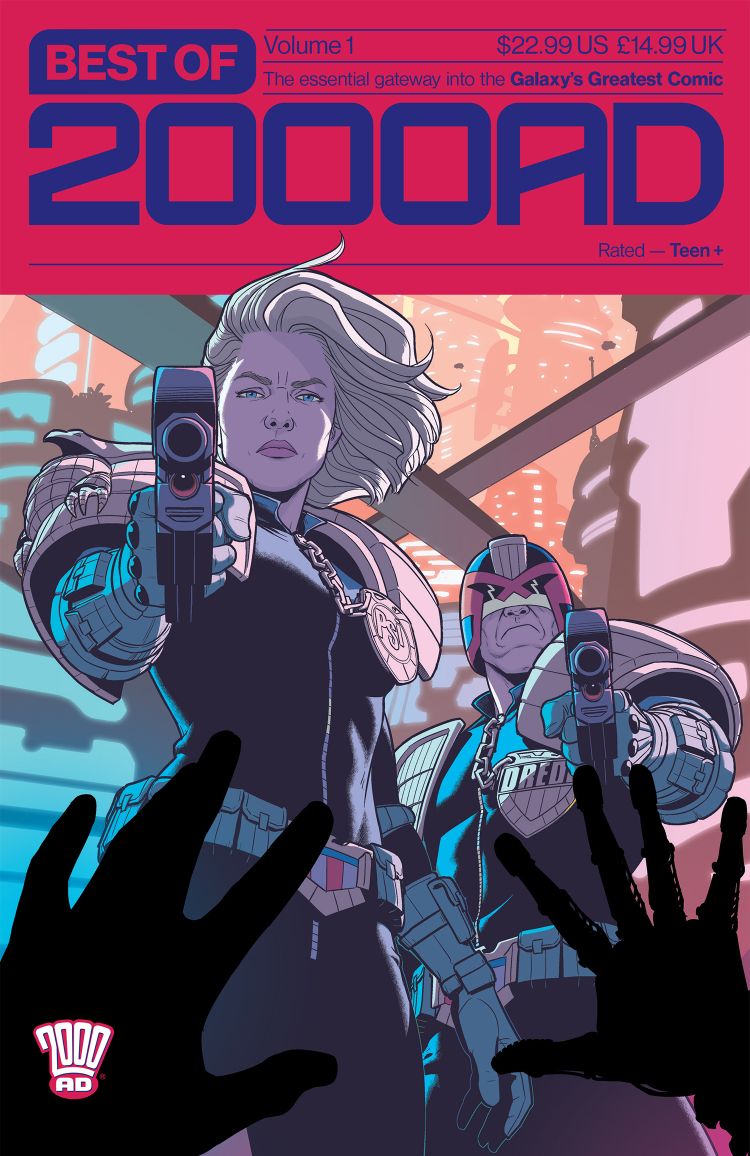
Looking at volume one of 2000 AD’s best series, we’re immediately introduced to the character most would be familiar with here in Judge Dredd. That first story, “Mutie Block,” gives us a clear snapshot of Dredd as a character and the world of Mega-City One that he inhabits. It breaks down the general culture of the city, their animosity to the “muties” that live outside of the city and have been subject to radioactive mutation for decades, and the idea of Judge Dredd as someone who embodies The Law.
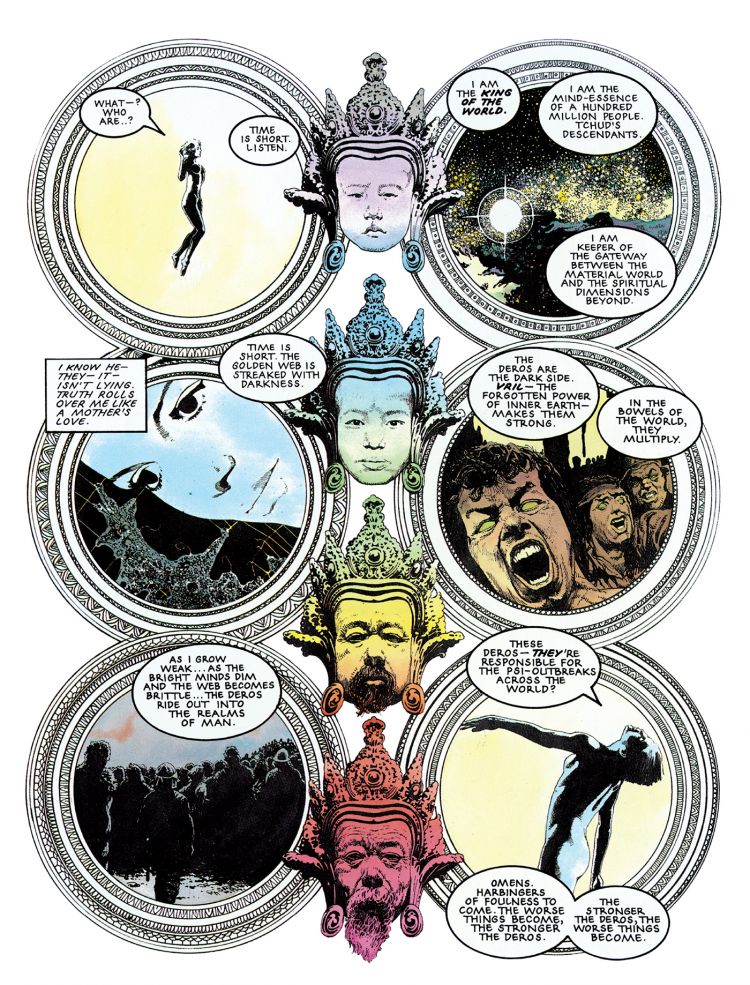
From there, we’re shown a space habitat, cult-tinged murder-mystery, Alan Moore and Ian Gibson’s expansive future tale, Halo Jones, bounty hunter desperation, and one of the more iconic stories from 2000 AD in Anderson, Psi Division: Shamballa. Each story carves out a vision of the future in ways that play with our conceptions of science fiction while injecting just enough timely allusions to feel grounded in the moment.

And this is one of the reasons that a long-running series like 2000 AD has become so ingrained in comics culture. Due to its weekly schedule, writers and artists are able to bend and adjust stories to better match current news cycles. It’s why Shamballa works so well as a piece that dissects both the iconography of the Judges and their penchant for violence while also running concurrent to the last gasps of the Soviet Union as Judge Anderson travels to Russian territories to work through a larger case. While shorter stories that can stand on their own are what comic anthologies can strive for, using them as a reflection of the current moment offers a unique timeliness that can’t quite be achieved in monthly, long-form releases.
Anthologies are where comics are at their best. We can read piecemeal a story that needs to be shorter in order to be savored and dissected while waiting for the next installment. Anthologies encourage creativity and brevity so creators can work through ideas at a blistering pace to get to the core of what their work is about. Having an anthology of an anthology like these 2000 AD best-of volumes is the best way to see how the short form works best in comics while giving us those essential stories that have kept the magazine going for nearly fifty years.
Get excited. Get drokked.

Drew Barth (Episode 331, 485, 510, & 651) resides in Winter Park, FL. He received his MFA from the University of Central Florida.

 The Drunken Odyssey
Leave a comment