
One of the prevailing conspiracy theories in this country’s history has been how a secret cabal of some kind—rich people, aliens, subterranean terrors, etc—has really been in control of everything happening and that whatever else we see is just spectacle. But for those doing the controlling, the spectacle does have to get boring after a while and so they need to create their own spectacle in order to liven things up. Absolute power must get dull after so long. At that intersection of spectacle and conspiracy is the first issue of Exquisite Corpses by James Tynion IV, Michael Walsh, Jordie Bellaire, and Becca Carey.
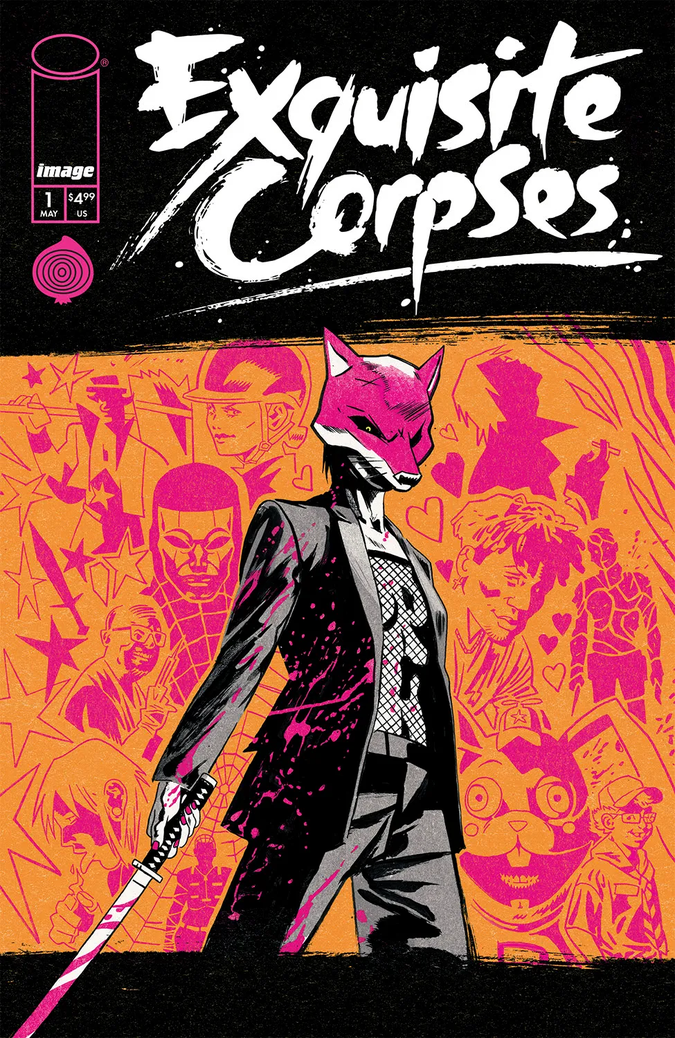
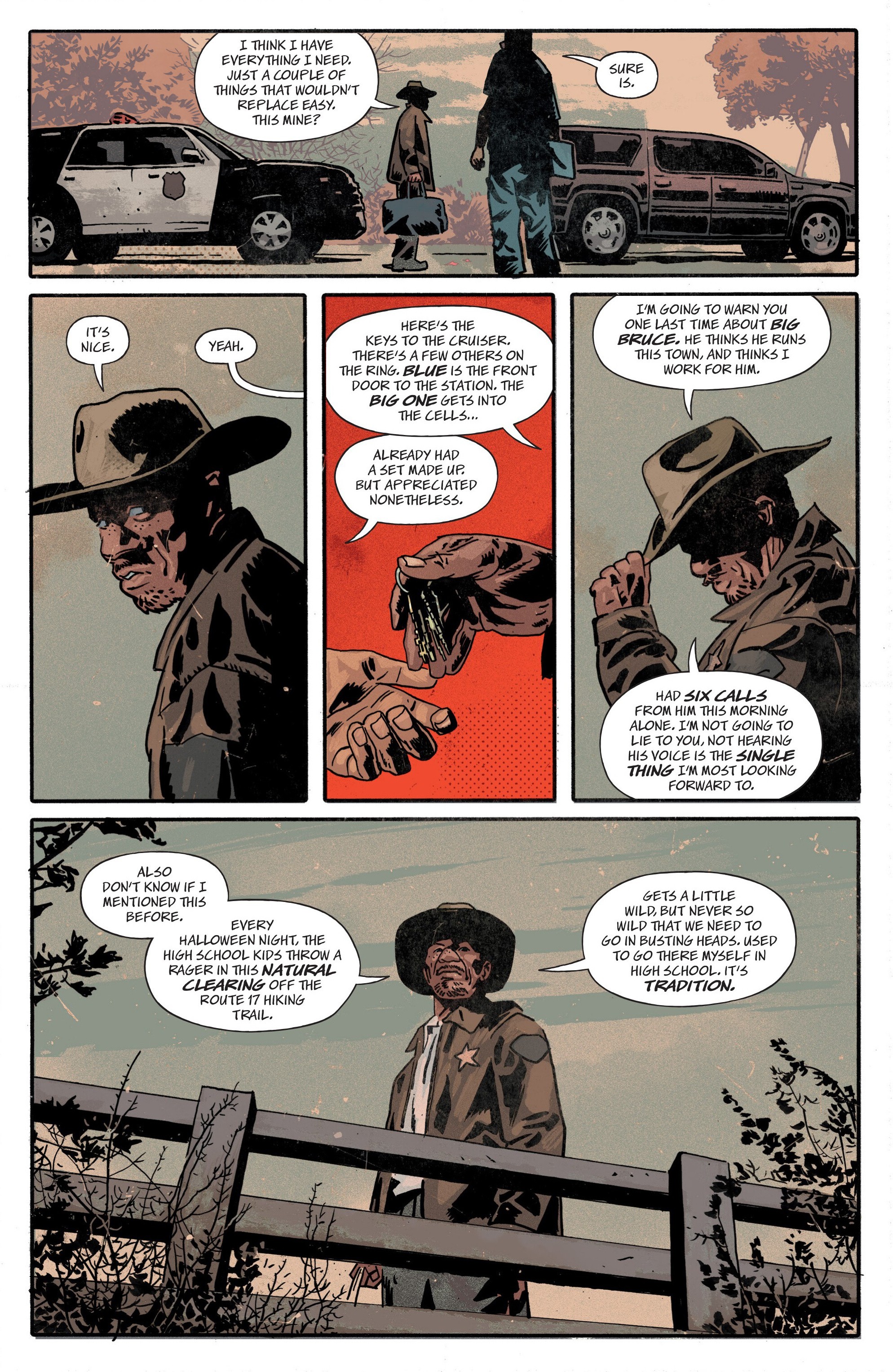
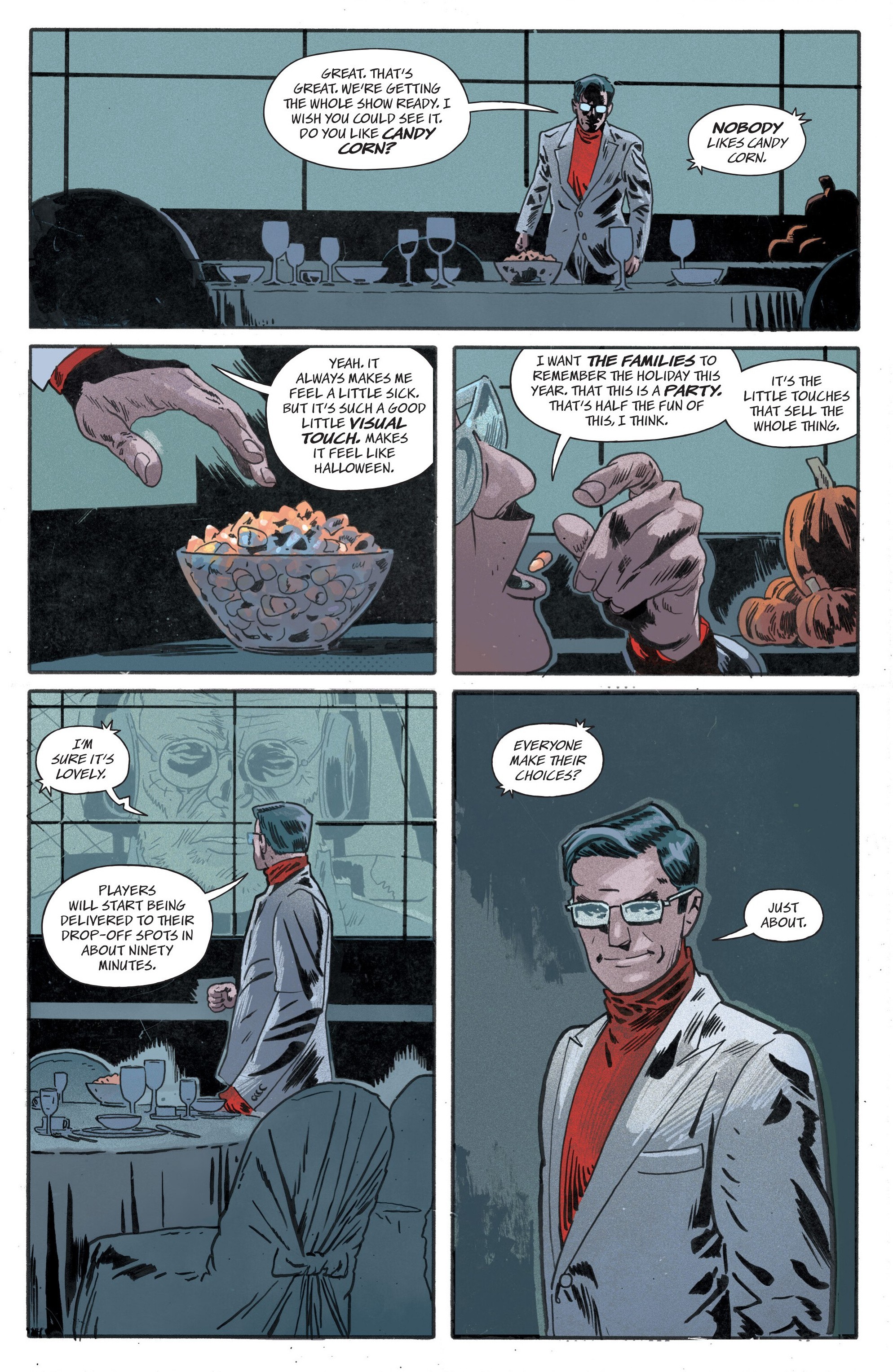
At the heart of America’s history and presence on the world stage, there has been a group of thirteen families running things. While each family rules over one state—one of the original thirteen colonies—only one is allowed permission to operate the country at their whims. To choose which family gets this control, a game is conducted every five years that they must all participate in: each draws a card with a weapon and puts forward a killer to represent them that uses that weapon. These killers are dropped into a small town and the last one standing is given one hundred millions dollars and a new identity to live out while their representative family rules the country. While Halloween in Oak Valley begins, the killers have been quietly transported in under the noses of the people who live there.
While Exquisite Corpses is a high-concept spectacle, the method of its creation is even more interesting. For an independent comic, it’s the only one I can think of that is using a writers room to create its story. While Tynion IV is the writer credited here—him and Walsh created the world’s lore and characters—but the story itself was the result of a group of a dozen creators coming together and setting everything else up. As a means of telling comic stories, it’s a more novel approach as we’re used to writers, artists, and editors working in tandem to get a completed story. But what Exquisite Corpses is doing is more akin to a television writers room where ideas can bounce off a dozen different people with different perspectives and come out with an even stronger story that the original creators may not have initially conceived.
Opening up the creative process in this way, we can see more hands, but we can also see more directions that a story can go. Comics have always been collaborative since the first artist and writer pairs became the norm in monthlies, but a more large-scale collaboration can keep things all the more interesting—I’ll always remember the writers rooms in the first few seasons of The Simpsons—and allow more writers the chance to work in comics. This method feels like one of the best ways to work up talent in the medium and it makes me wonder how many more creators would want to try this kind of method.
Get excited. Get together.
Drew Barth (Episode 331, 485, 510, 651, & 674) resides in Winter Park, FL. He received his MFA from the University of Central Florida.

 The Drunken Odyssey
Leave a comment