
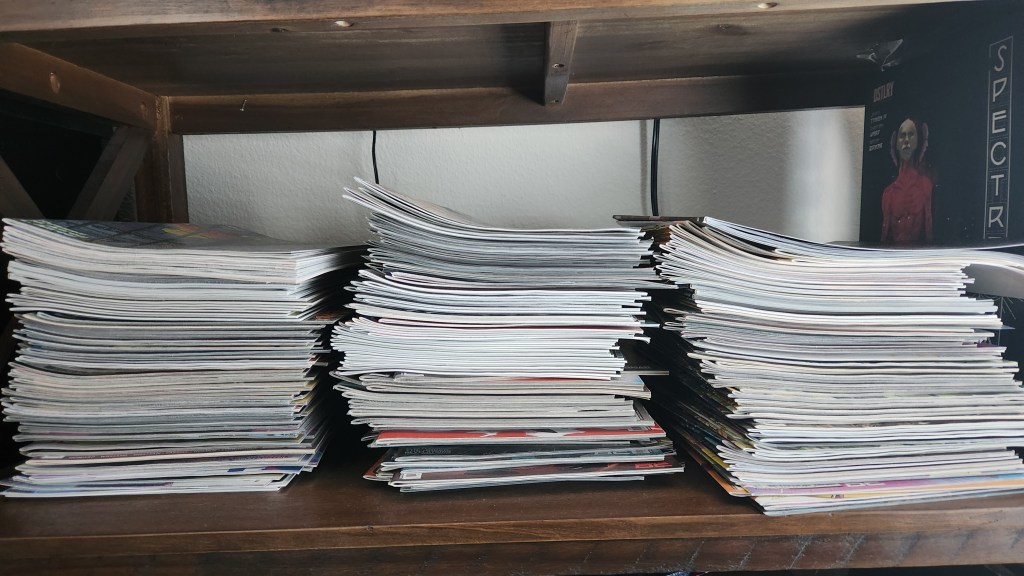
Finally, the equilibrium we all strive for in my titles. Anyway, let’s pull another series from the depths of the pile that’s actually a sequel to a series I had covered back before this article was a year old. And while the opening of that article may not have aged all that well, there still remains the kernel of truth regarding Si Spurrier and his contributions to comics—an idea I’ve covered multipletimes over the years. And that’s why we must return to Spurrier, Matías Bergara, Patricio Delpeche, and Jim Campbell’s Coda.
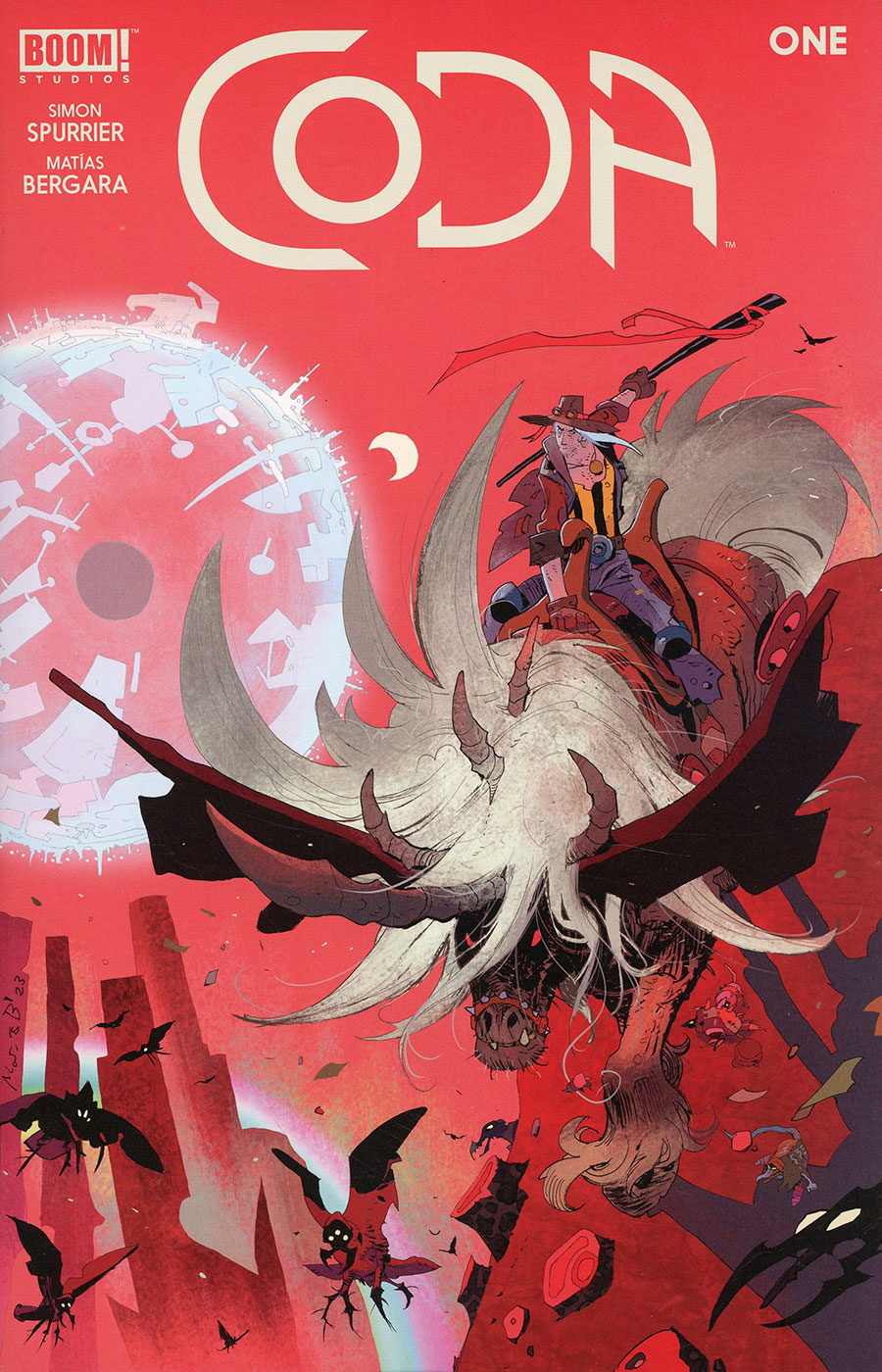
It’s been ten years since the ending of the first volume of Coda and Hum and Serka have carved out a simple life for themselves. They work their land, keep to themselves, and try to move on from the events that nearly broke the world a decade earlier. And yet the world keeps trying to claw itself back into their laps. Magic has been nearly gone for this entire time, but the promise of its return by a small child, the supposed heir to the last king of the land, spurs devotion. But that child is only found by one of the only survivors of the king’s death, and Hum knows he’s full of shit. All this while Serka comes into contact with a group of Gnomads who have created a wonderful device that can fell bandits ten times their size with a single pull of a trigger.
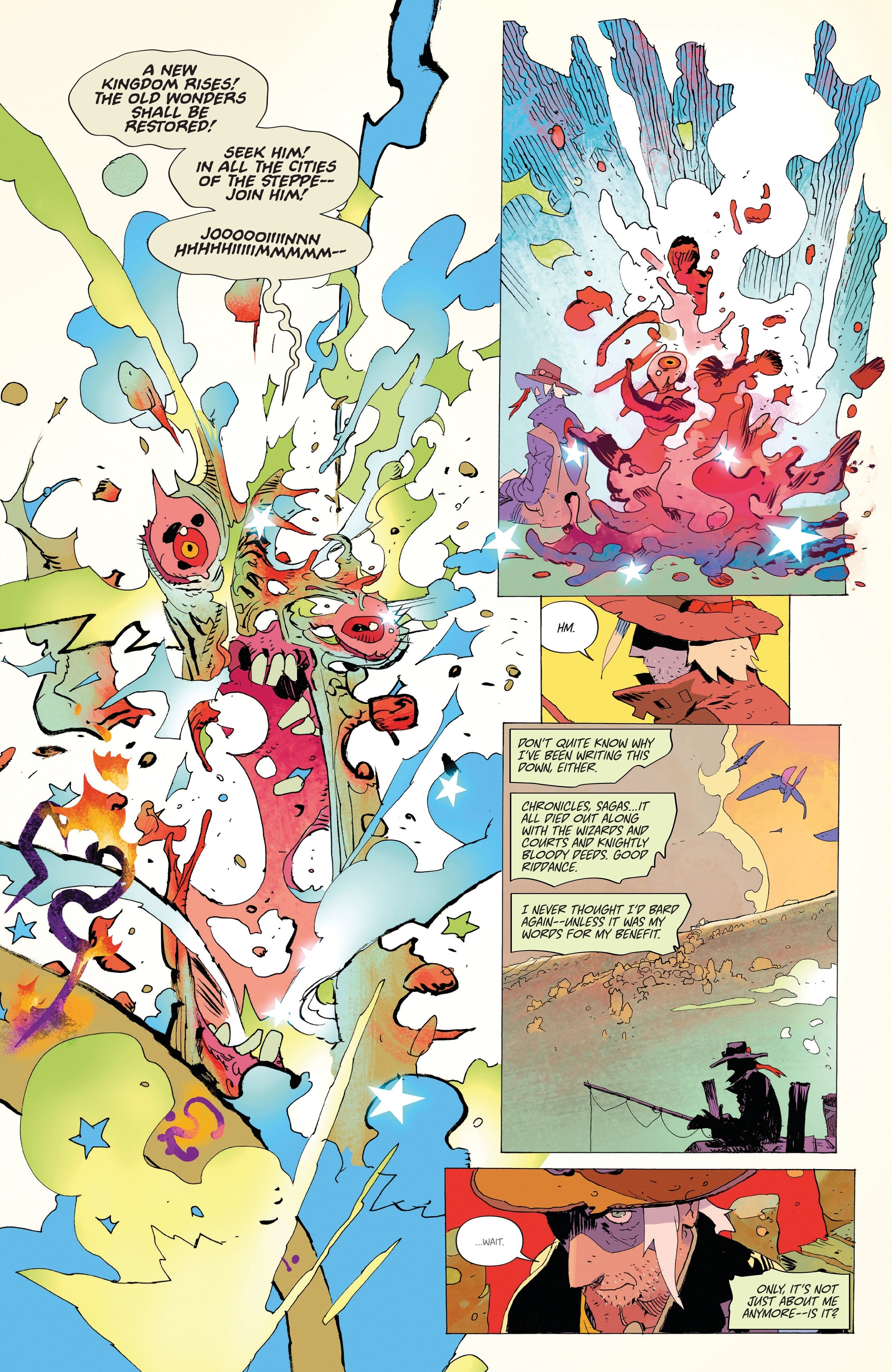
Like my article last week, and despite being a couple years old already, this volume of Coda ends up being evergreen. A fanatical death cult being promised a return to a glorious golden age based on ideals of a past that didn’t actually exist coming up against a sect of death-machine wielding obsessives who believe their sense of justice is the only real justice left. Both are convinced they’re the only solution to every problem their world faces and will exert incredible power to ensure that end. While I wish for a break from timeliness, in this case, seeing some more classical fantasy tropes butting up against the political audacity on display in these factions creates a fun juxtaposition that’s delicate to balance. The story maintains its two sides incredibly well—one with Hum trying to out-play the story the death cult has created for themselves and Serka’s sense of honor preventing her from stopping the obsessives from pushing too far. Put putting a bard in a paladin’s story and a paladin in a bard’s story shows us the ways in which we expect one side to play out and how a different perspective on their situations is the only way out.
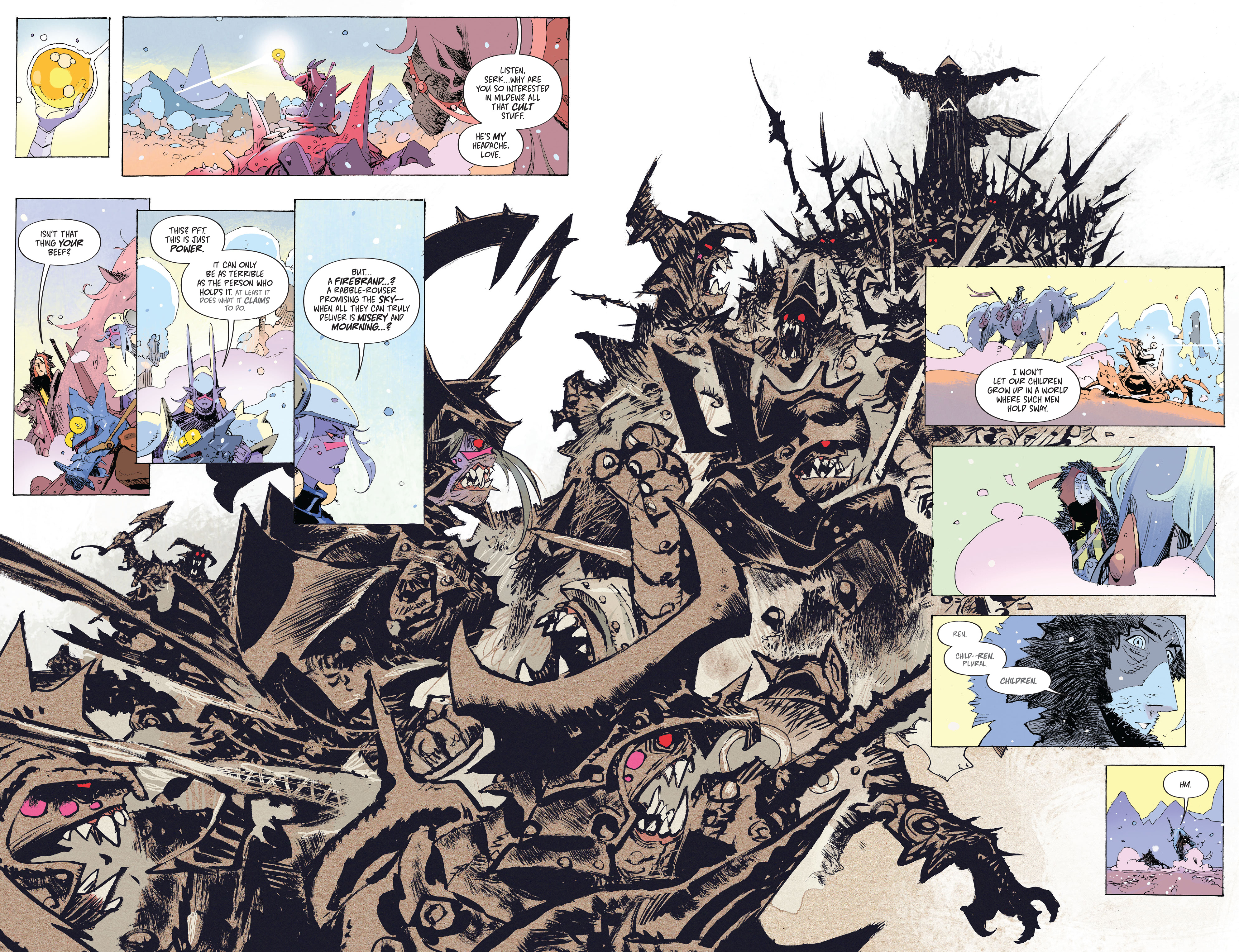
Coda shows us that, sometimes, the only solution to a problem is to invert its expectations. If we maintain a set of decorum, we’ll be out-played by those who exist outside the rules. If we reason with zealots, we only end up deepening their belief. But if we work outside of the constraints of the situation, we can finally come out with a good ending.
Get excited. Get inverted.
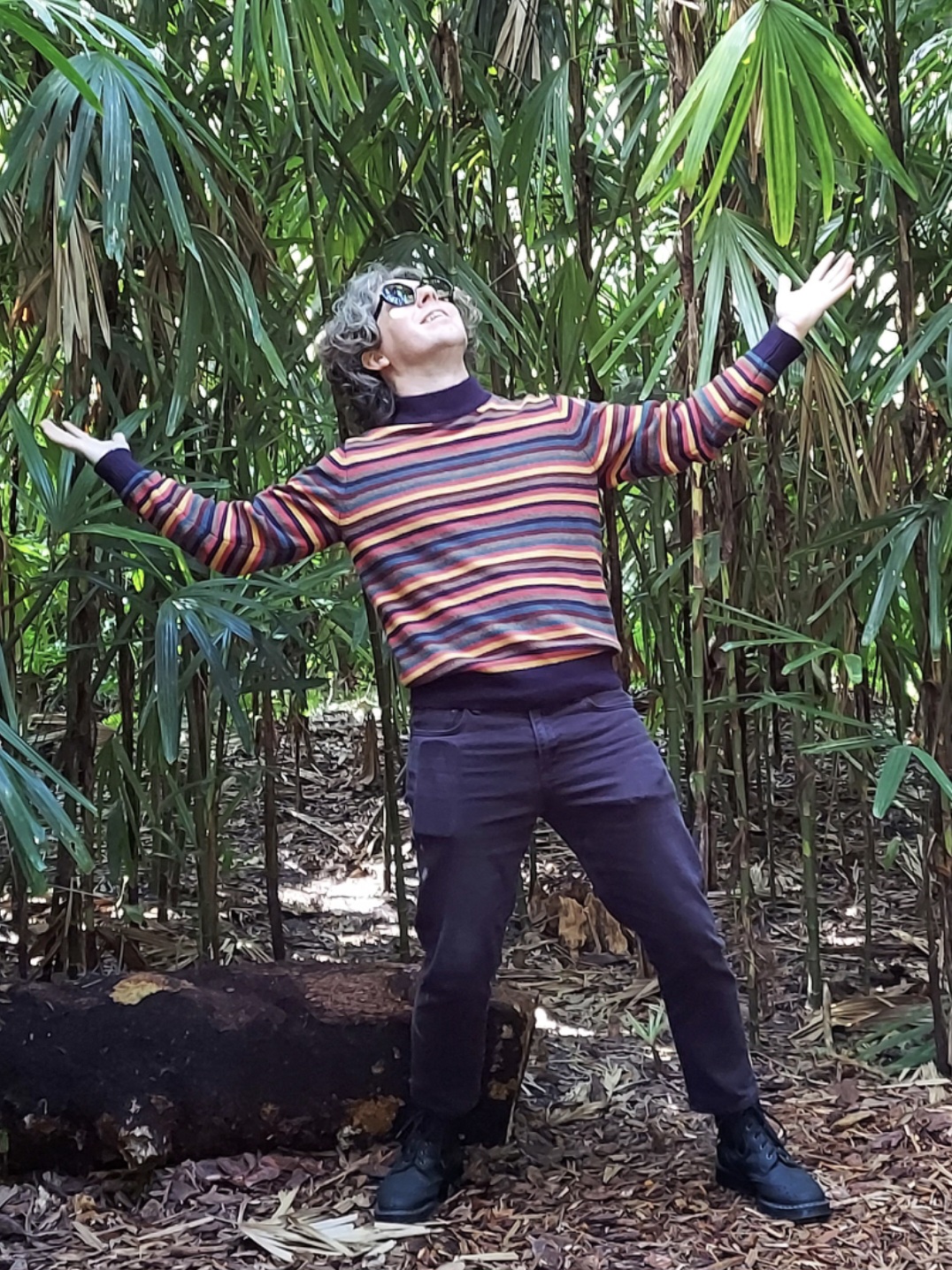
Drew Barth (Episode 331, 485, 510, 651, & 674) resides in Winter Park, FL. He received his MFA from the University of Central Florida.

 The Drunken Odyssey
Leave a comment