
It’s very nearly Christmas, so that means it’s time to talk about colonization. Last week’s look at Susumu Higa’s Sword of Sand from Okinawa focused almost exclusively on the events of World War II and how the residents of the Okinawan islands dealt with their homes becoming a large-scale battleground. In the second half of the book, Mabui, we see the impact of the war decades later as families have to live in the shadow of the American military bases that take up so much of Okinawa.

“Mabui” is Okinawan for “spirit” and this idea holds together the various stories that make up this half of the collection—both on the spiritual side and for the Okinawan identity. In this series of stories, we see everything from the military landlords that are paid by the Japanese government to rent their land for US military bases, people whose land is subject to crashed planes and lost pilots, an American soldier who had coached children on how to play baseball during the war returning decades later, grave robbers pilfering whole crypts for their burial zushigame, and a woman who works on one of those military bases stuck between a well-paying job on a military base and her identity as an Okinawan. No matter the story, there is always that connection back to traditional Okinawan religious practices as well as the involvement of a yuta—a spiritual leader—to help solve the character’s problems.
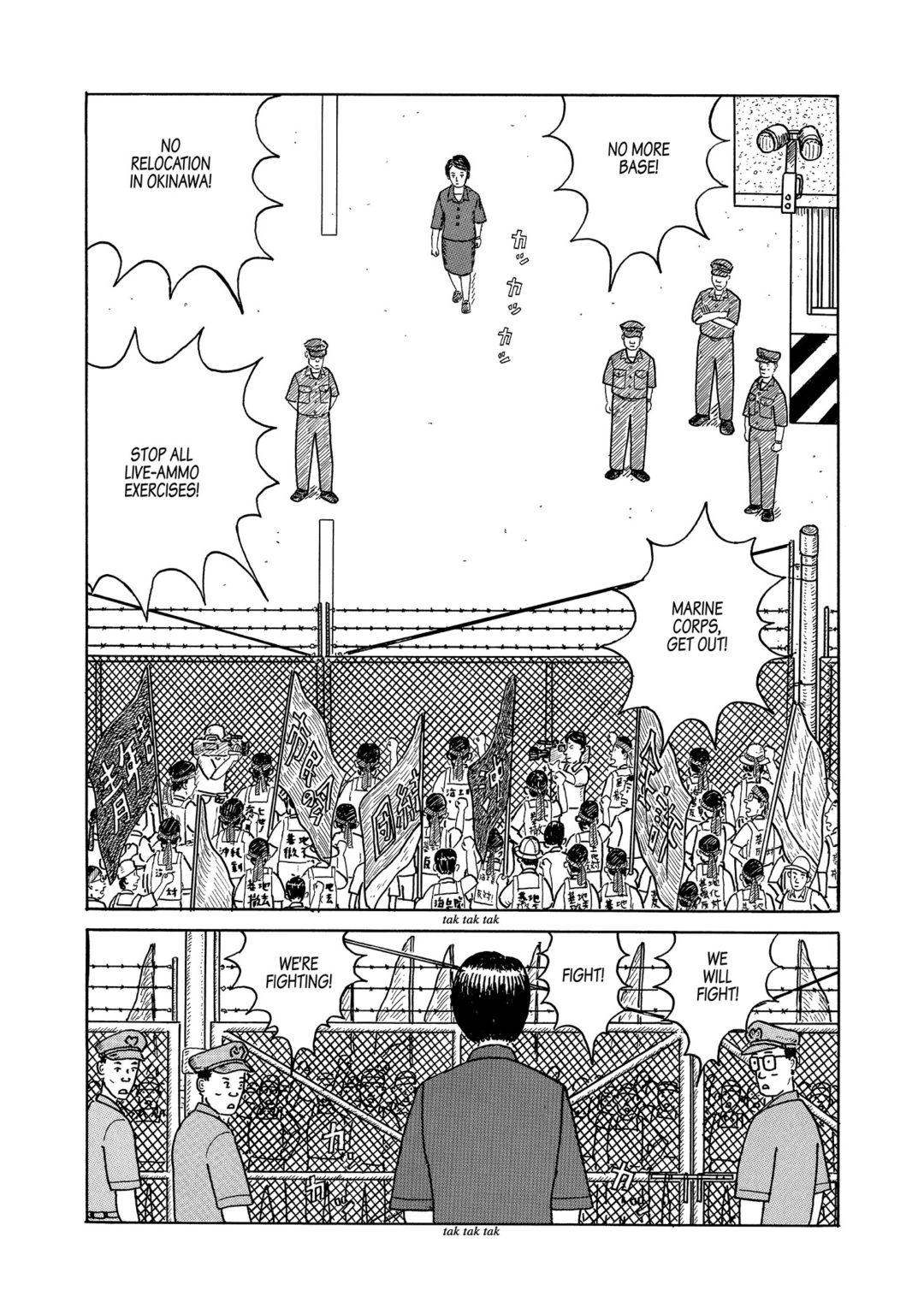
Seeing how the Okinawan prefecture has fared since the war is interesting as much of the Western perspective on post-war Japan comes from the mainland. It’s Okinawa that holds 75% of all US bases in Japan, and those bases take up 20% of the main island—it’s impossible not to feel the pressure of an outside force so large in every aspect of life on the islands. How Higa portrays them, however, isn’t so simple. Okinawa itself had been overwhelmed by the Japanese Imperial Army before being taken over by the US military after the war. But in these stories, Higa shows the US not as liberators or conquerors, but as this overwhelming presence that can’t be overcome. In the stories of Mabui, the US presence is simply something to live with or protest against while trying to maintain much of what makes Okinawa home for everyone on the island.
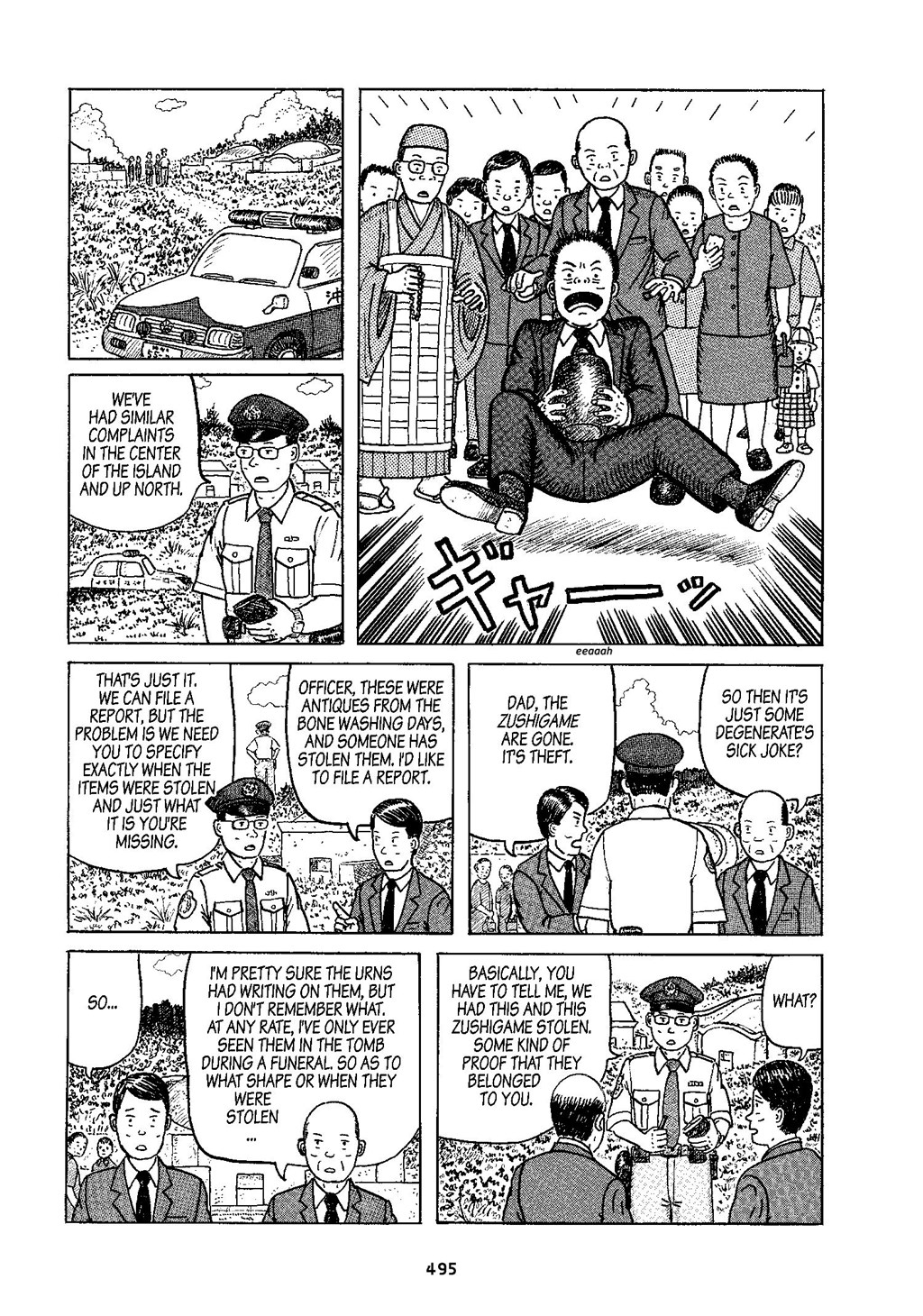
Okinawa occupies a unique space in graphic novels as so much of it is steeped in the history of the island and from the perspective of someone who was born during its time as a battleground. Higa’s manga is a kind of hybrid work as many of his stories are inspired by actual events he had read, experienced, or was told while leaving him enough room to expand upon those factual accounts. He can speculate as only someone who has seen these stories happening his entire life can.
Get excited. Get knowing.
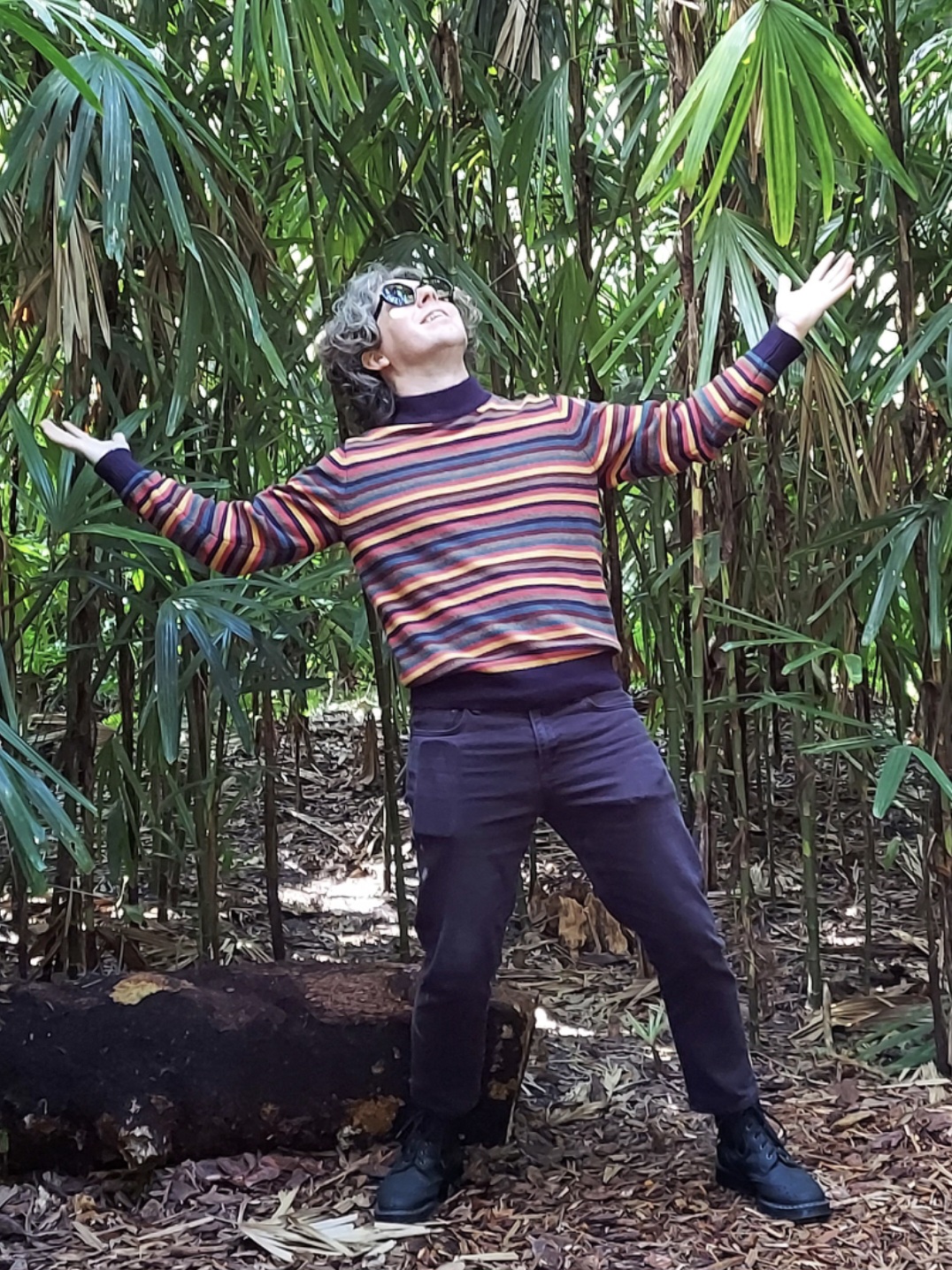
Drew Barth (Episode 331, 485, 510, 651, & 674) resides in Winter Park, FL. He received his MFA from the University of Central Florida.


 The Drunken Odyssey
Leave a comment