
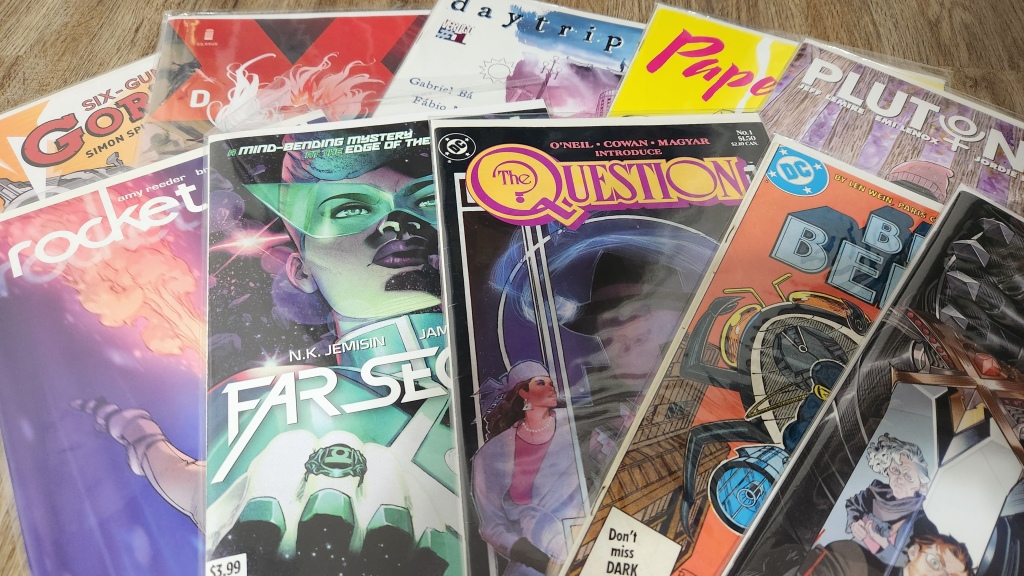
Like many long-running series, my pile of neglected to-be-read comics does seem to be endless. But that doesn’t mean it isn’t without a certain continuity to it. For instance, last week, I had written about Grant Morrison’s run on The Green Lantern and the ways they play with core foundational elements of Green Lantern as a character as well as the DC Universe at large. This week, we’re going to be taking a look at the limited Justice League Incarnate series by Joshua Williamson, Dennis Culver, Brandon Peterson, Andrei Bressan, Tom Derenick, Kyle Hotz, Paul Pelletier, Norm Rapmund, Ariel Olivetti, Nik Virella, Todd Nauck, Mikel Janín, Chris Burnham, Mike Norton, Jesus Merino, and Tom Napolitano and the ways the team use Morrison’s own foundational work to push the DC Universe forward.
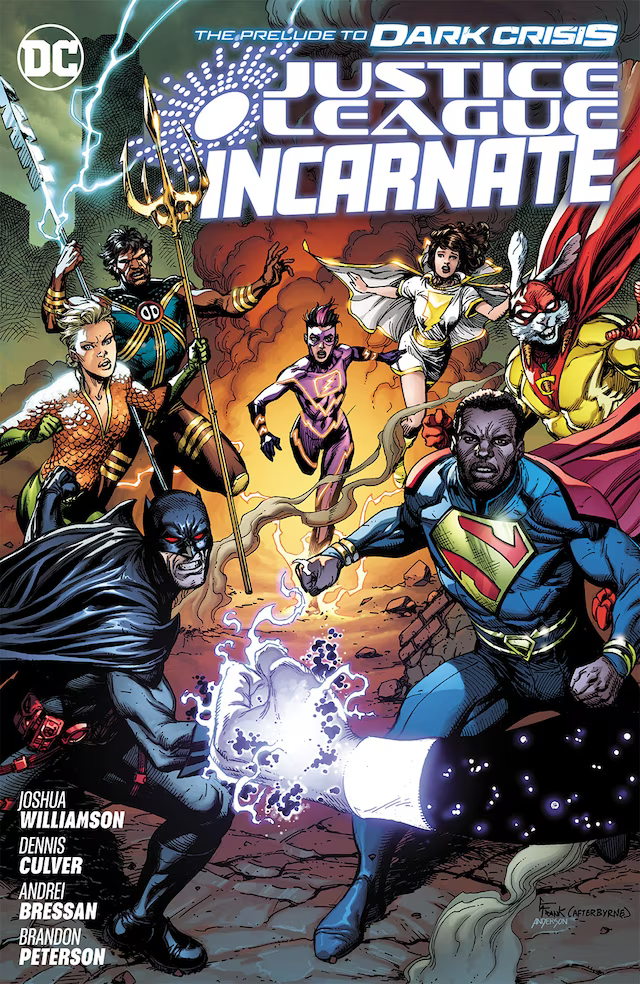
Justice League Incarnate is a stepping stone of a story. It brings together the heroes of various different Earths—like President Superman of Earth-23, Mary Marvel of Earth-5, Thunderer of Earth-7, and Captain Carrot—as guardians of the Multiverse to close a multiversal tear that could both empower Darkseid and let in a presence known as the Great Darkness. But those two forces are in opposition with one another—Darkseid wants to control the Multiverse and the Great Darkness wants to reduce it to nothing. As a result, this League has to strike a balance between how much power they can give up to Darkseid to keep the Great Darkness at bay while attempting to close the tear before either side realizes what is happening.
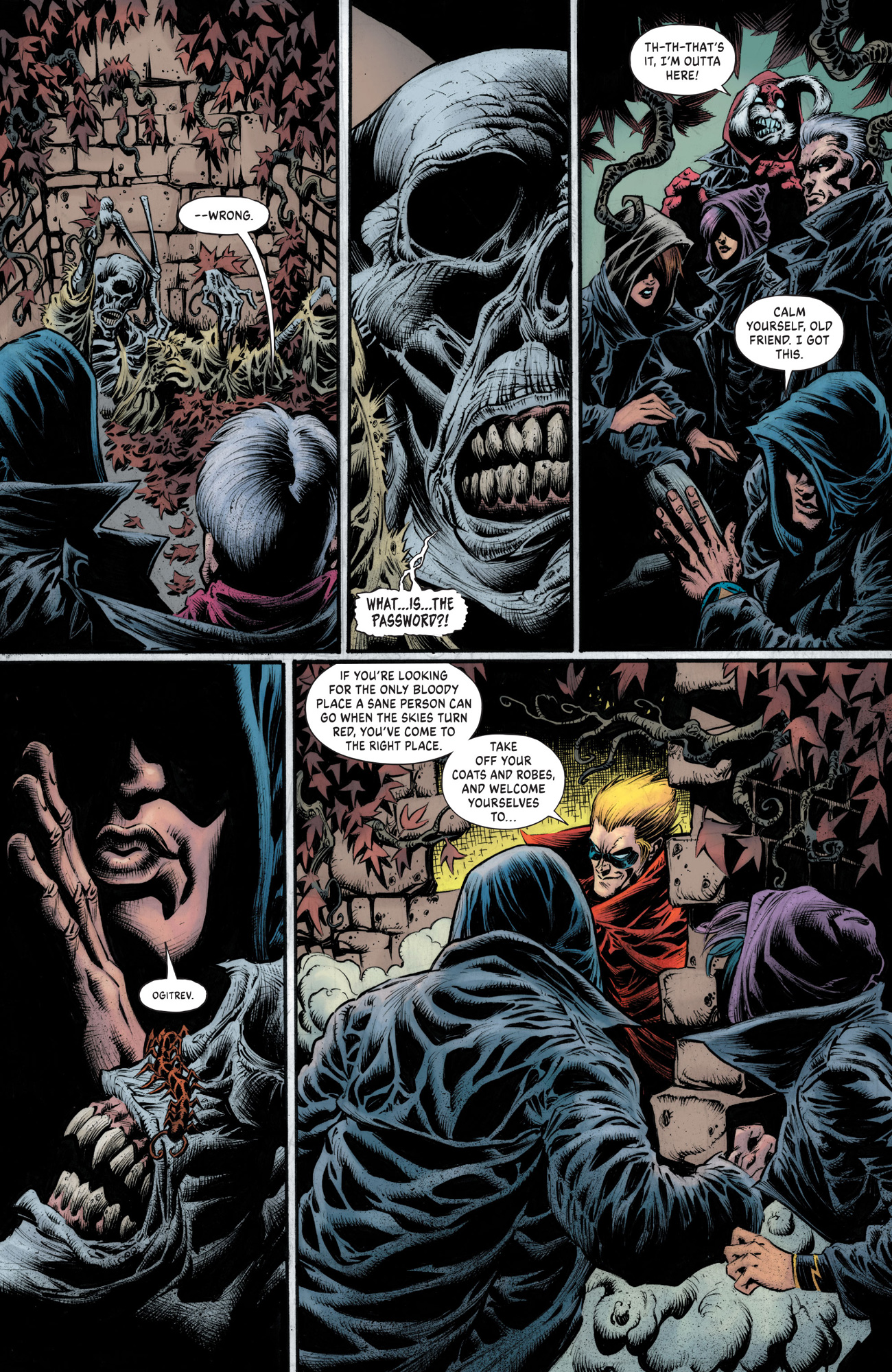
In this series, though, we need to talk about the meta-aspects of the narrative. After the team are blasted into different universes, we see President Superman and Doctor Multiverse on Earth-33, our universe, and have to relay a message to the rest of the team using the very comics that we’ve been reading this entire time. That their story is also told in formalist nine-panel grids throughout shows how much the creative team put into each world they crafted based on Morrison’s original Multiverse guide book years ago. And that series was its own cyclical look at the Multiverse and the meta-narrative that winds through the DC Universe at large. These small hints help to make those decisions feel like they mean even more as they’re guiding readers to a defined point in time that they can go back and explore.

What Justice League Incarnate represented at its time of publication more than two years ago is this bridge between events. But it wasn’t just setting things up for another large-scale event—it was cementing the influences that would go into that event and the role past stories will play during the construction of the DC Universe at the end of it. It’s the preface before the resetting of the Multiverse that would come later and the creative team behind it want to dig as deep as they can before then. But now I wonder if I actually have that event book somewhere deeper in the pile.
Get excited. Get Infinite.

Drew Barth (Episode 331, 485, & 510) resides in Winter Park, FL. He received his MFA from the University of Central Florida.

 The Drunken Odyssey
Leave a comment