
with Dmetri Kakmi
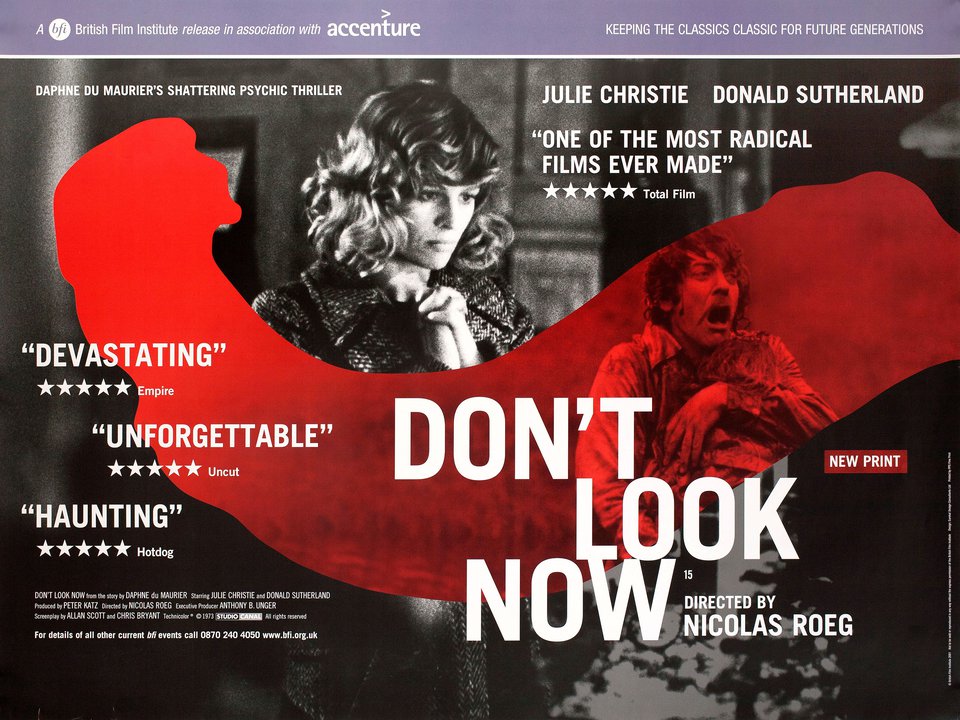
Don’t Look Now
UK 1973
Director: Nicolas Roeg
Cast: Julie Christie, Donald Sutherland, Hilary Mason, Adelina Poerio
There is much to discuss about Don’t Look Now. Not least the revolutionary editing, the nonlinear time frame, the astonishing love scene, and Pino Donaggio’s brillaint music score.
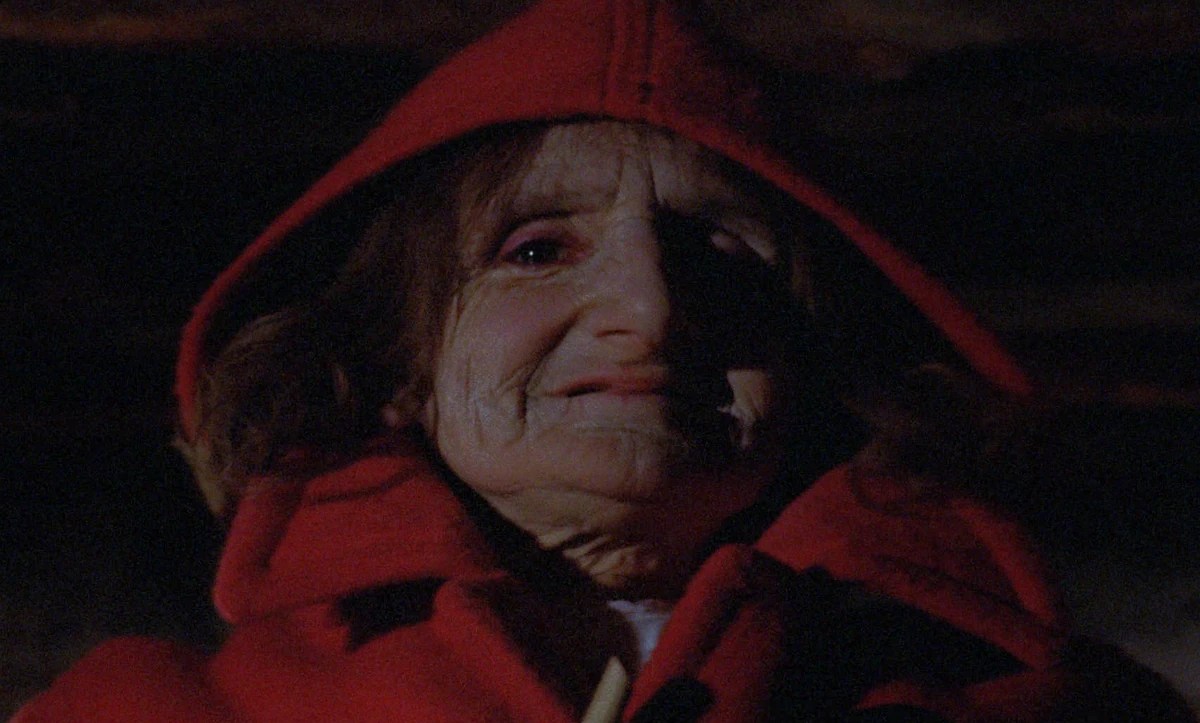
We will focus on a topic that has not, to my knowledge, been covered before. The face. Not Julie Christie’s lovely face but Adelina Poerio’s unlovely one.
It’s a truism that humans are fascinated by freaks, mutants, weirdos and killers. The more facially challenged the better. Ugly doesn’t cut it. They must be hideous, grotesque beyond all measure. The question why is for postmortem academics to explore but it is true nevertheless: the monster fascinates. Doctor Frankenstein’s cadaver, Dracula, Wolfman (a bore!), Michael Myers (poster boy), Jason Vorheese (who’s a pretty boy, then?), Freddy Krueger (another bore), Leatherface (misunderstood sweetie pie), Art the Clown (unhinged), and numerous others.
Then there’s the killer dwarf in Don’t Look Now. Talk about demonising the vertically challenged. Dwarf tossing pales in comparison to turning the poor mites into hatchet-wielding murderers. But at least Adelina Poerio, the diminutive femme fatale, gets to do her chopping in Venice and enjoy a pleasant holiday.
If you’ve seen this adaptation of Daphne du Maurier’s novella, my bet is you can’t look at a red mackintosh without shuddering. Many are the times I’ve shouted, ‘It’s the killer dwarf from Don’t Look Now. Quick stone it to death,’ and it was just an innocent school girl in a red coat. The poor kid is probably still in therapy.
‘We didn’t need dialogue. We had faces.’
Norma Desmond might have been talking about Adelina Poerio. Adelina certainly had a face. An unforgettable face. A face that would sink a thousand ships. That is why Nicolas Roeg doesn’t show it until the end.
Any filmmaker worth his salt knows that an extraordinary face is worth revealing slowly, by degrees, like a revelation from on high. You don’t make a vulgar splash and put it on display from the start. You wait. You build anticipation. You make the audience wait until they’re at fever pitch and then you hit ‘em between the eyes.
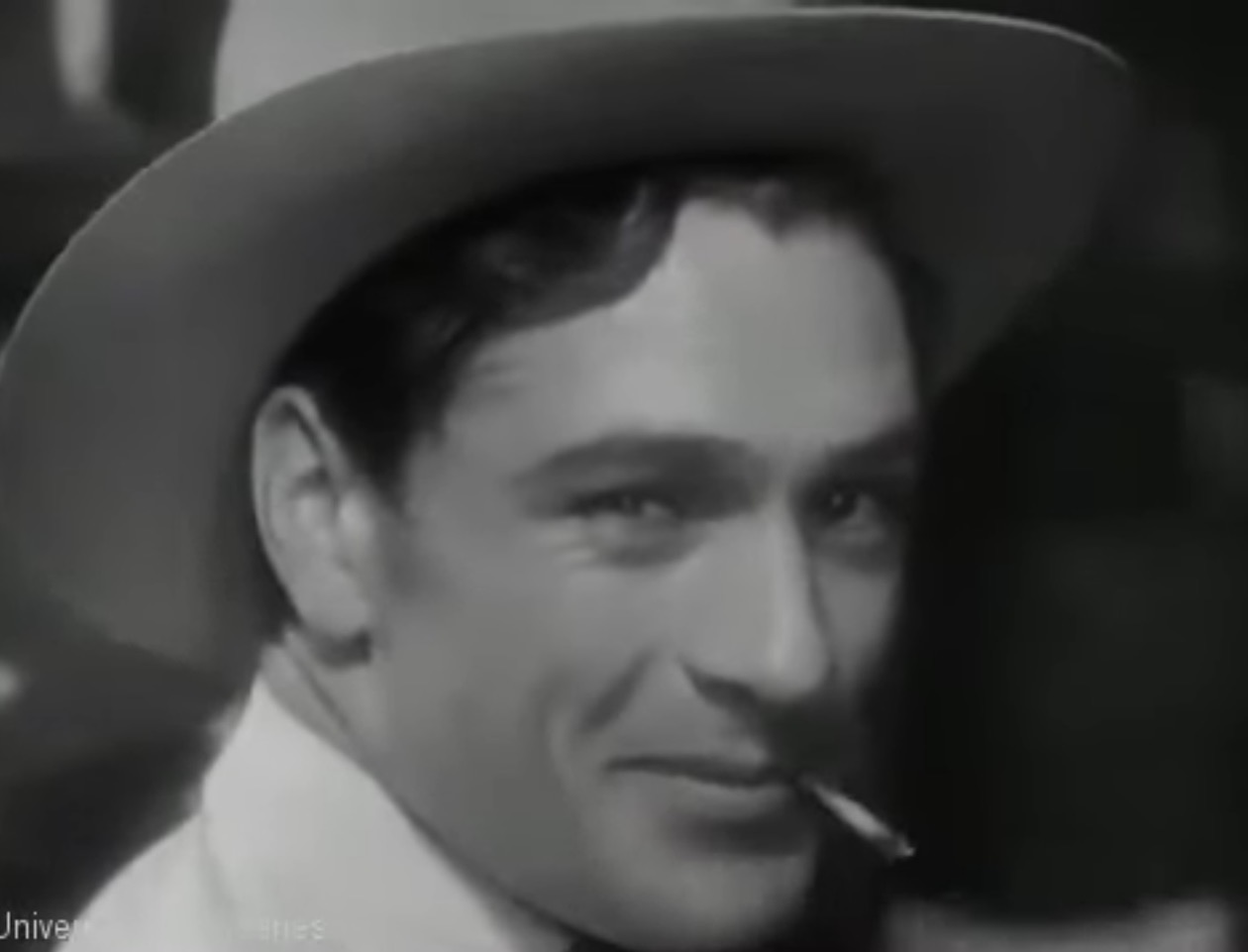
Case in point Gary Cooper in City Streets (1931). The first time we see his lanky carnival huckster he has his back turned to the camera. After adjusting something on a wall, he turns and it’s ‘I’m ready for my close up, Mr Mamoulian’. Cowboy hat tilted back, burnt matchstick between luscious lips, he gives the famed grin and the audience ovulates. It’s the same with Grace Jones. In her best videos, the face is obscured by shadow or covered by glasses, mask or cowl. Remove the veil and reveal the face of the century.

So it is with Adelina Poerio. Even though she’s in the film from the very beginning, we do not see her face. Initially, we see her from behind in a slide of a church Donald Sutherland is restoring. Later, she is a fleeing red coat in nighttime Venice. We see her but we don’t know what we are looking at. We think we are seeing one thing when we are seeing another—until the shattering climax when Adelina turns to confront Sutherland and chaos ensues.
Hidden inside the red hood, Sutherland sees not the youthful face of his dead daughter Christine but the aged, contorted visage of a deranged killer. Being the psychic that he is, it’s as if he is looking into the future to see his child as a wisened old woman or, worse, rotting in her grave. The hatchet comes down on his neck. Church bells ring. Birds take to the air. A cascade of sound and image, like broken glass, suddenly reveal the hidden meaning of his psychic visions, and then comes the blood…
Red, the colour that brightens the film’s otherwise saturated palette, blots out the world, like it did at the start when Sutherland spills water on a slide. Time melts. The end loops back to the beginning. Today is yesterday; yesterday is today and tomorrow never comes.
It’s at this point we realise Roeg’s masterstroke. The entire film is brilliantly encapsulated in the opening seven minutes. Donaggio’s child-like piano motif—a motif that blossoms to full orchestral grief by the end—gently underscores a series of ominously pregnant images in the middle of which Donald Sutherland declaims, ‘Nothing is what it seems.’
He is about to find out the truth of the statement. And the last earthly thing he sees is Adelina Poerio’s alarming yet compelling face. Once seen never forgotten…
Dmetri Kakmi is the author of The Woman in the Well, The Door and Other Uncanny Tales, Mother Land, and When We Were Young (as editor). His essays and short stories appear in anthologies. He is working on a crime novel called The Perfect Room.


Leave a Reply