
with Dmetri Kakmi
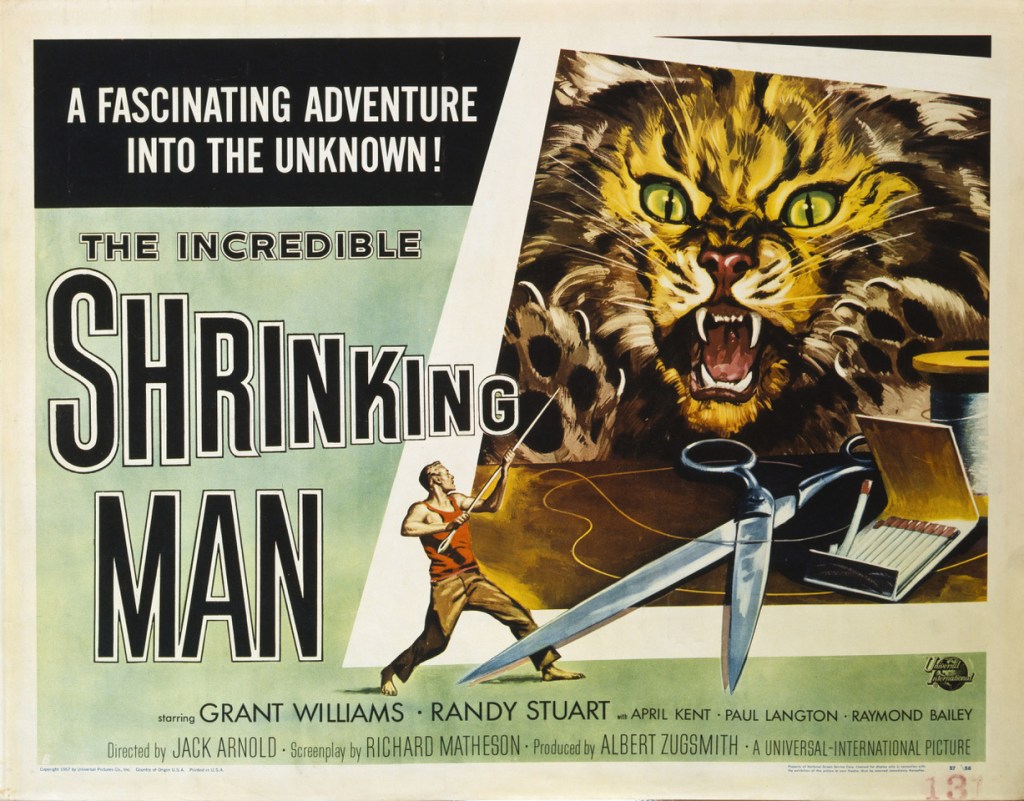
The Incredible Shrinking Man
USA, 1957
Director: Jack Arnold
Cast: Grant Williams, Randy Stuart, April Kent, Giant Cat, Giant Spider
Richard Matheson got the idea for The Shrinking Man (the novel’s title) from a 1953 musical called Let’s Do It Again, where Ray Milland’s character dons a wrong hat. It’s too large for his head and sinks around his ears — a potent image for a novelist interested in existential dilemmas. Matheson’s earlier novel, I Am Legend, is equally concerned with man’s place in the universe. But it’s in Scott Carey’s extraordinary adventure that it finds an apotheosis that borders on the religious.
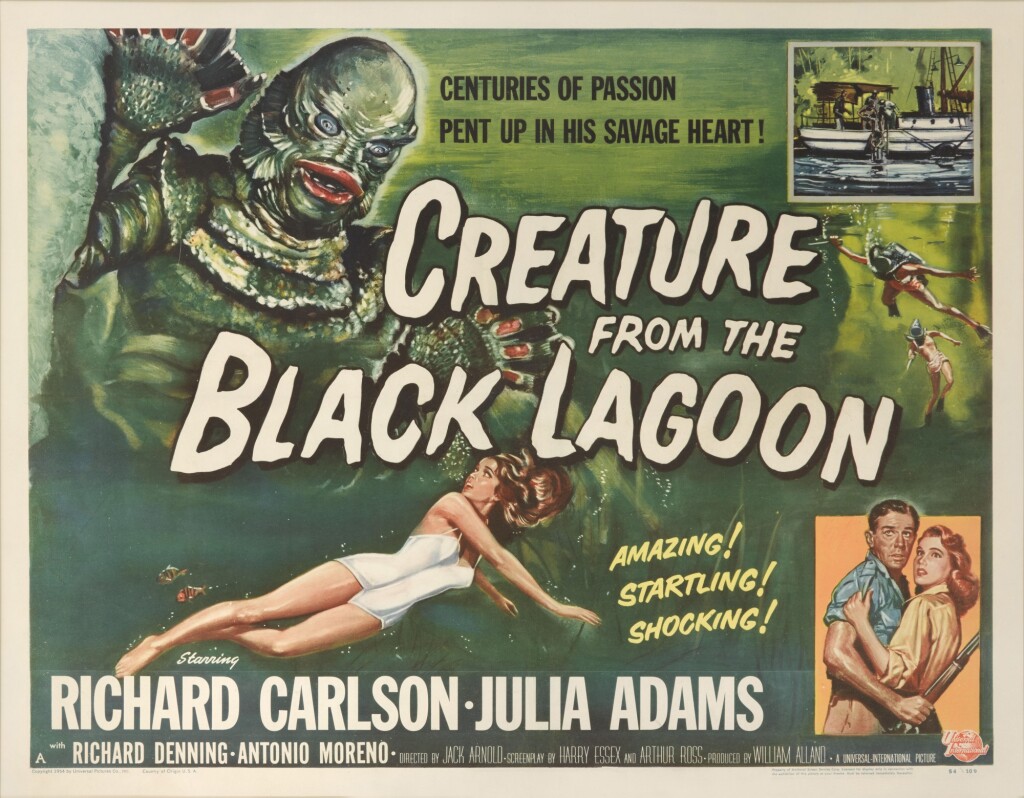
Who better to bring the amazing story to the screen than Jack Arnold, the director of sci-fi classics It Came from Outer Space (1953) and Creature from the Black Lagoon (1954), among others.
Universal Pictures wanted Dan O’Herlihy for the main part but got hunky Grant Williams instead. Williams has a fine head of hair and is easier on the eyes. Furthermore, he brings a balance of strength and vulnerability to a difficult part that wins audience sympathy, while leaving him open to whatever horrors await as he shrinks from a normal-sized man to the size of a dust mite — an absurd (or absurdist) premise that leads to one of Hollywood’s great endings.
The film’s main thrust is Man’s diminution in a Woman-dominated domestic space. By extension, it asks what it mean to be a man in the post World War 2 period. Baby Boomer America lashed man to a nine-to-five routine, from home to office and back again. If he is not at the mercy of an employer, he is beholden to a wife. He feels caged, neutered and chaffs at the bit, busting to get out.
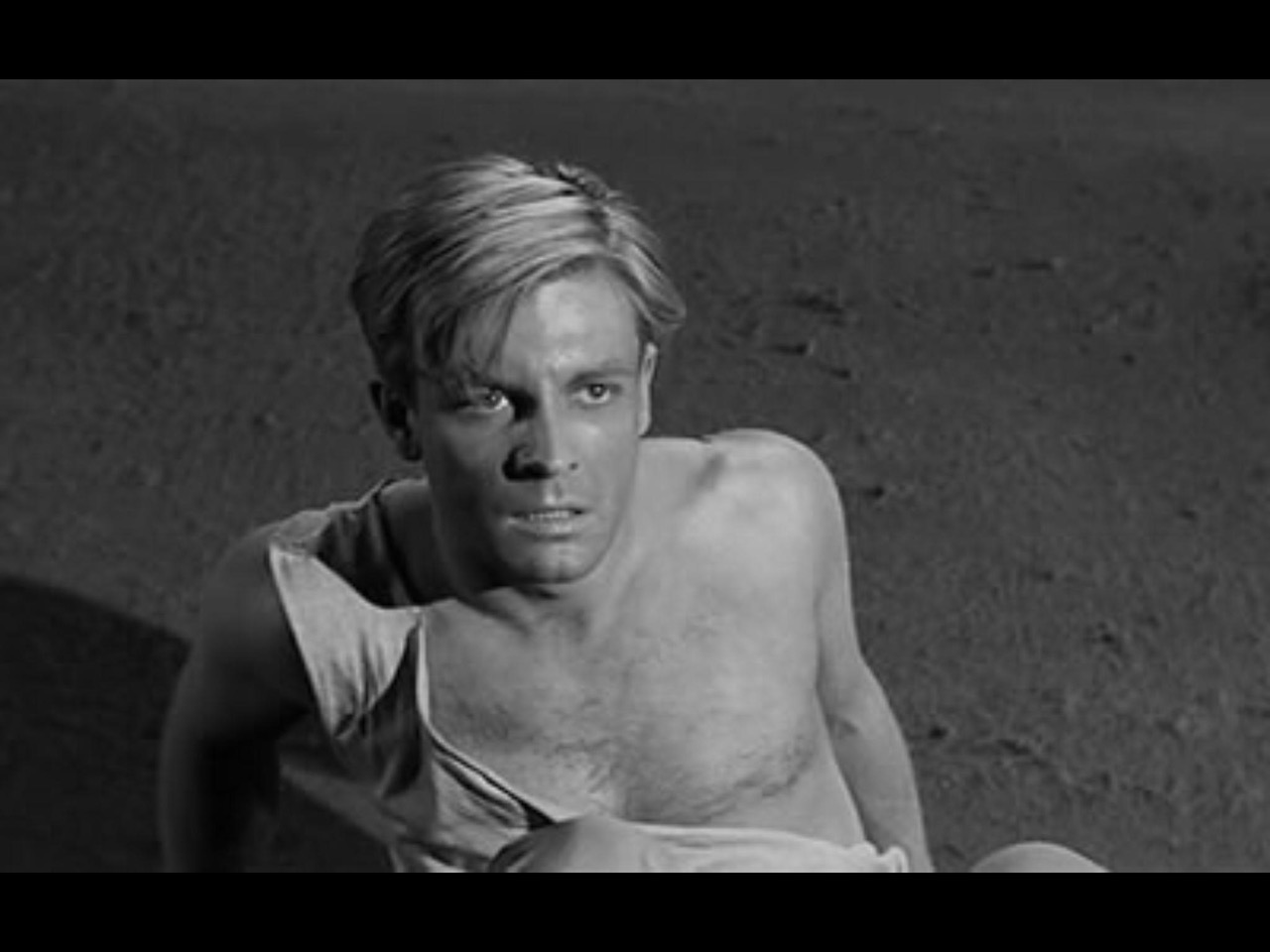
So it is with mild-mannered Scott Carey. Despite the love and attention he gets from wife Louise, he is hemmed in and feels out of place in the stultifying neatness of a suburban home. Everything, from clothing, furniture to domestic cat, literally overwhelms and diminishes him. His humiliation is complete when he shrinks to the size of a prepubescent boy. His wife infantilises him to the point of taking in his over-large pants, turns him into a surrogate child, and eventually sticks him in a doll house for his own protection. The look of desperation on Grant Williams’ face as he flees a mammoth puss with sharp teeth across the living room floor speaks volumes about the nature of his existential dilemma.
It’s only when Carey further shrinks to the size of an ant and must fight for survival in the wilderness of his own basement that he finds meaning and purpose, an opportunity to uncover a true self, away from the mortgage belt.
The story posits the notion that civilisation kills man’s natural instincts; the savannah revives them. Rewatching the film recently, I wondered how might a woman’s version of the same story play out. What does Carey’s wife Louise feel about being stuck at home, cooking and cleaning all day, as she was directed to do by government and marketing forces in the post war period? Did she feel stultified? Was she busting to get out too? Unfortunately, the ill-conceived Attack of the 50 Foot Woman (1958) fails to provide a satisfactory answer.
The Incredible Shrinking Man truly shines in its next evolutionary leap.
If I harp on the ending it’s because this is a rare instance of a film that exists for its concluding moments. The journey to get there is indeed thrilling but, in this case, it’s the destination that truly matters. And it is Scott Carey’s final ecstatic speech, as he leaves behind limited notions of manhood and what it means to be human, and merges with the dust of the cosmos, that the story goes from sensational adventure to metaphysical journey, worthy of a Sufi or Gnostic mystic.
It’s hard to believe original test audiences didn’t like the end and thought it would be better if Scott Carey grew back to normal size. Idiot pea brains! Feed them to the giant spider immediately.
A South American Indian saying states, ‘To be human, one must make room in oneself for the wonders of the universe.’ Similarly, it’s only when Scott Carey stops fighting destiny and gives in to its rhythms that he realises he hasn’t lost anything. In shrinking to the size of an atom, he has expanded to encompass the universe. He is both dust and super nova.
Dmetri Kakmi is the author of The Dictionary of a Gadfly (as The Sozzled Scribbler), The Door and Other Uncanny Tales, Mother Land, and When We Were Young (as editor). His gothic fantasy, The Woman in the Well, will be published in April 2025. He is working on a crime novel called The Perfect Room.

 The Drunken Odyssey
Leave a comment