
by DMETRI KAKMI
In 2006 I excavated a troubled past by writing Mother Land, a fictionalised memoir about my family’s life on Bozcaada, a Turkish island. Childhood memories clashed with my life as an editor at Penguin Books. Some weeks I had one foot in Turkey and one foot in Australia. Sometimes, my sanity seemed at breaking point. I doubted the book would be finished. Yet I was determined to continue.
I really didn’t know what I was doing. I wrote, travelled back and forth between countries, researched the subject, and hoped for the best. Everything changed when I came across The Sheltering Sky by Paul Bowles. The book fell on my head as I rummaged through a second-hand bookstore.
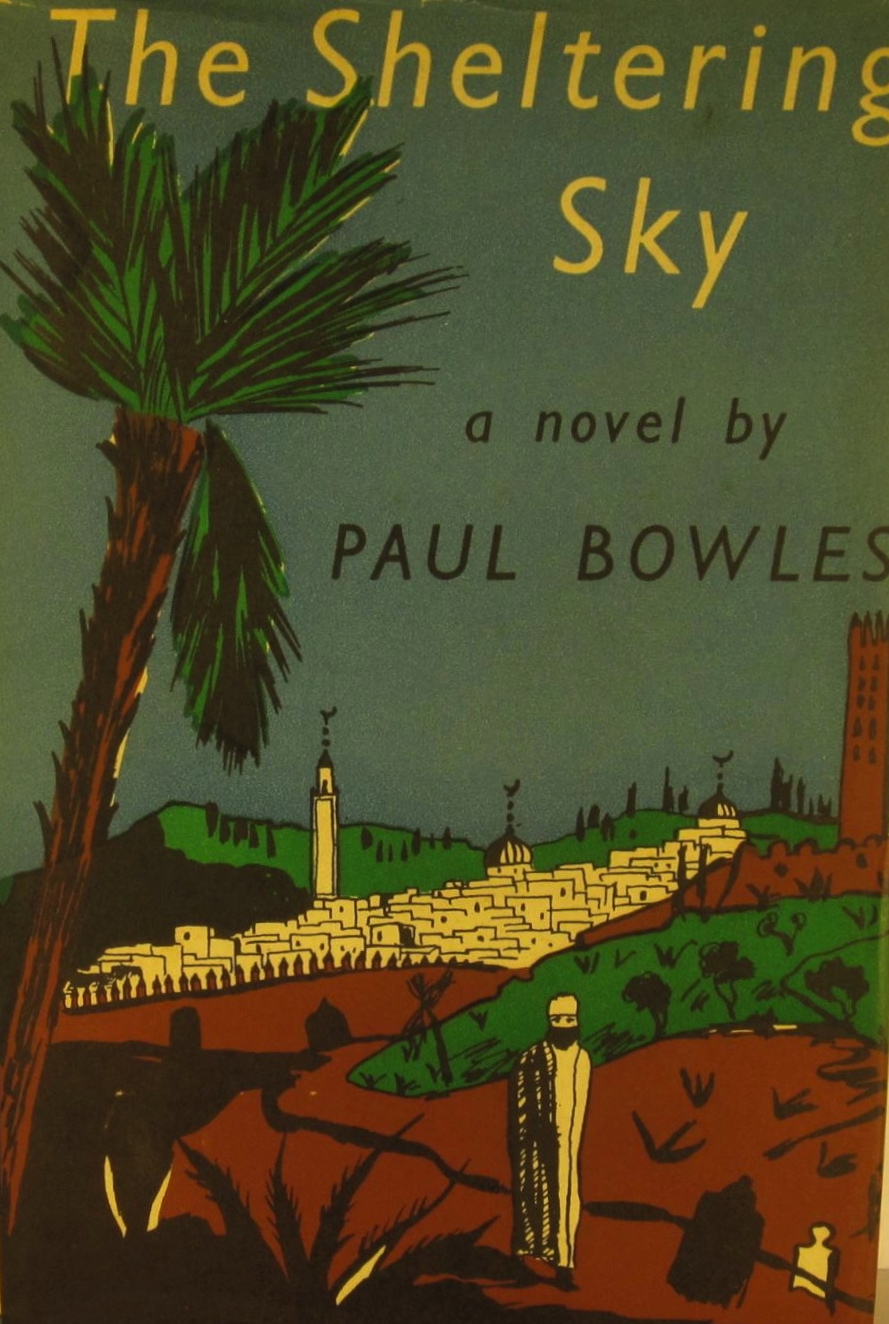
Published in 1949, Bowles’s first novel is a jolt of linguistic style, poetry, nihilism and spiritual degeneracy. The book’s about a sophisticated New York couple uncertain of their future together. Attempting to save the marriage, they journey across the deserts of North Africa. Thrown together in an alien world, they grow further apart. Despite the beauty of the landscape, the reader is drawn into a stifling, claustrophobic atmosphere that grows more menacing the further the couple penetrate the continent and leave behind a known and understandable civilisation.
Bowles was a composer before he became a writer. Although his writing style is spare and direct, the writing has the instinctive musicality, cadence and rhythm, the surge and withdrawal, you expect from a musician. Each word chimes in exactly the right place. Despite the dark subject matter, the overall effect is of elegance, grace and controlled artistry.
The narrative of my book, Mother Land, ran along similar lines as The Sheltering Sky. I too was travelling to another country to find myself. The difference wasthat I was going to my birthplace and home. Turkey was not alien. It was my country. Or so I thought. For although I had lived in Australia for twenty-nine years at that stage, I still thought of Turkey as the place where I truly belonged; Australia was an adjunct.
Even so, I feared for my life. Turkey, when my family lived there in the 1960s, was not a safe place. It was powder keg of nationalistic and conservative religious politics. You never knew when violence would erupt. This tension was especially unpleasant if you numbered yourself among the dwindling Greek populations that had lived there since before the Byzantine Empire. And so my family left in 1971, hoping to make a better life in Melbourne, Australia.
I had no idea what to expect in Turkey in 1999. My mind teemed with questions. Has the country changed? Are the natives still hostile towards Greeks? Is my island, Bozcaada, still the same? Am I going to be safe? As far as I was concerned, Turkey could become my grave.
That, after all, is what happens to Port Moresby in The Sheltering Sky. In his final moments, when he has gone as far as he is physically able, Port is consumed by the terrifying, beguiling desert; and as he whirls ‘down his own dark halls towards chaos’ he confronts his aloneness and alienation. I didn’t want that to be my fate.
Of course, things rarely go according to plan. And every journey to foreign climes is an inner odyssey of self-discovery. We don’t leave ourselves behind just because we travel to another country.
Visiting Turkey taught me a great deal. First, that you can’t go back. The past is indeed a different country. People and places change. Life moves on. After almost thirty years’ absence, and after forgetting how to speak Turkish, I was as much an outsider in my country as Port and Kit Moresby are in the Sahara. They did not belong and neither did I. To make sense of it all, I had to acknowledge that I had changed; I was no longer a frightened ten-year-old boy but an educated Western man of almost forty.
This is where art stepped in to bring order to life and to possibly redeem the past.
In my mind Turkey had stood still for twenty-eight years, a frozen image, a black-and-white photograph. My duty was to free the country and myself from stasis. The only way I know how to do that is to write a narrative that sets time in motion — from black-and-white photo to a colour film that runs forward.
One of my principle concerns in Mother Land was to evoke the beauty and the terror of the island and the sea — their vacillating moods comment on the human drama, the history, the myth and magic of the place. Again, the lesson is in Bowles. One of his greatest achievements is in the way he turns the desert and the watchful sky into a purely subjective experience. Half way through The Sheltering Sky, Kit and her husband Port walk an internalised landscape of the mind as much as a physical one.
‘He was at the edge of a realm where each thought, each image, had an arbitrary existence, where the connection between each thing and the next had been cut. As he laboured to seize back the essence of that kind of consciousness, he began to slip back into its precinct without suspecting that he was no longer wholly outside in the open, no longer able to consider the idea at a distance.’
This is the internalised, dream-like language I wanted to capture in my book, if I was to walk the fine line between memory and truth.
Paul Bowles explores the deadly seduction of the natural world and of unknown cultures, a theme he extends inhis other novels and short stories. Rather than seeming paranoid and xenophobic, Bowles, the great traveller, transforms this irrational dilemma into a metaphysical journey in which transformation, transcendence and annihilation walk hand in hand. Bowles achieves this through observation, of course. But he also works with words at a sentence level to entice and to shift consciousness.
This is Kit alone in the desert: ‘Whichever way she looked the night’s landscape suggested only one thing to her: negation of movement, suspension of continuity. But as she stood there, momentarily a part of the void she had created, little by little, a doubt slipped into her mind, the sensation came to her, first faint, then sure, that some part of this landscape was moving even as she looked at it. She glanced up and grimaced. The whole monstrous star-filled sky was turning sideways before her eyes. It looked still as death, yet it moved.’
In the end, Port dies and Kit is stripped of the last vestiges of her former self. The reader ponders the question: is she mad or is she transformed into something more resilient, real and essential? She wanders on like a body in which the rational mechanism is severed. The liberation is too extreme, too intense, for an organism conditioned for civilised containment. Divested of her artificial reserves, Kit is overwhelmed by her primitive nature and comes out of the ordeal as beautiful and as terrifying as the panorama she traverses. She becomes the vibrating essence of herself.
I like to think that’s what happened to me, too. Like Kit I began my journey as one thing and ended up as an other. Fear and uncertainty gave way to knowledge and understanding. There is nothing like familiarising yourself with the historical and political forces that form a nation to help you understand a people. Making friends with Turks made me see that the enemy can have a beautiful face. The writing process also made me see that my Turkey is a thing of the past; my future is in Australia.
If I sound vague it’s because Greek-Turkish relations are complex. It is not easy to summarise our convoluted interrelationship. Suffice it to say that acrimony and bitterness is the customary position for most books about the subject. I was as surprised as any reader when Mother Land turned out to be about forgiveness and reconciliation. The anger and resentment was burned out, to be replaced by compassion. It may well be the book’s saving grace.
The first time I read The Sheltering Sky, I was seduced by the beautiful language, the book’s metaphoric ‘awayness’, if you like; the second time I immersed myself in the philosophic thought that bubbles to the surface like cool water at an oasis. I had to sink to the depths of terror and rise to the heights of exultation in Bowles before I recognised them in myself.
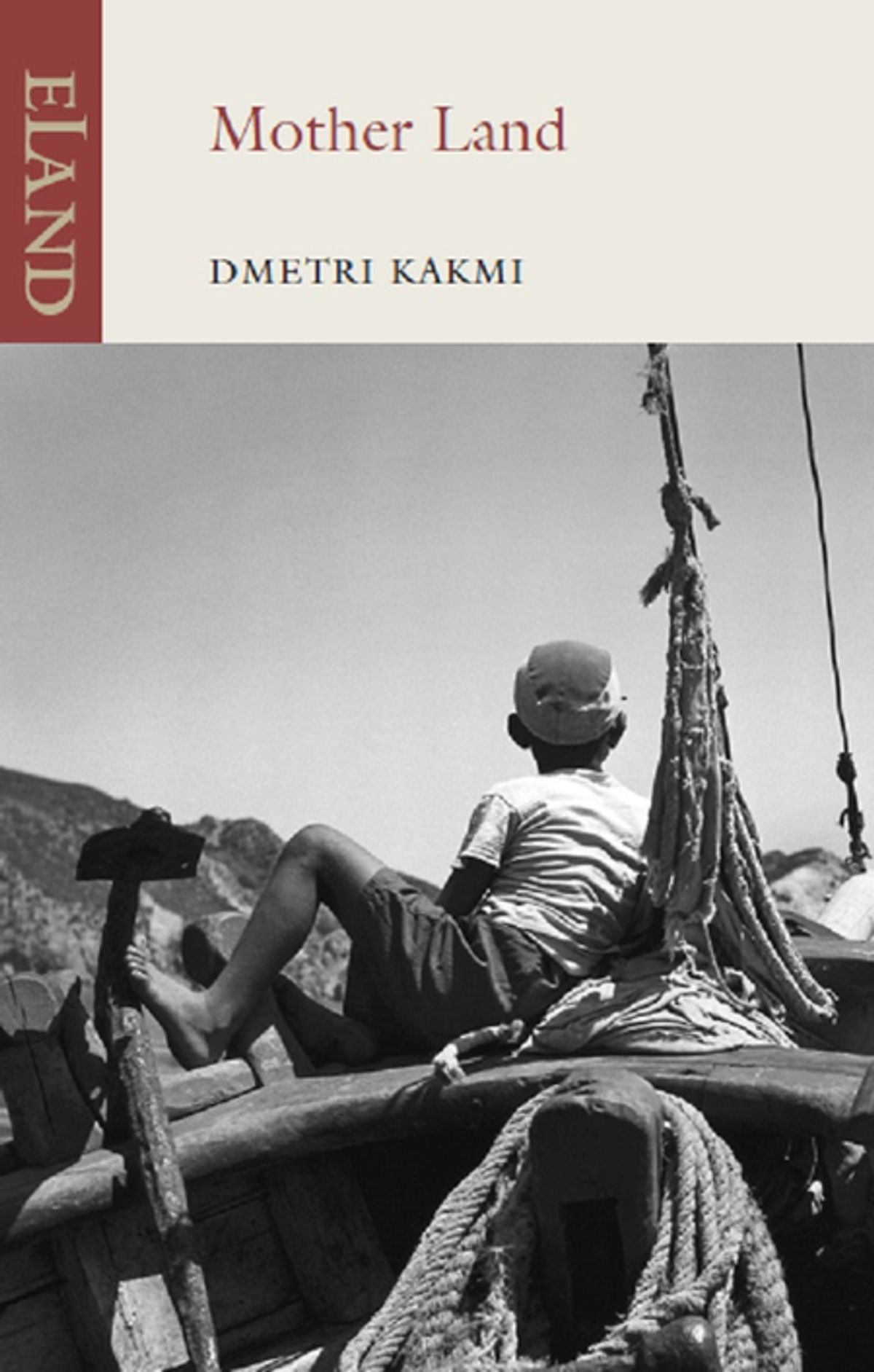
I finished Mother Land six months after reading The Sheltering Sky for the second time. The manuscriptwas accepted for publication. The book is a record of a way of life that is forever gone and an observance of a northern Aegean landscape that is timeless, indomitable. The lesson comes from Paul Bowles.
This lecture about memoir writing was delivered at the Melbourne Writers’ Festival in August 2016.
Dmetri Kakmi (Episodes 158, 440, and 671) is the author of The Woman in the Well, The Door and Other Uncanny Tales, Mother Land, and When We Were Young (as editor). His essays and short stories appear in anthologies. He is working on a crime novel called The Perfect Room.


Leave a Reply