
with Dmetri Kakmi
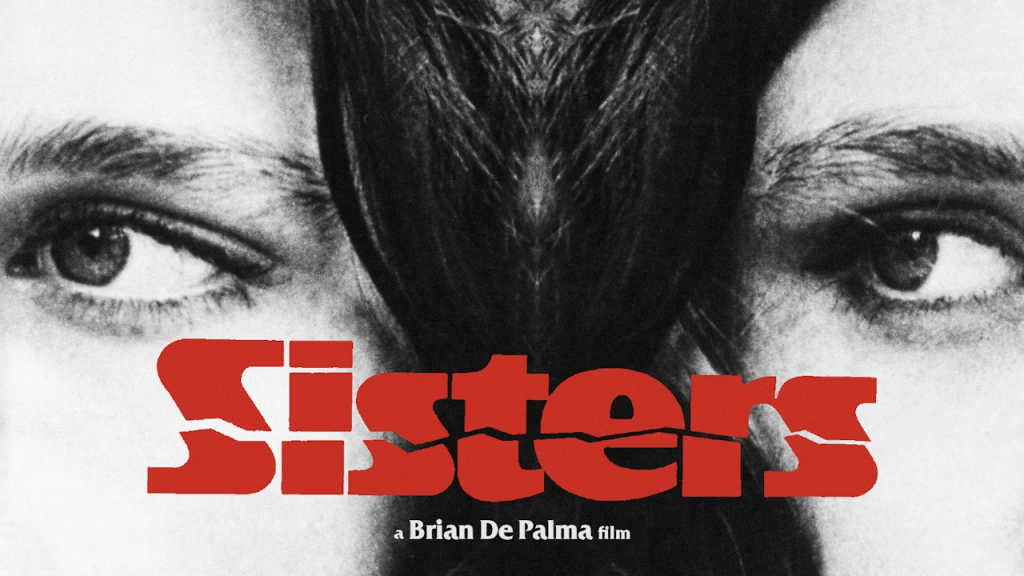
Sisters
USA 1972
Director: Brian De Palma
Cast: Margot Kidder, Lisle Wilson, Jennifer Salt, William Finney
Brian De Palma is my favourite American filmmaker. I have been kneeling at his blood-drenched altar ever since I saw Carrie (1976) at a local drive-in. My eternal adoration was solidified with Dressed to Kill (1980) and Blow Out (1981). The only other filmmakers that cause similar paroxysms of delight are Jean-Pierre Melville and Alfred Hitchcock. Let’s toss in Robert Bresson’s A Man Escaped (1956) for good measure.
What do these filmmakers have in common? Pure cinema. In a nutshell, that is a filmmaking style that emphasises visual storytelling over dialogue and plot, creating a visceral, sensory experience through editing, camera movement and lighting.
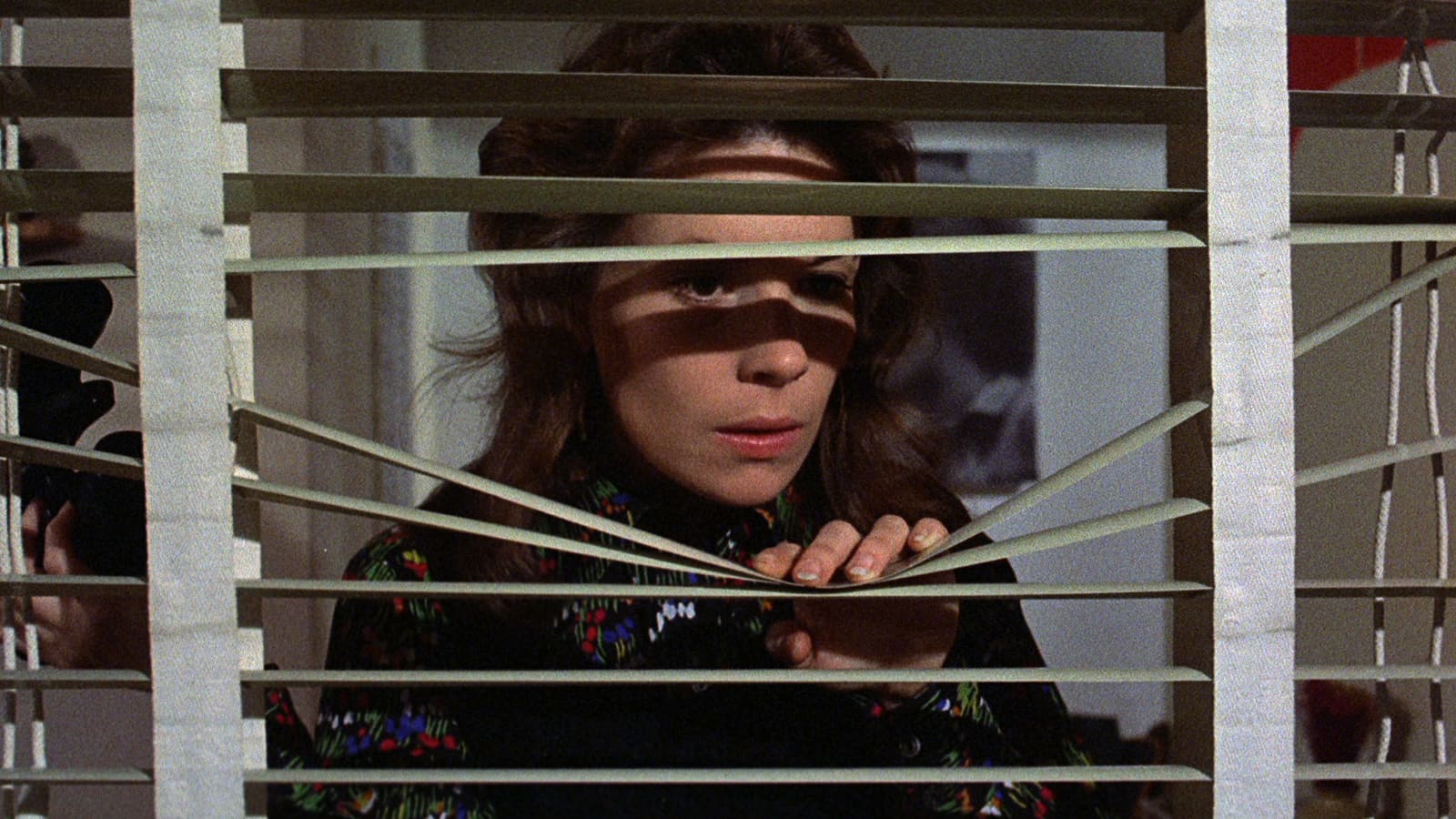
Let’s outline the distinctive De Palma touch as it applies to his ‘personal films’, and more specifically to Sisters. Implicating characters and audiences alike through the act of watching, the Peeping Tom and voyeurism; drawing attention to the artifice of filmmaking through the use of screens within screens, windows, surveillance, binoculars, eyes scanning, split screens, the destructive casual glance; obsessiveness, people seeing what they are not meant to see and, vitally, perhaps not seeing what they think they saw. From there on duplicity and unreliability take over. People and events may not be what they seem. The main character is suddenly murdered and disappears from the narrative, further destabilising the audience; doubles appear, split personality is suggested; there is a melding of consciousness, followed by a melting of reality. Waking life merges with dreams and nightmares, one collapsing without warning into the other, to the point where they are indistinguishable. Characters awaken while still asleep, in an altered state of being, or caught in a nightmarish, absurdist loop without end.
De Palma’s obsessive return over 60 years to these themes and motifs gave birth to a distinctive vision or universe—one that deals with the mind and the nature of reality and consciousness. I will go one step further and say that to dismiss De Palma as mere a ‘Hitchcock ripoff,’ as many critics have, is to lack originality and to profoundly misunderstand both Hitch and De Palma.
Put that in your hashish pipe and smoke it!
De Palma got the idea for Sisters from a Life magazine article about conjoined Siamese twins, an image he reproduces with Danielle and Dominique, both played by Margot Kidder, sitting in swim suits by a pool. A critical and financial success, Sisters was a breakthrough, the point at which De Palma brings together the stylistic flourishes and thematic obsessions that define his oeuvre.
Sisters is not a horror film in the conventional sense. It is more of a macabre tale about psychosis, freaks and outsiders, themes that surface in many De Palma films.
When writing about Night of the Living Dead (1968), I said some films exist for the ending. Sisters exists for a sequence that comes approximately 30 minutes into the 90 minute outing: the split-screen murder and subsequent clean up. Like the famous ‘museum sequence’ in Dressed to Kill, the two split-screen sequences constitute a film within a film, a bravura moment that solidifies De Palma as a stylist who knows how to execute memorable set pieces, brimming with shock, suspense, tension and grim humour.
It’s not worth describing the sequence here; seeing is believing, as they say. The other sequence to watch out for is Jennifer Salt’s gruesome nightmare about being conjoined with Margot Kidder and sharing the Breton twins’ hideous fate, all played out to Bernard Herrmann’s nerve-shredding music.
Sisters is the first of De Palma’s psychosexual thrillers. Otherwise known as his ‘red phase’ films. The previous six movies are chaotic experimental outings with a droll sense of humour and a political edge. They are not to my taste. Yet the flourishes for which he is celebrated are already present in his first feature, Murder a la Mod (1968); Dionysus in 69 (1969) is the first time he uses split screen. Sisters drew these elements together, making room for further refinements and elaborations over a long and highly diverse career.
It’s as if, throughout the 1960s, De Palma was searching for the genre that suited his sensibilities. The genre, it turned out, was the crime thriller. In this field he was able to put to good use his technical mastery of scene construction and become a master audience manipulator, calculated for optimum effect of playful, artful artifice.
De Palma does not depict a real world of cause and effect. His is an enclosed world of demented deceptions, chance encounters and absurd coincidences. Clever, cunning and endlessly self-regarding, he is a teller of tales more interested in a cinematic form that opens to teasing, playful possibilities, no matter how outlandish. If Sisters is the introduction, Femme Fatale (2002) must be the epilogue.
Dmetri Kakmi (Episodes 158, 440, and 671) is the author of The Woman in the Well, The Door and Other Uncanny Tales, Mother Land, and When We Were Young (as editor). His essays and short stories appear in anthologies. He is working on a crime novel called The Perfect Room.

 The Drunken Odyssey
Leave a comment