
with Dmetri Kakmi
Texas Chain Saw Massacre
US 1974
Director: Tobe Hooper
Cast: Marilyn Burns, Gunnar Hansen, Teri McMinn, Jim Siedow
If The Exorcist is the granddaddy of the modern horror movie then Texas Chain Saw Massacre must be the bastard inbred grandchild. Both films are legendary and have spawned sequels and remakes over the years. None come close to the visceral power and shock of the originals. They are imbedded in the collective imagination with the force of myth and legend to the point where the mere mention of the titles alone evokes terrifying images and expectations of bloody demise.
Released a year apart, they represent perennial oppositional concerns of horror. At base, The Exorcist is peril in urban space. Texas Chain Saw Massacre, on the other hand, is localised menace in a rural setting — the bucolic environment the city slicker goes to for rest and relaxation turns out to be an abattoir where relaxation quickly turns to anxiety and rest, when it comes, is final.
For censorship reasons, Texas Chain Saw Massacre wasn’t released in Australia until 1984. I was first in line. The element that shocked most on that first viewing was the complete disregard of the human. We are brought up to respect the dignity of the autonomous human figure. Man or woman is a free agent who, in a civilised context, is treated with respect, care and consideration. All that is turned on its head in the isolated farmhouse. For the sadists living there the unfortunate holidaymakers are little more than garbage, nothing but offal or a side of beef to be stabbed and pierced, before getting chopped up for dinner.
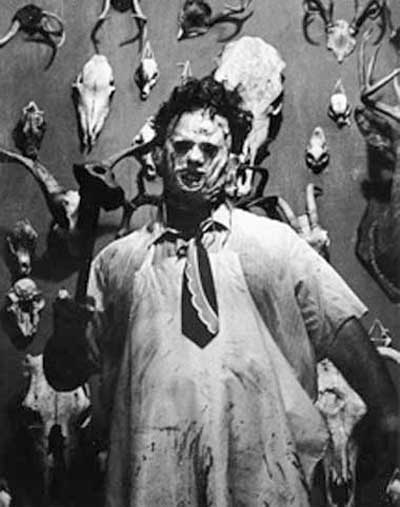
This is evident in Leatherface’s foremost appearance. The first victim, Kirk, enters the farmhouse, looking for gasoline. In the tried and true tradition of feckless horror movie casualties, he advances towards a red room from which emanate squeals of a distressed pig. ‘Hello, is anybody home?’ Kirk slips on the threshold. As he stumbles, a mammoth figure appears, bashes him on the head with a sledgehammer, drags him away; and, with the finality of doomsday, slams shut a sliding metal door.
That is perhaps the most gobsmacking introduction to an iconic monster in the history of the horror movie.
The remarkable thing about Leatherface’s preeminent foray is the brute force, the rage, the sheer finality of his actions. There is no recourse; no negotiation, no nothing. Just a cracked skull, pools of blood, spasms, and away you go to be turned to sirloin. I was horrified, numbed, by the speed, ferocity and callousness.
This wasn’t mere psychopathy. It was nature’s complete indifference to the human. For all our philosophies and civilisational trappings, Hooper is saying, we are no different to pigs, sheep and cows; animals to be swept away by catastrophe and forgotten. What’s more, this brute force will come in the shape of other people, and they won’t care a fig about the sanctity of your life or the fact that you have friends and family that love you.
Bleak and nihilistic, it was a vision from hell—or more rightly from the Vietnam war zone. It was a hard-to-swallow message for a 23 year-old. I was shaken to the core. No wonder I can’t abide any story about cannibalism. And I’ve not been able to see Texas Chain Saw Massacre a second time; all this is based on memory.
A pivotal component to the film’s overall effectiveness is sound design. From the beginning the senses are assaulted by dire radio news reports, ambient industrial noise, crashing cymbals, and a series of dissonant noises played against a background of what appears to be sun flares. The aim is to put the viewer on edge before the story begins. It doesn’t stop there. For the next eighty-three minutes, Hooper and co-composer Wayne Bell assault the ears with a range of raw on-location sounds—cicadas, metal scraping metal, squeals, crunching and crushing, bones clashing and that famous flashbulb sound, which apparently is a tuning fork scraping a piano string. This sonic soundscape forms the warp and weft of the film until sound and image feed into each other and become inseparably linked in the viewer’s mind to create extreme distress.
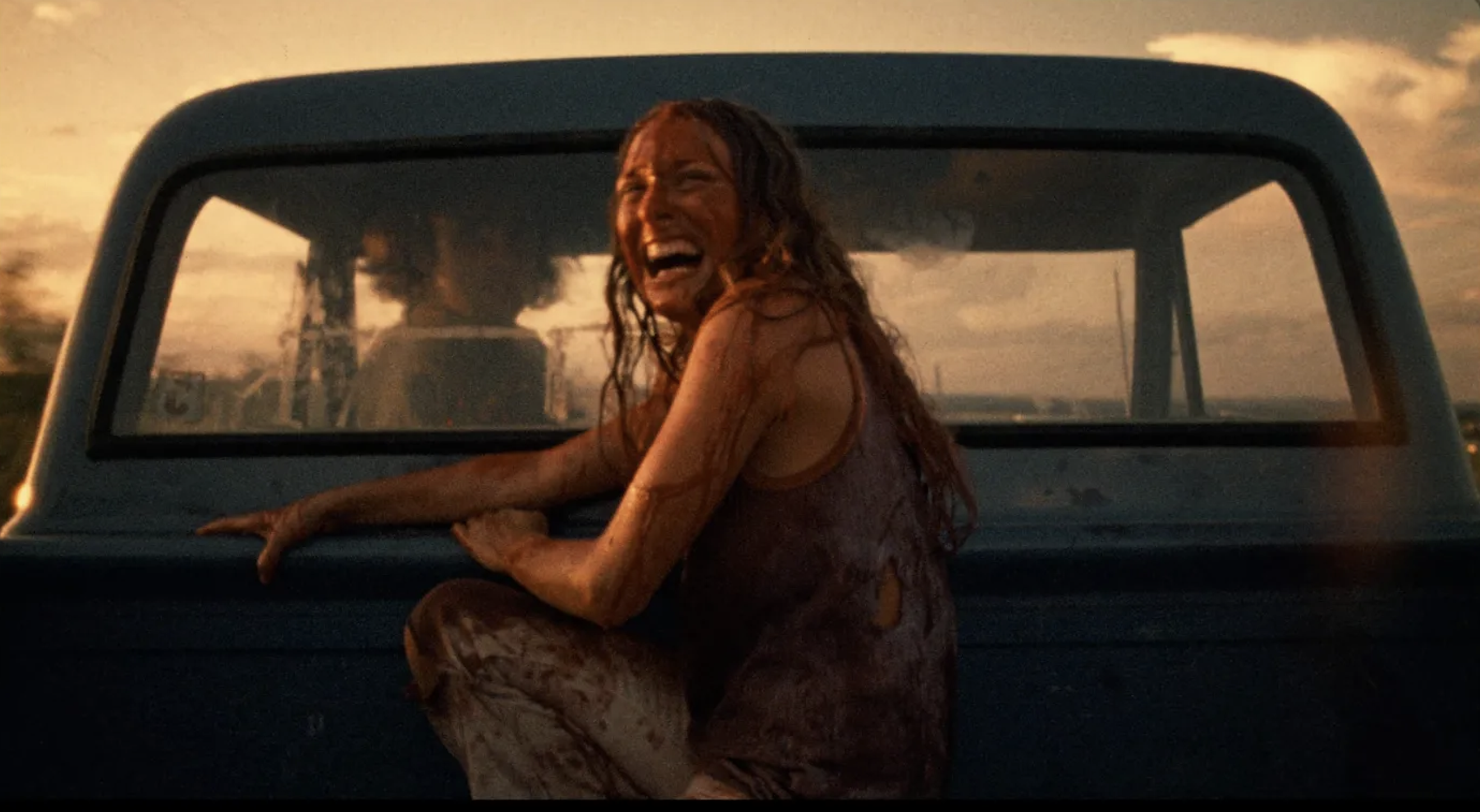
Texas Chain Saw Massacre survives because it is an archetype. Not of xenophobia, as is often claimed, but of something darker and more sinister. Every frame bespeaks of chaos, instability, and random death. You can run but you cannot escape. Even Sally Hardesty, the sole survivor from the first ordeal, finds that out when she is finally skewered in the not-bad 2022 Netflix sequel. In an instance of genius this dance macabre is perfectly encapsulated in the image of a bulky masked figure running down a highway with a roaring chainsaw. It’s a cinematic legacy of which Tobe Hooper must have been proud.
Dmetri Kakmi is nobody. Are you nobody too? Then there’s a pair of us. Don’t tell! They’d advertise you know. How dreary to be somebody. How public like a frog.
Dmetri Kakmi is the author of The Woman in the Well, The Door and Other Uncanny Tales and Mother Land. His essays and short stories appear in anthologies.


Leave a Reply