
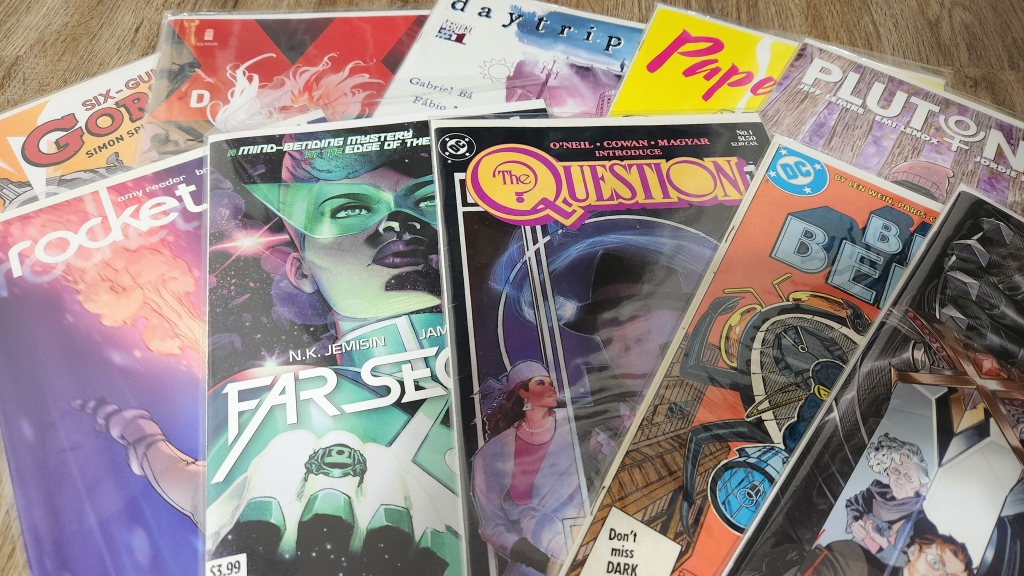
The Fourth World can’t end for me, can it? The more I read through the essays included in each of the Fourth World omnibuses, the more I discover about the series that keeps me coming back to write about it. The continual depth and prescience that we see over each issue of Kirby’s initial run and his final stories highlights not only how much thought and care was put into his grand mythology, but the breadth of Kirby’s own knowledge on the human condition. It’s why I keep coming back to much of the themes and ideas present in The Hunger Dogs missing from my initial look.
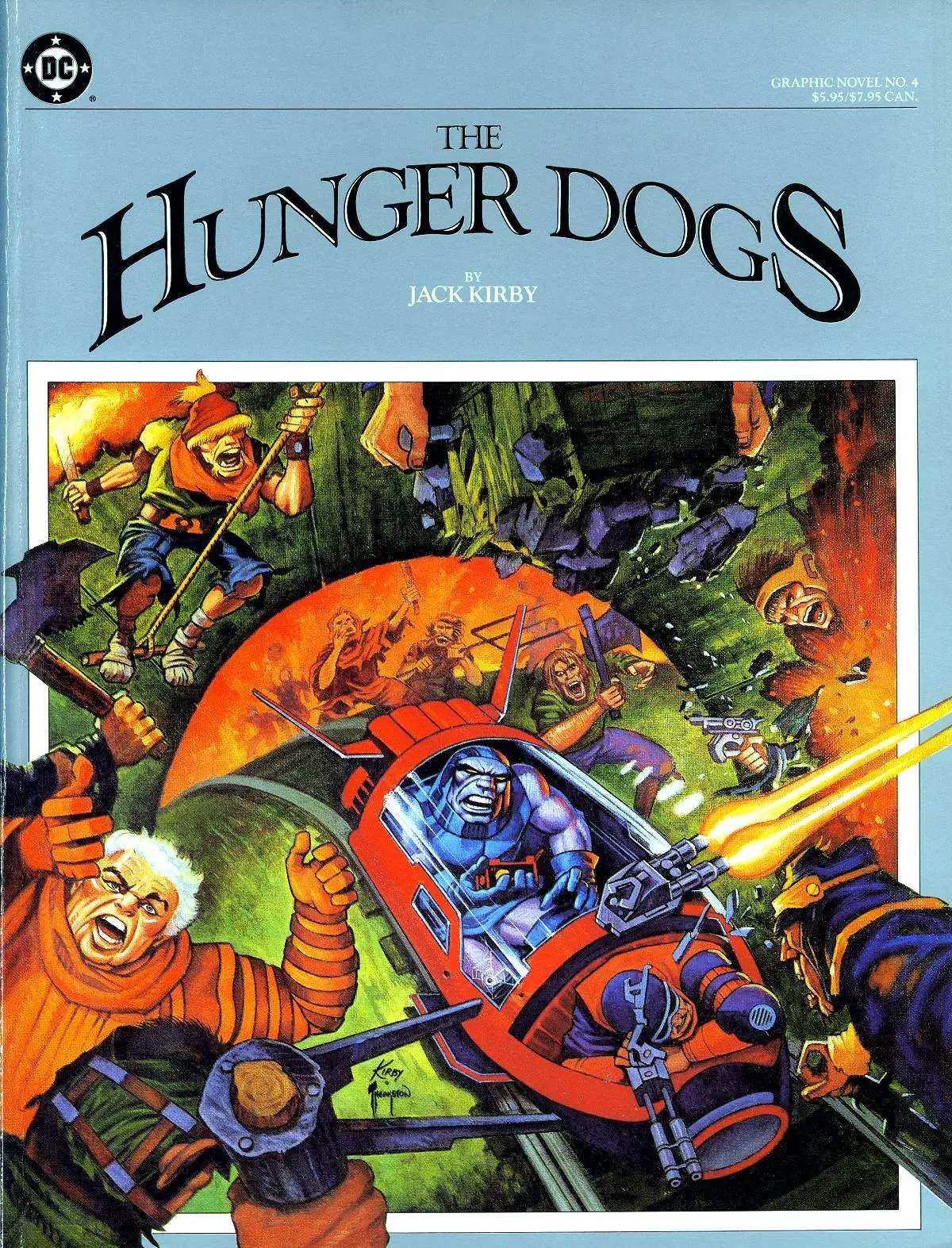
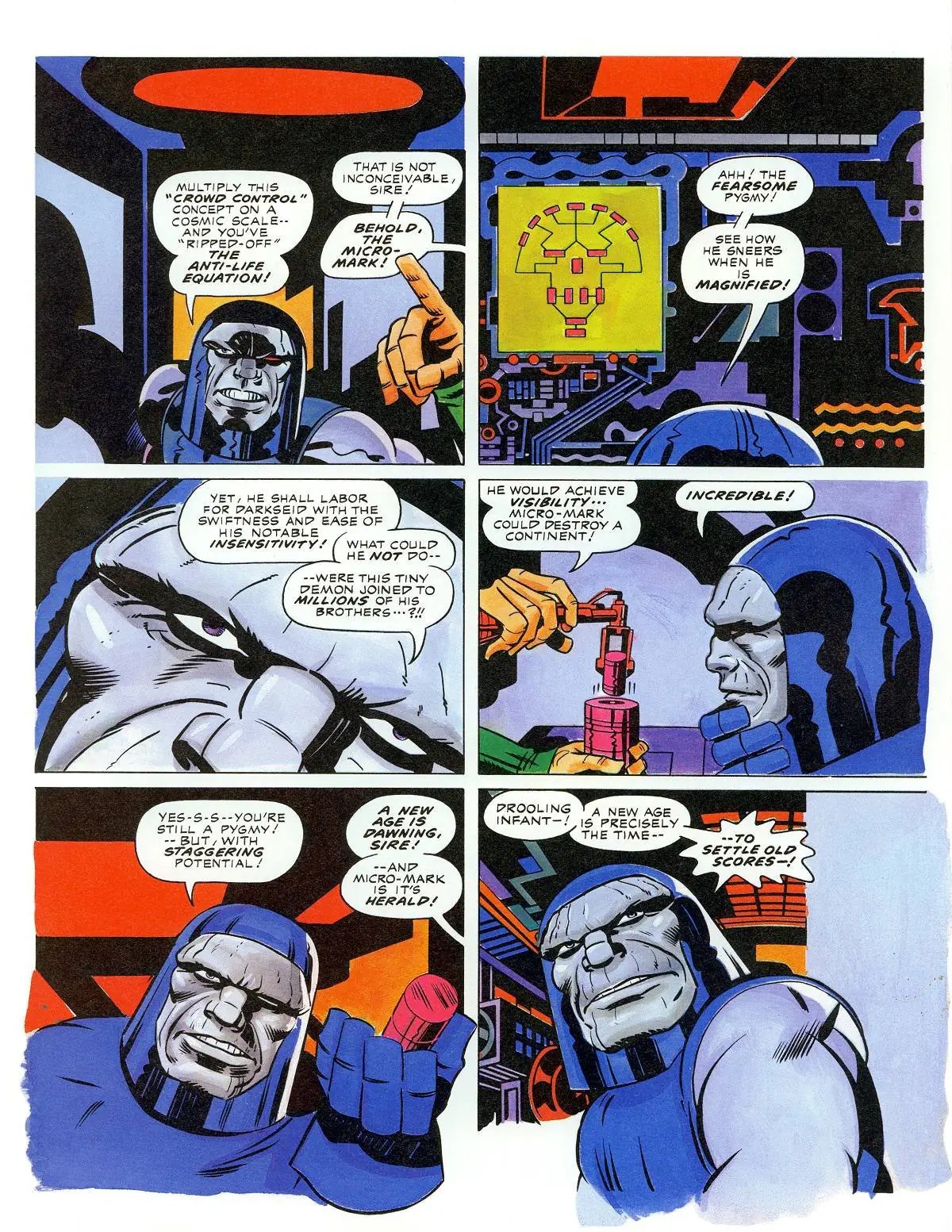
I had previously written about many of the triumphs of good that happened in those final Fourth World stories across The Hunger Dogs and its two lead-in short stories. But what about Apokolips? What had happened on the planet to so change the tides of what was possible for Orion and Highfather to accomplish? Well, more than we’d think. One of the major changes was the introduction of the Micro-Mark age in Apokolips, developed by some of Darkseid’s newest sadistic minds. Another was the lessening of para-demons and troops on the ground in many of the slums of Apokolips, replaced instead by automated machines that scan and kidnap in the night dissidents. With all of the resources of Apokolips being poured into the development of the Micro-Mark and much of its citizens being watched over by machines, many of those in the slums found ways to revolt, loosening of fear that Darkseid had used to subjugate them.
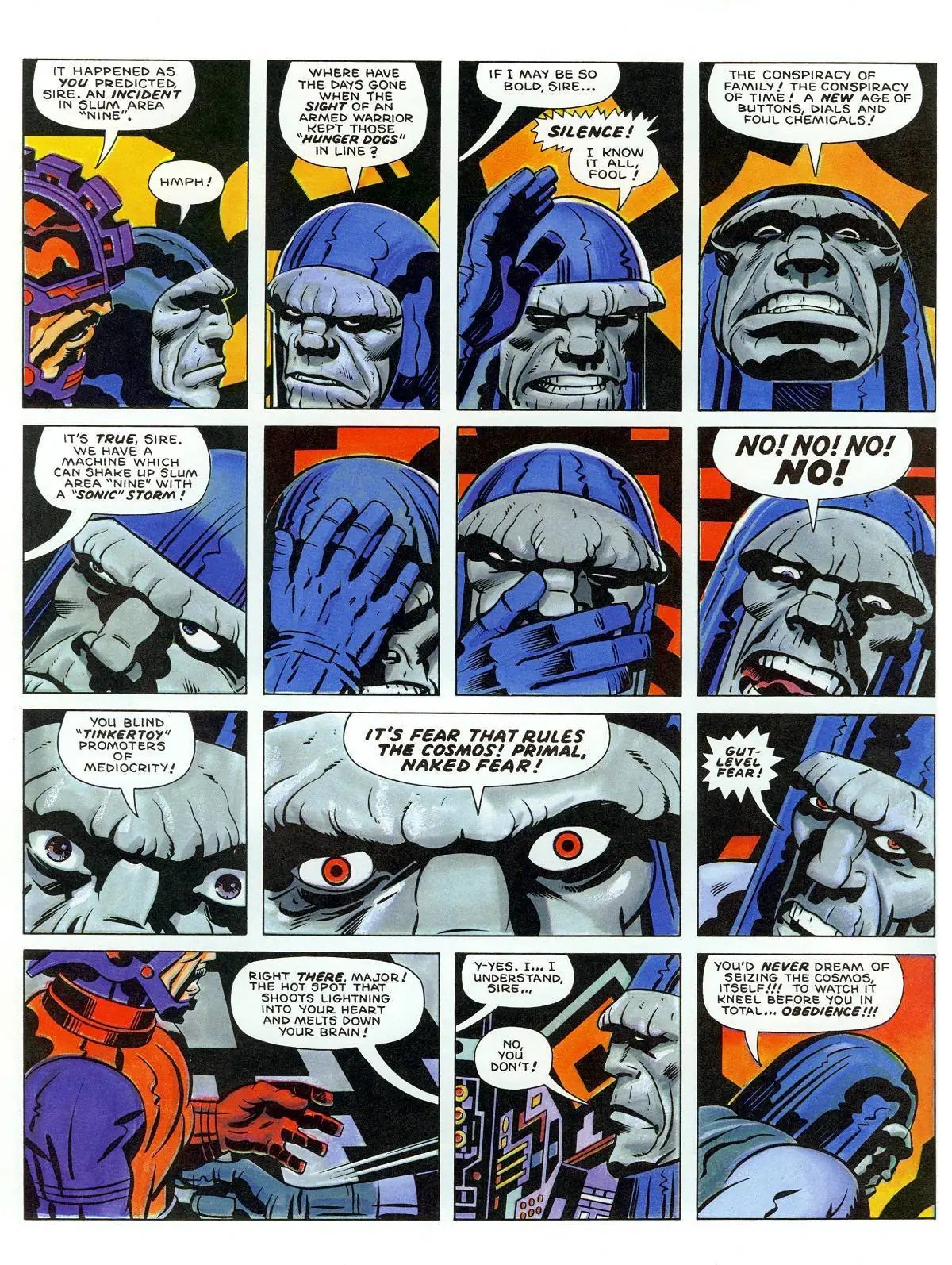
Somehow, the revelations of Kirby have returned to mirror us once again. I’ve written before about how Kirby’s Glorious Godfrey and his Justifiers were judicious analogs for the power given by demagogues, but The Hunger Dogs goes further. Imagine a world where a governing body is dumping all of its resources into a wildly unpredictable and unpopular boondoggle that will ultimately lead to its destruction while machines monitor our every move.When Kirby was writing this story, we’d say he was writing about Regan’s Star Wars and Project SHAMROCK. Now, we’re looking more to incessant AI, LLMs, and further surveillance programs. It’s that reflection from a different era, the way in which Kirby could focus on those anxieties in a way that feels continually relevant. He couldn’t have known how things would end up over forty years after The Hunger Dogs was published, but he could see the curve of history from his drafting table.
Kirby’s aim was mythology, and the Fourth World is why we keep coming back to myths. We see endlessly the ways in which grand stories are able to show so much of the human condition—from our personal failings to the failings of the world around us to every kind of triumph we can experience. He had a vision for something grand, and even if he wasn’t able to end it in the way he originally wanted to, he still was able to give us a story that would leave the door open.
Get excited. Get relevant.
Drew Barth (Episode 331, 485, 510, 651, & 674) resides in Winter Park, FL. He received his MFA from the University of Central Florida.


Leave a Reply