
And somehow we’ve reached the end.
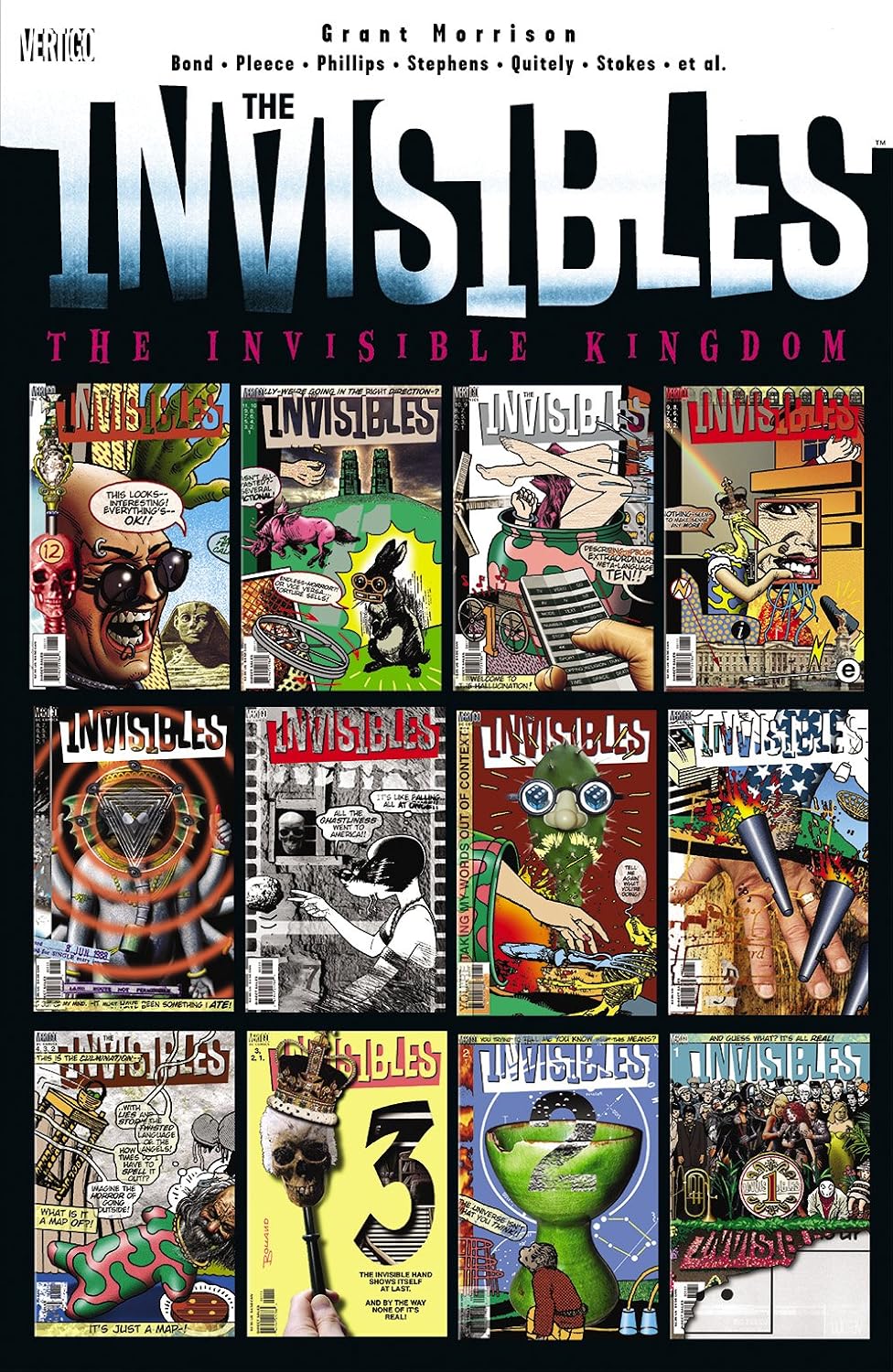
Although, when it comes to something like The Invisibles and Morrison’s penchant for a meta-narrative twist that implies the story continues on into the future, we may never actually reach the end. But for what we as people existing in a relatively stable plain of existence can experience, this is the final volume of Grant Morrison, Philip Bond, Warren Pleece, Sean Phillips, Steve Yeowell, Ashley Wood, Steve Parkhouse, Jill Thompson, John Ridgway, Rian Hughes, Michael Lark, Chris Weston, The Pander Brothers, Cameron Stewart, Mark Buckingham, Dean Ormston, Frank Quitely, John Stokes, Daniel Vozzo, and Todd Klein’s Invisible Kingdom.
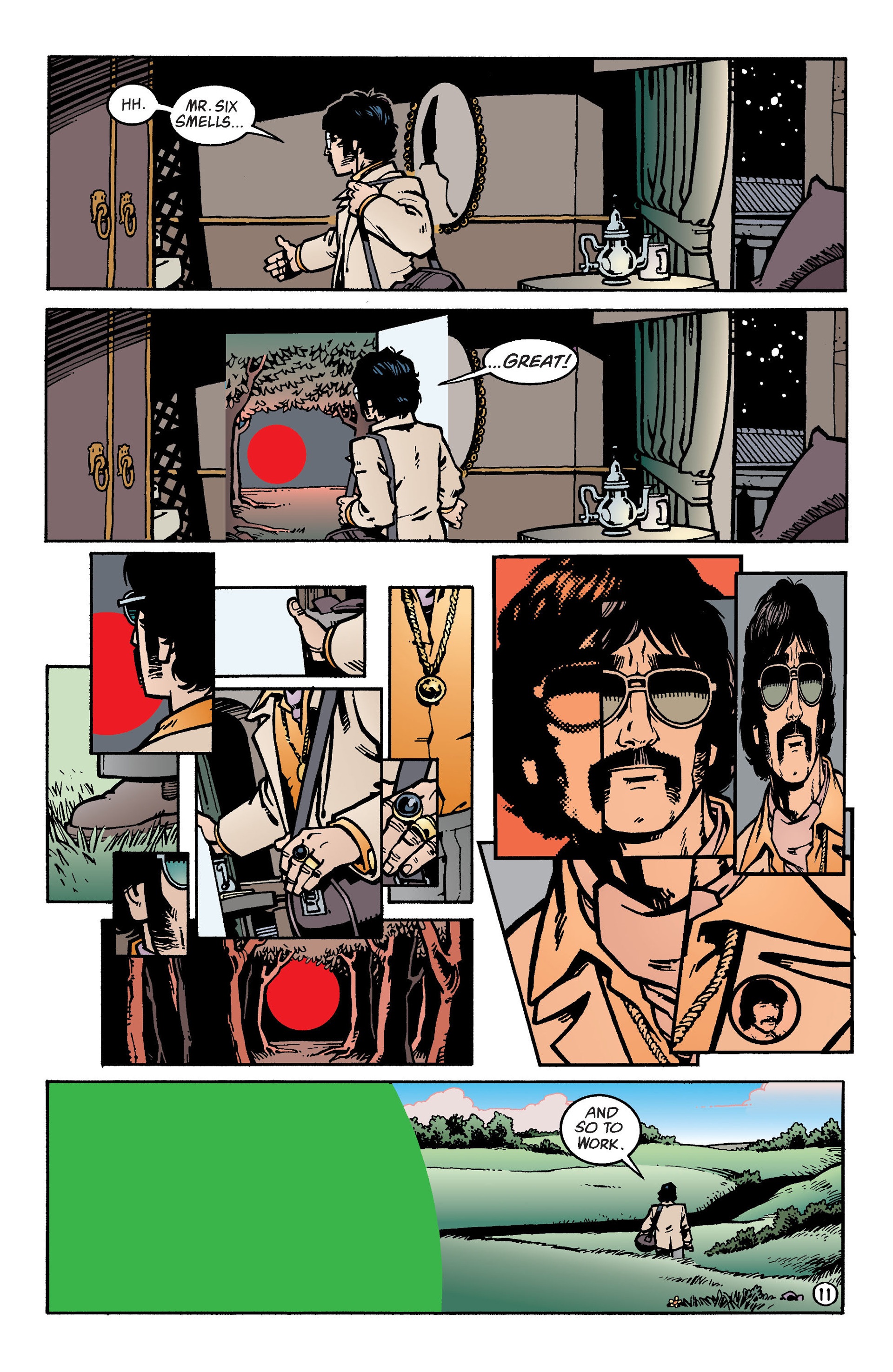
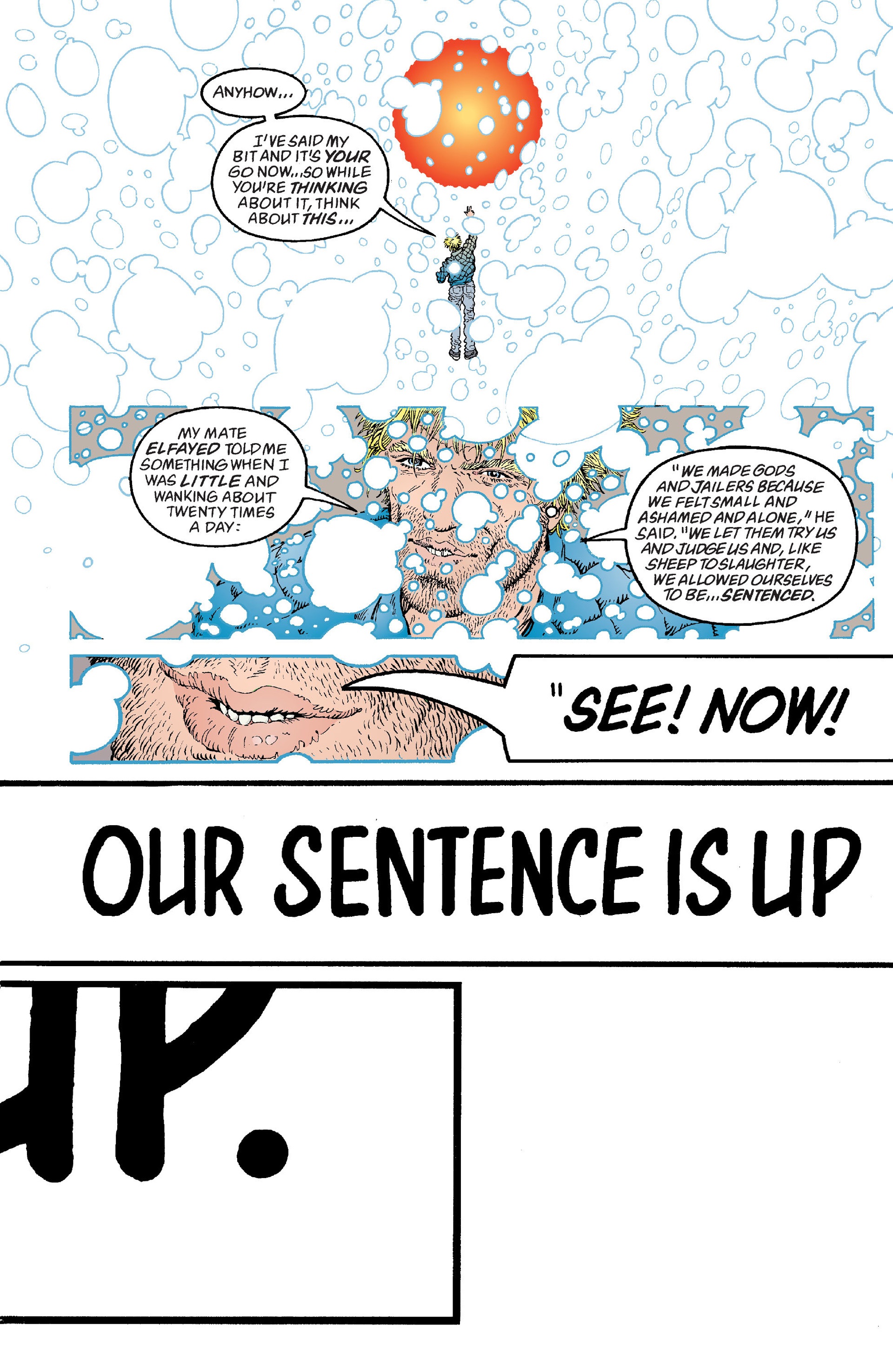
With the end of the series comes the return of nearly everything else we’ve seen to this point: King Mob going back to his gun-less self, Jack Frost maybe becoming the new messiah of the super-contextualized world, Ragged Robin coming full-circle with her time travel, Sir Miles’s plan to coronate the king-archons and lead humanity into the darkness as part of the second dimensional machine. Basically, everything we’ve been working toward since the series began—almost like Morrison was able to plan the whole thing from the start. But the plan does finally come together and we see how this Invisible cell was able to avert the apocalypse just as the new millennium was about to begin and just how Dane McGowan was able to help the world cross over into its final state in 2012 using some fourth-wall breaking magic.
In this final volume, we see the kernel of what would become a hallmark of much of Morrison’s writing into the 2000s, namely the meta-textual fourth-wall-breaking nature of his characters (although they dabbled with that in Animal Man previously) and the condensing of time. That latter aspect is the most fascinating as we see evidence of it all over their work on DC’s various Batman titles Morrison would orchestrate later. Here, though, time skips, jumps, condenses, flashes back and forward, and splinters to show just how fractured this timeline has become. Using an object like the Hand of Glory helps the fractured time distortions make more sense in the context of the story while mirroring the character’s own mental states and the physical state of the comic itself—the panels create their own kind of time travel due to how we as an audience read them. All of these time-based experiments show just how Morrison began thinking more with the medium outside of the page.
It can’t be overstated what The Invisibles did to comics over six years and fifty-nine issues. It showed the kind of work that could be accepted by a mainstream publisher just as the grimdark extreme excesses of the 90s were killing the industry. It provided a mirror to those same excesses and the banal nature of the violence perpetuated by its characters. And, more than anything, The Invisibles showed a more chaotic side of magic that wasn’t common in many circles yet and actively brushed up against some more traditional magic in comics at the same time.
Get excited. Get up.
Drew Barth (Episode 331, 485, 510, 651, & 674) resides in Winter Park, FL. He received his MFA from the University of Central Florida.


Leave a Reply