
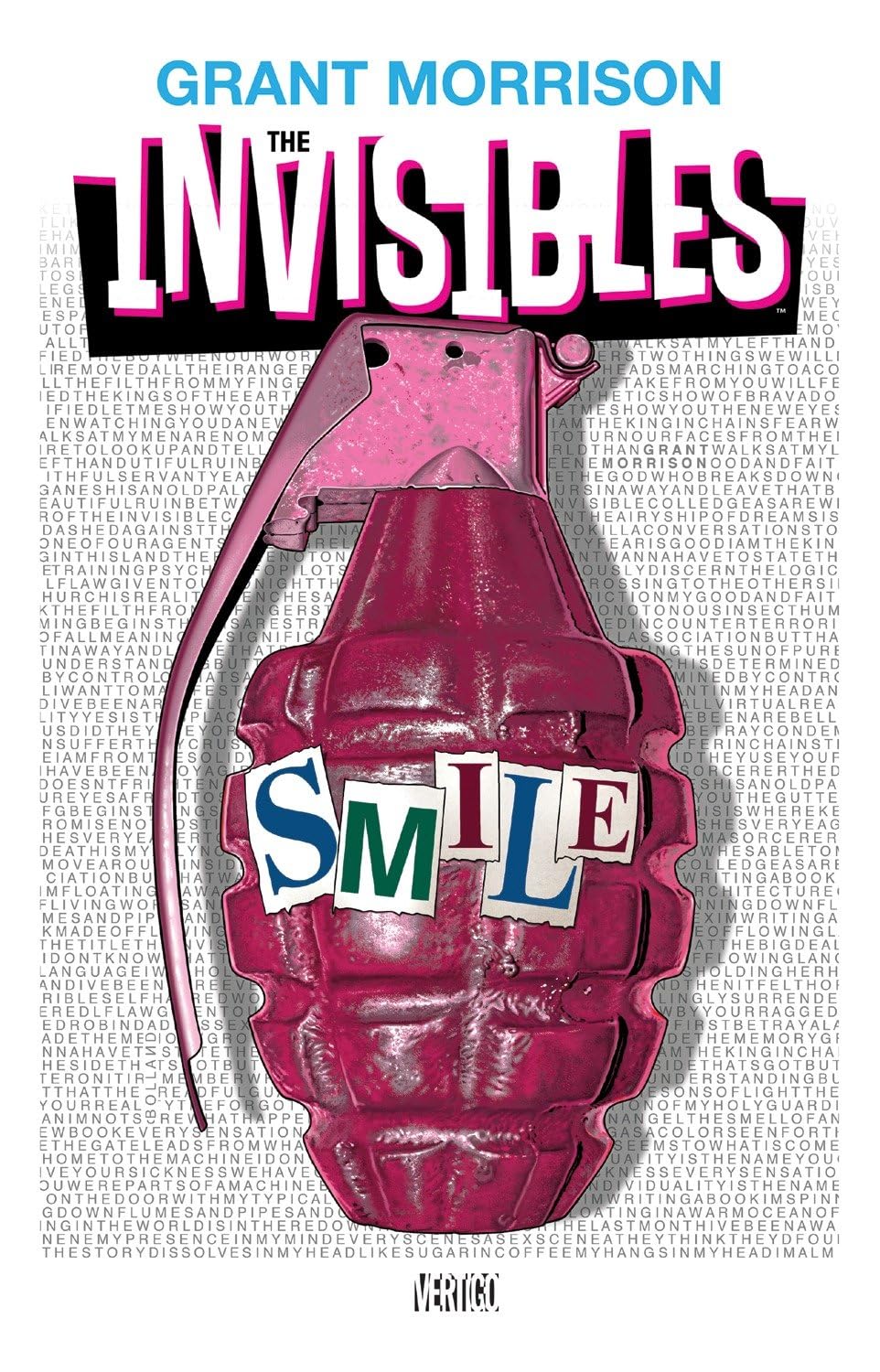
If you haven’t been noticing a trend over the past few months, I’ve been writing about two series: Promethea and The Invisibles. The former was due to coming into a collection of the entire series s a result of some patient used book store-diving and the former because of what happened as I was reading through Promethea. The usage of magic, symoblogy, and its focus on the world coming into the new millennium brought to mind that final volume of The Invisibles in which the issues literally count down twelve to one. And so, after both have been read and digested, why not look at the warring magic in the pages of Alan Moore’s Promethea and Grant Morrison’s The Invisibles?
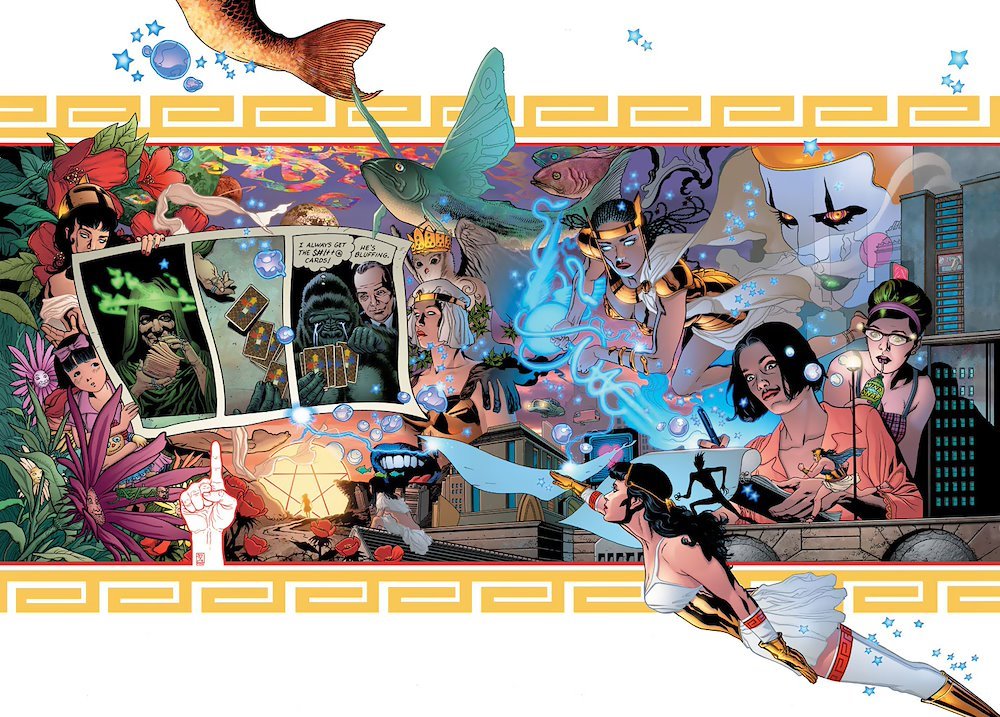
As I read through both series, I could see the ways in which Moore and Morrison approached the idea of magic when it came to comics. At this time, Morrison was fully in their comic-writer-as-rock-star-phase and took that maximalist approach to writing The Invisibles as well as their work for DC and Marvel—the former of which they were trying to turn into a sapient being. Moore, by contrast, had worked with his own imprint at DC, America’s Best Comics, and was turning his attention to writing his stories toward the younger and working-class audiences he had initially viewed comics as for when he began writing in the medium. By odd contrast, though, The Invisibles is much more formalist in its approach to comics: standard panels, revolving door of artists and collaborators, definable story arcs. Despite the image of someone rebelling, Morrison’s work always fit into neat panels. Moore, by contrast, and with the aid of J.H. Williams III’s impeccable line work throughout Promethea, broke free from convention in many issues with some foregoing panels entirely.
More than anything, we see in each series the difference between structure and chaos. This is all the more appropriate when considering Moore’s practice with the traditional occult of Bennett and Crowley while Morrison has been known to practice chaos magick. With Moore’s approach to magic in Promethea, we saw the more traditional symbols—tarot cards, zodiac signs, and the alchemy that formed the basis for much of the modern occult. By another contrast, Morrison would utilize the chaos magick approach to much of the magic used throughout The Invisibles—a symbol would gain power as it is needed. The belief in the magic needed in the moment would mean less structure to play with how magic worked, but more freedom to choose how it would behave for the story itself.
There have been writings about the dueling magicians that dominated comics, but it’s the stories they told and the ways in which they presented that magic to their audiences that would define how we would appreciate the work. The work wasn’t simply the magic of storytelling, but how magic could interact with the visual medium of comics—how ideas themselves could become a part of ritualistic magic. And when considering that kind of magic, sometimes it behooves us to look at the Source.
Get excited. Get crackling.
Drew Barth (Episode 331, 485, 510, 651, & 674) resides in Winter Park, FL. He received his MFA from the University of Central Florida.


Leave a comment