
Dmetri Kakmi
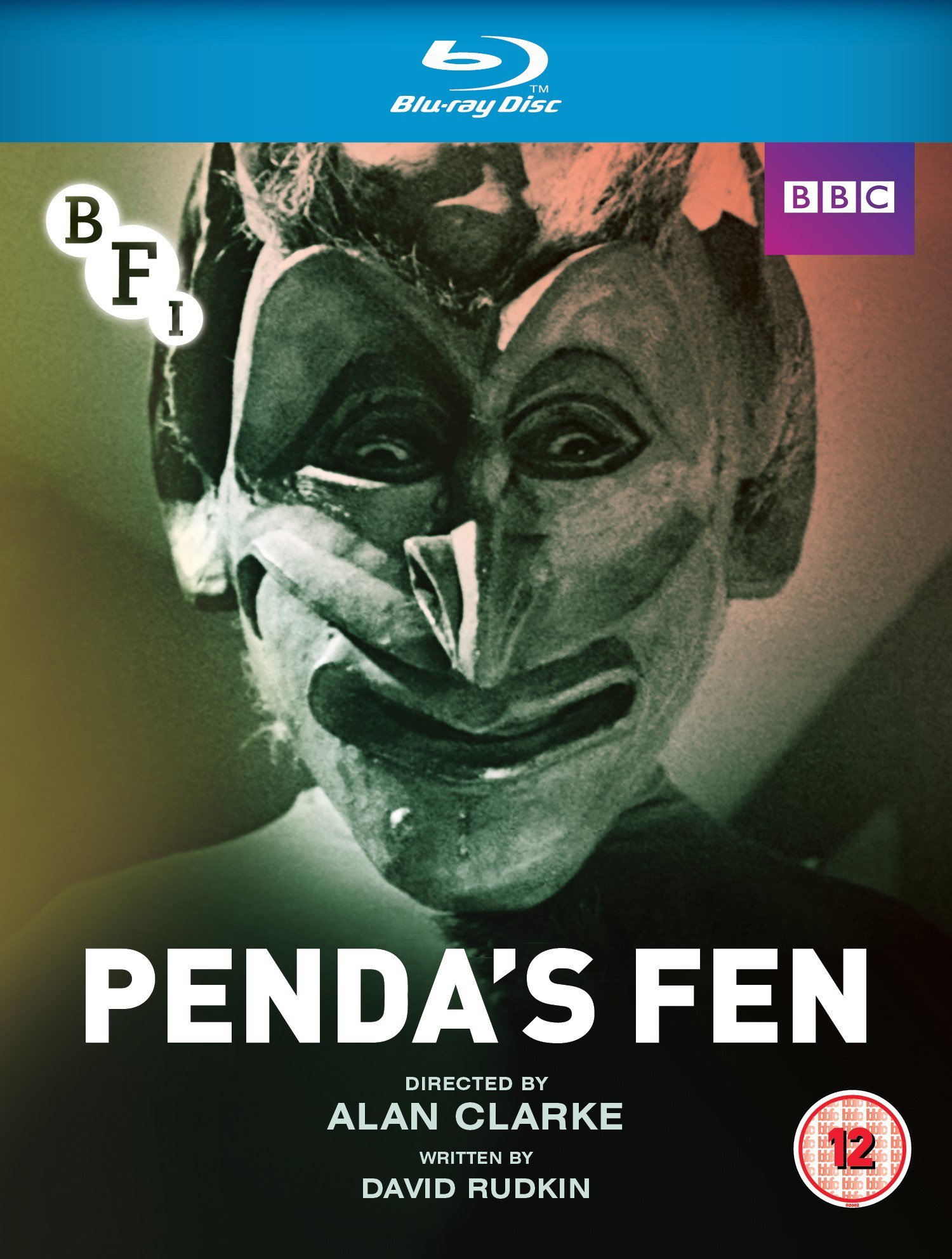
Penda’s Fen
UK 1974
Director: Alan Clarke
Cast: Spencer Banks, John Atkinson, Georgine Anderson, Ron Smerczak, Hobgoblin and Angel
I bet few have heard of this English oddity. Strictly speaking, it is not horror. Yet it combines elements of fantasy, folk horror, time slip, mysticism, folklore, gay coming-of-age story and wraps it all up in shifting notions of masculinity, sexuality and Englishness.
Sounds like it could have been made yesterday, doesn’t it?
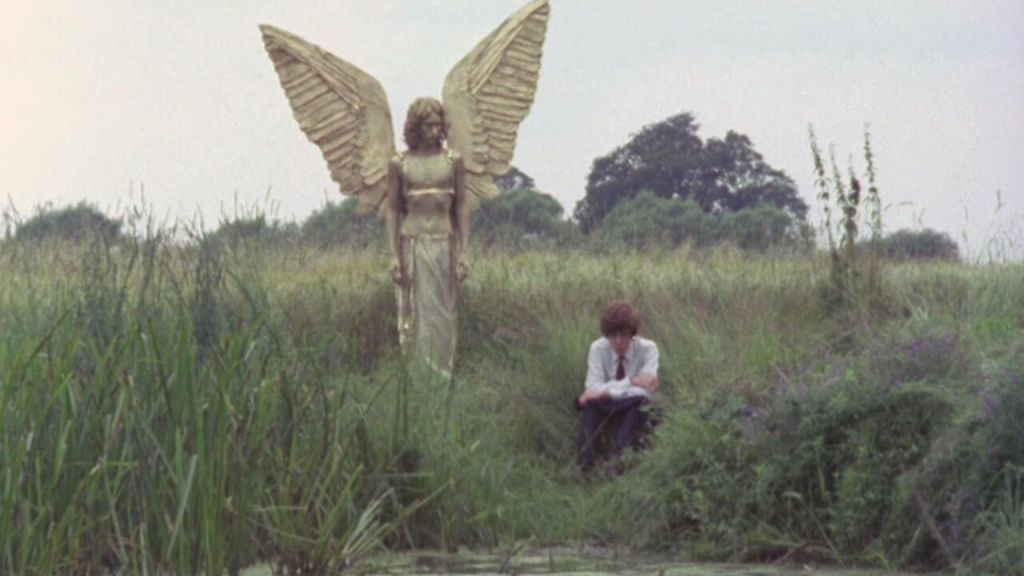
Floppy haired Stephen is the 17-year-old priggish son of a vicar. He has conservative views on just about everything, especially what it means to be English and what it is to be a man. He definitely stands outside the circle of his boisterous school mates, one of whom he secretly admires. He is so uptight he makes his vicar father, excellently played in rotund tones by John Atkinson, seem positively progressive. After Stephen discovers he is adopted, he has a series of encounters with England’s last pagan king Penda, an angel, a hobgoblin, Elgar’s ghost, and a homoerotic wet dream that must have raised eyebrows in its day. Along the way, the veil drops from his eyes and he begins to loosen up.
At one stage Stephen is admonished to ‘be strange, dark, true, impure and dissonant.’ He takes it very much to heart, leading to a passionate assault on conservative myths about self and nationhood. At a critical point, he even cries out: ‘I am nothing pure! My race is mixed. My sex is mixed. I am woman and man, light with darkness, nothing pure! I am mud and flame!’
If that doesn’t constitute the queerest of queer pronouncements I don’t know what does. But Stephen’s queerness is not a posture. It is about personal and by extension pan-global transformation, which reflects 1970s radical politics; horizons are thrown wide open because meaningful change relies on a humanist apprehension of past and present, history, art, mystery, aesthetics and the numinous.
Homosexuality here is a metaphor. In line with the times, it stands for bodily and perceptual liberation; a breaking out of straightjackets into universal heterodoxy. Keeping in mind that this is long before mainstream gay cinema existed, screening it on prime time British television must have represented a significant breakthrough.
In the U.K. only Victim in 1968 presented homosexuals in a human light. Stephen’s homosexuality is simultaneously incidental and vital to the plot; this is not a film for special pleading or sexual exploration. Rather the focus is on unconventional personal growth. I ignore the fact that communism is posited as a viable alternative to England’s future—an odious thought after the horrors of Stalin, Mao Zedong, Kim Jong-il and Fidel Castro.
Given director Alan Clarke said he did not understand what the story was about (his mainstay was social realism), it’s fair to say script writer David Rudkin was working from from the gut. You need strong writer’s instincts for the rhythms and pace of storytelling to trust the process and compose this wild, anarchic ride and come out triumphant. In the process you end up with a narrative that flows seamlessly back and forth between the real and the irreal to create a fable that speaks to viewers more than fifty years after it was made.
After the first television screening one critic said, ‘Make no mistake. We had a major work of television last night. Rudkin gave us something that had beauty, imagination and depth.’
It’s the journey that matters, rather than the destination. Though that too is worth the wait. Penda’s Fenculminates in a scene that conflates anarchy, absurdism and paganism to raise the newly liberated gay boy high atop his eyrie, surveying endless possibilities of a newly uncovered realm.
Dmetri Kakmi is the author of The Woman in the Well, The Door and Other Uncanny Tales and Mother Land. His essays and short stories appear in anthologies.


Leave a Reply