
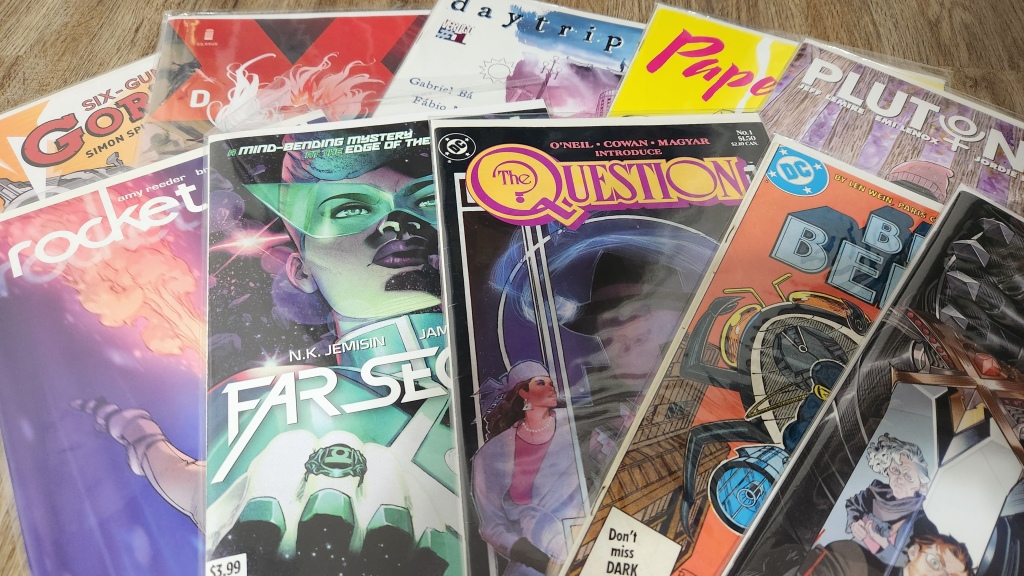
There are rather large gaps in my comics knowledge. I only have so much time and there’s always new issues to read, stories to digest, and discoveries to make when plunging into my endless back-logged pile. But there’s other series that I had just missed completely. The global backlog that doesn’t confront me on my shelf daily is more vast than anything I could keep in my home. But then that’s why I need to go back to discover classics like the first book of Alan Moore, J.H. Williams III, Mick Gray, Todd Klein, Jeromy Cox, Alex Sinclair, and Nick Bell’s Promethea.
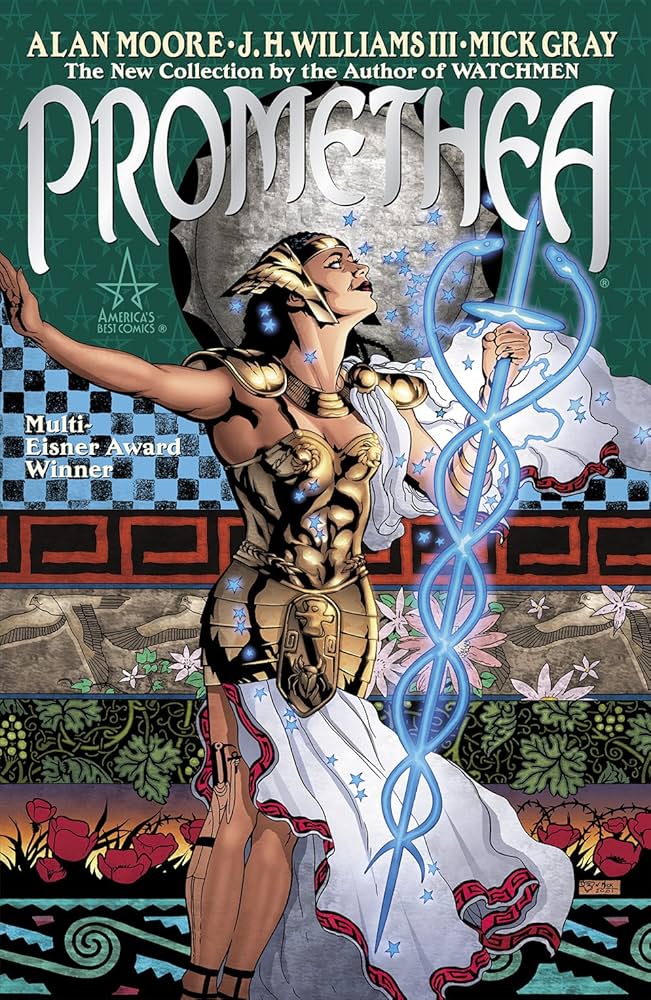
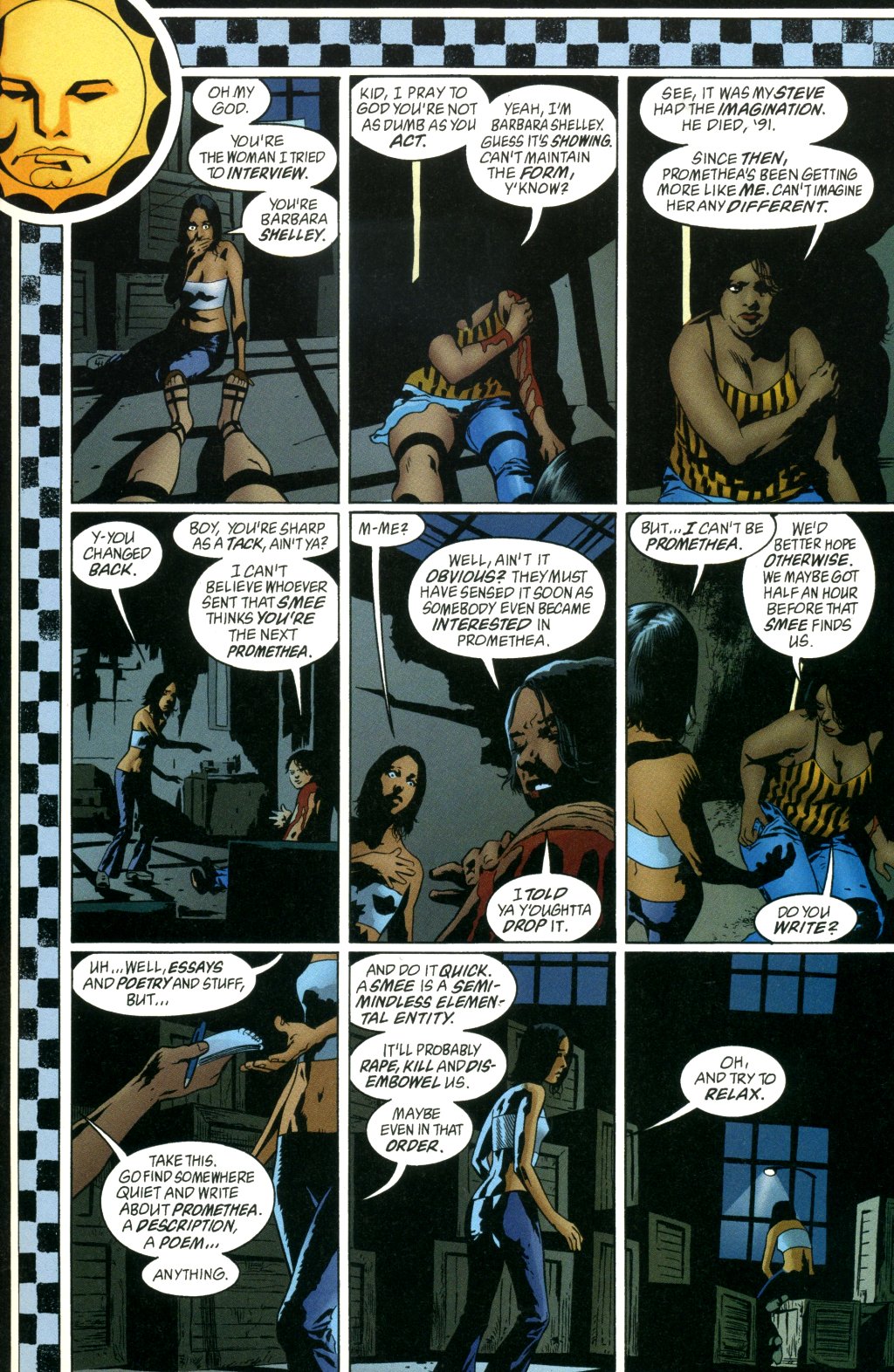
There’s an idea that’s existed in fiction for hundreds of years. A handmaiden to the Faerie Queen, a fairy princess, a fantasy warrior, and a science hero all share the name Promethea despite her creators having no idea the other one existed. But what was a kind of coincidence to those who know how to look, namely Sophie Bangs and her studies of the phenomena, was more than that. These were manifestations of a long line of power dating to 411 AD, with each character becoming an incarnation of the person who either created or was the subject of her creation. And this is where Sophie Bangs and her studies come in as, with her diving into the idea of Promethea repeating over so many stories, darker forces converge to quell her before she can take the mantle herself.
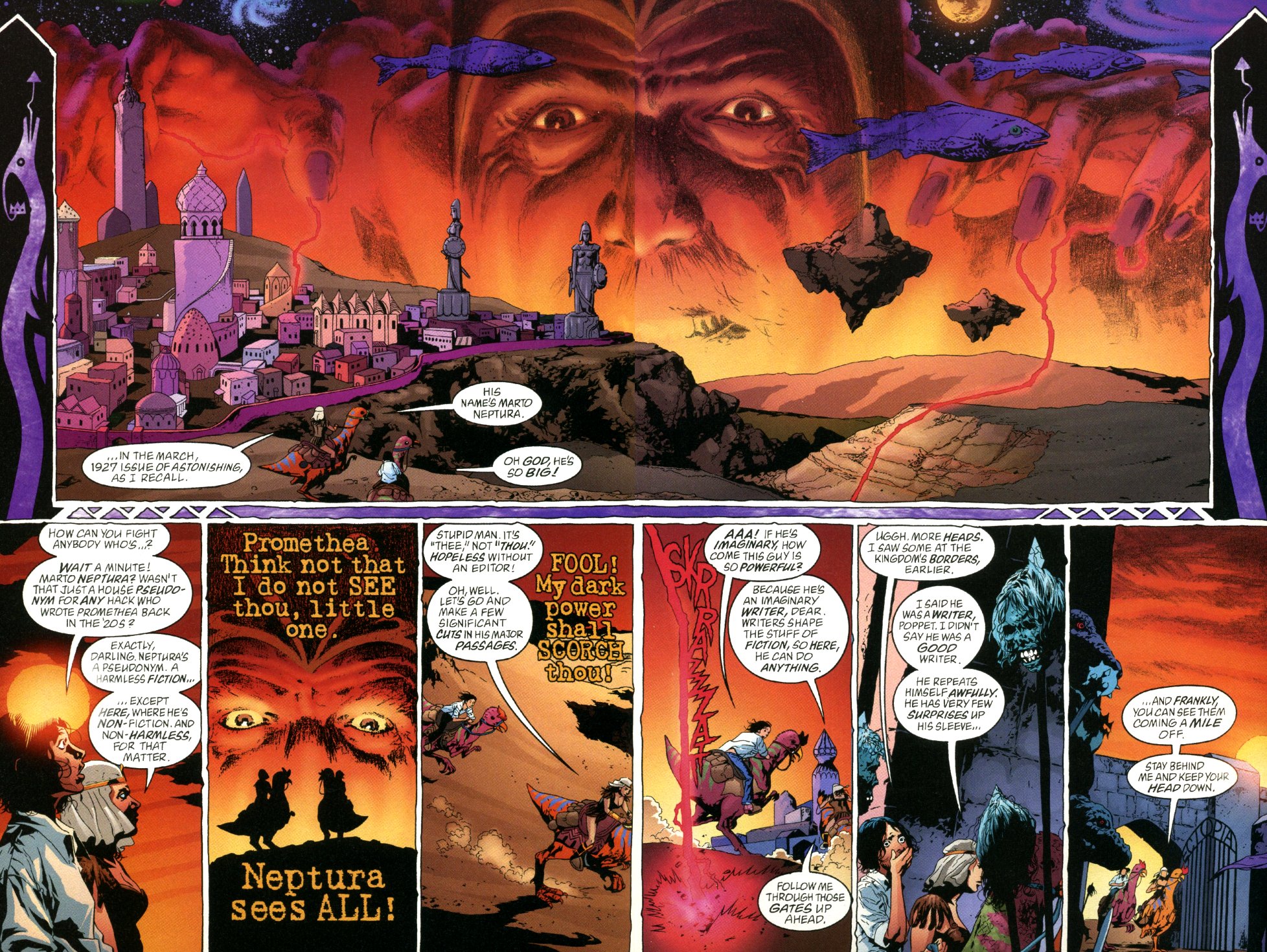
What begins this first volume of Promethea is an essay by Moore that outlines the history of the character, from a mention in a long-forgotten poem to a side character in a comic strip to a series of pulp and comic heroes. The essay itself is well researched and outlines the history of this character appearing in so many different spaces across different mediums and decades. It is also a complete fabrication. At no point is this fiction ever announced due to our familiarity with Moore himself and our collective history trusting the research he would conduct. But the history he presents us was never real and we would only discover that should we try to research A Faerie Romance by Charlton Sennet or Margaret Taylor Case’s Little Margie in Misty Magic Land. These pieces only add to the idea of this fictitious world Promethea as a character inhabits and Promethea the story looks to tell. The fiction of the story exists in the way all fiction does, but it tries to pull the world we know further into it to make it all the more real.
How I had spent so much of my comic reading life without having Promethea in it feels like a failure of my own research. Considering I was fully taken into Moore’s own fake essay, maybe my research isn’t the best. Even still, it’s hard to look at this first volume of Promethea and the directions it takes us without wanting to fully immerse ourselves in the world its building.
Get excited. Get maybe real.
Drew Barth (Episode 331, 485, 510, 651, & 674) resides in Winter Park, FL. He received his MFA from the University of Central Florida.


Leave a Reply