
with Dmetri Kakmi
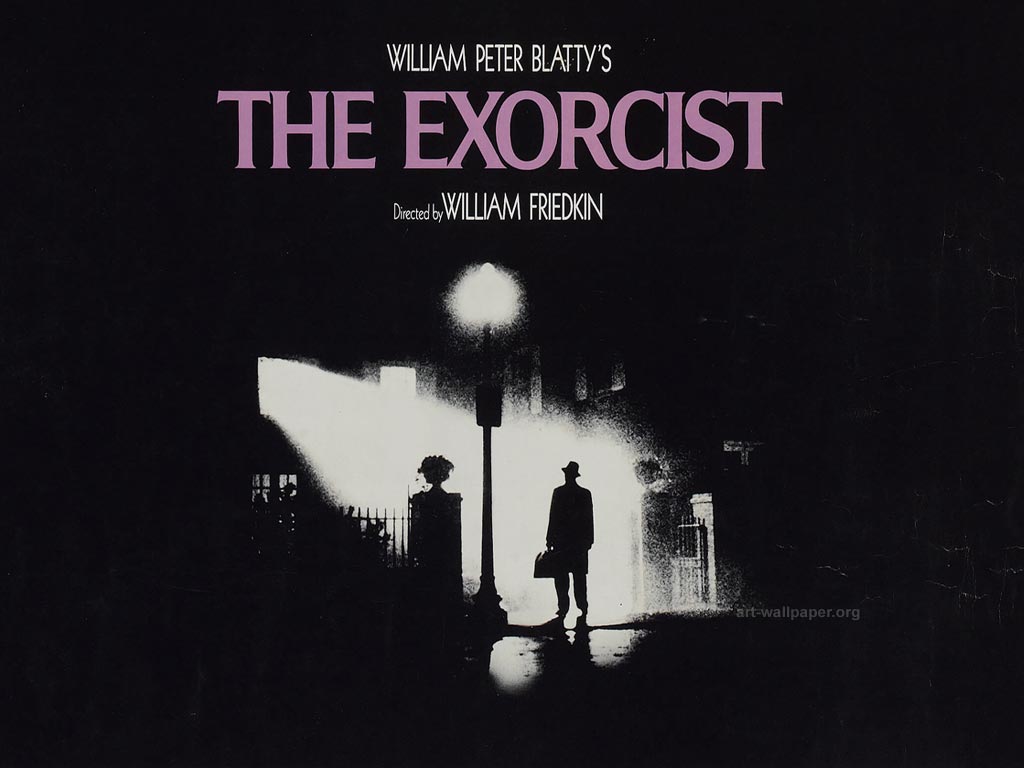
The Exorcist
USA 1973
Director: William Friedkin
Cast: Ellen Burstyn, Linda Blair, Jason Miller, Max von Sydow, Pazuzu
The Exorcist was the first horror movie to make me realise the genre can deal with hefty subject matter.
The first time I saw the film almost a decade after its initial release, it was on a double bill with Texas Chainsaw Massacre in an underground sleaze pit that usually screened porn. Picture 20 year-old me in an auditorium filled with adolescent hormonal bloodlust, a sticky carpet underfoot, and the smell of stale semen in the air. I thought I’d sniffed poppers and gone to heaving.
Chainsaw Massacre scared the life out of me; The Exorcist made me laugh so much a man sitting behind me told me to ‘shut the fuck up or I’ll kick ya fuckin’ head in.’ In my defence, if you’re in a John Waters mood Regan’s lewd behaviour can be high camp comedy. With all that grotesque cackling and tongue waggling, she’d fit right in with the Pink Flamingos mob. When I failed to comply with the testy gentleman’s wishes, he chased me out the cinema, shouting, ‘I’m gonna fucken kill ya, ya cunt.’
Years later, on second viewing, I saw that The Exorcist is an expertly crafted shocker with serious intent. The sobering material is intelligently, meticulously, overseen by a director who proved his mettle with The Boys in the Band (1970) and The French Connection (1971).
Friedkin took his responsibility to the source material to heart and he made sure his film was grounded in hard reality before the shenanigans start with Captain Howdy. In the process, he created an unsettling piece of celluloid out of a sensational bestseller that has spawned several sequels (only The Exorcist III and the 2017 TV series with Ben Daniels [he can exorcise my demons any time] are worth watching) and kickstarted the possession sub-genre that set in motion many a stereotype and cliche but none so shocking as the original.
Shocking because The Exorcist was the first to do things that had not been done before in cinema. Psycho (1960) and Night of the Living Dead (1968) broke taboos and brought Hollywood screaming and kicking into the modern era. But The Exorcist was first to break and keep breaking until it seemed there was nothing left to break. We might even go so far as to say it was a revolutionary gesture for freedom of expression in the arts.
The Exorcist was first to show a human head rotate 360 degrees, like a happy sprinkler in springtime; first to show a child eerily levitate from her bed; first to show a child masturbate with a crucifix while spouting sacrilegious obscenities; first to show a child shove her mother’s face between her thighs and tell her to ‘Lick me.’ It broke so many taboos Will Hays must still be spinning in his Gravox.
The key word in this is ‘child’. A director can ask an adult actor to do anything in the name of art. But not a child. Children are sacrosanct. A line is drawn. At least that was the case until the 1970s. Everything changed after that date. Nowadays its common for a toddler to behave as if it’s possessed, but 1973 was another world. Most still maintained a degree of public self control. No one had seen behaviour like this on the big screen, especially when it involved a minor and religion. Regan MacNeil must have made Rhoda Penmark from The Bad Seed (1956) look like Snow White.
It seemed the door was flung wide open for bad kiddies and they came in droves. First there was Damien Thorn in The Omen (1976) then Carrie (1976), The Brood (1979), Children of the Corn (1984), and so on and so forth, until it seemed adults didn’t trust the product of their own loins any more. What was going on?
Was it a response to 1970s permissiveness and the rise of youth culture? Or are these films saying something more primal and sinister?
While watching the Spanish Who Can Kill a Child? (1976), I remember thinking childhood innocence masks a dark core. I felt myself being carried into the dead-eyed liminal space children occupy and the often brutal, amoral social codes that define schoolyard behaviour before adult socialisation pulls the little monsters in line. During the more confronting moments in that movie the thought occurred to me that there is a thin line between pulling wings off a fly to terrorising Mummy for sheer pleasure.
Of course people did not know that 12 year-old Linda Blair had adult body and voice doubles (Eileen Dietz and the brilliant Mercedes McCambridge, respectively). They, like me, thought Blair was a shameless hussy capable of any amount of sordid behaviour. The future arrived with her and there was no turning back. When people stumbled out the theatre after the premier in December 1973, dazed and retching, they had a series of sounds and images indelibly seared onto the collective consciousness. Cinema would not be the same again. Nor would our expectations.
PS: If this ramble whets your appetite for a possession novel, I point you to The Case Against Satan by Ray Russell. Published in 1962, it’s a stark account geared to the realities of an age.
Dmetri Kakmi is the author of The Woman in the Well, The Door and Other Uncanny Tales, Mother Land, and When We Were Young (as editor). His essays and short stories appear in anthologies. He is working on a crime novel called The Perfect Room.

 The Drunken Odyssey
Leave a comment