
I’ve spent a lot of time thinking about the classic Universal monster movies—and not just because I want to go back to Epic Universe. The idea of that series of films from 1913 to 1956, based loosely on classic horror literature, is what got me into horror as a genre from a young age. Even if the films weren’t the most accurate to their source materials, they created pop culture iconography that’s persisted for a century. And now, all that time later, we can come full circle with the comic adaptation of the movie adaptation of The Invisible Man by James Tynion IV, Dani, Brad Simpson, and Becca Carey.
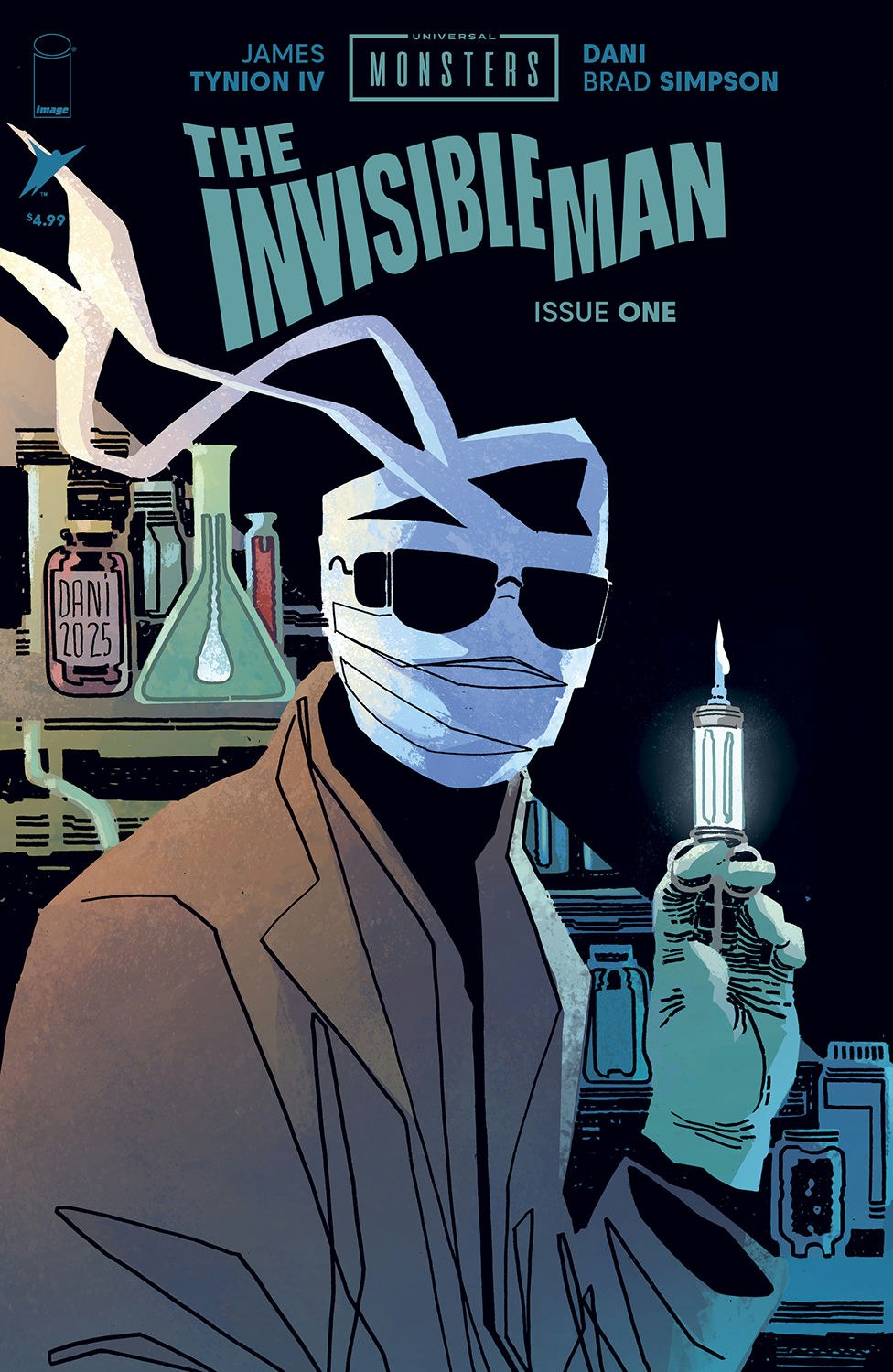
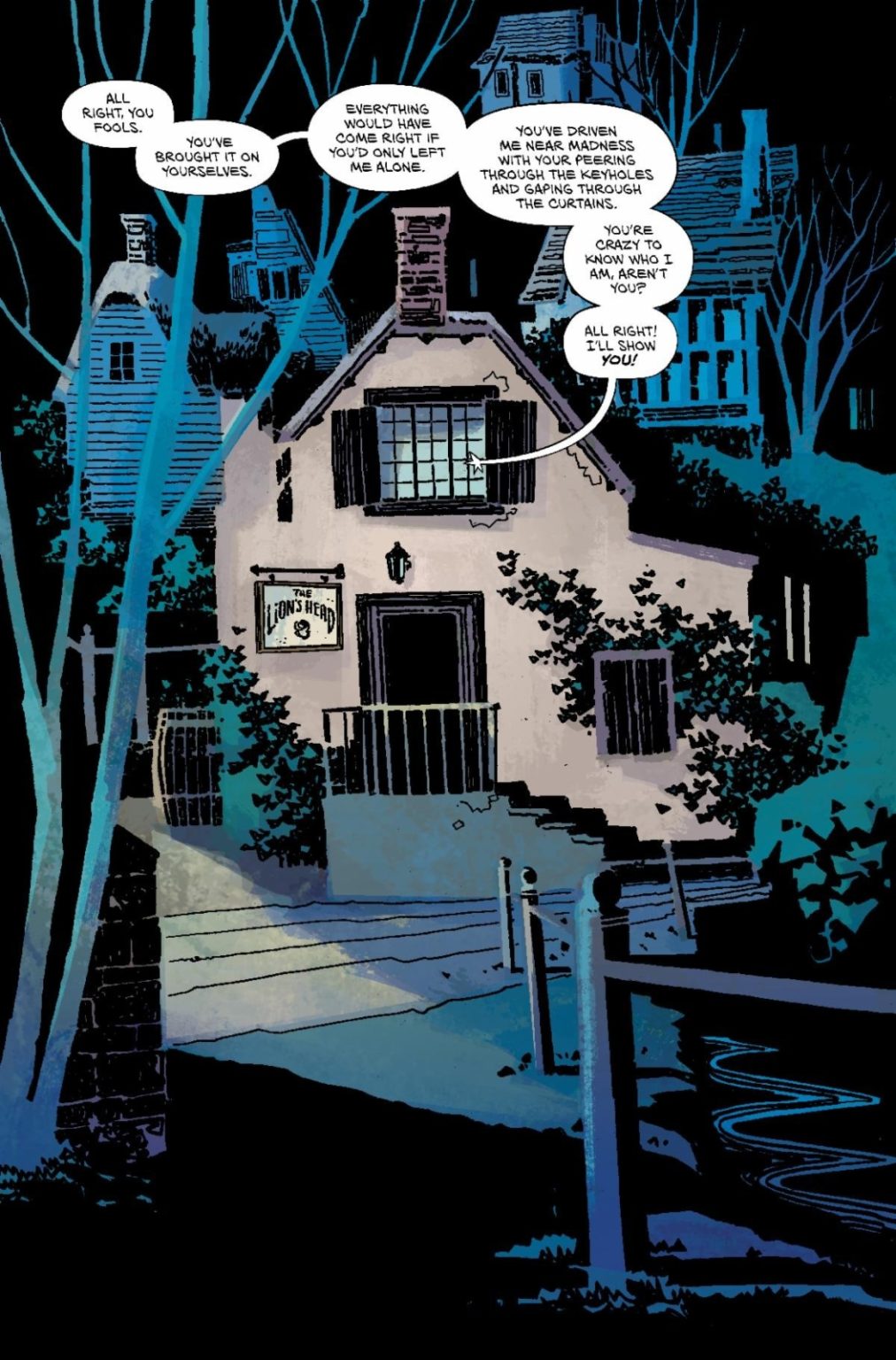
For the most part, this first chapter of The Invisible Man comic mirrors a bit of what we would expect from the Universal picture. We have John Griffin beginning his descent into murderous madness as he strangles a cop in his room at the Lion’s Head. But we have a hard cut from that moment to the past as Griffin begins to tell us the tale of how we had gotten to that point. Or, at the very least, how we began to get to that point. He describes the monocaine—the chemical impetus injected into a lab rat that would turn it white before experiments would turn it invisible. We also see his disdains: Kemp as the other scientist working alongside Griffin, prodding him; Dr. Cranley, the man who runs the lab, funds the experiments, and is father to Flora, Griffin’s girlfriend who we can see already worries for him.
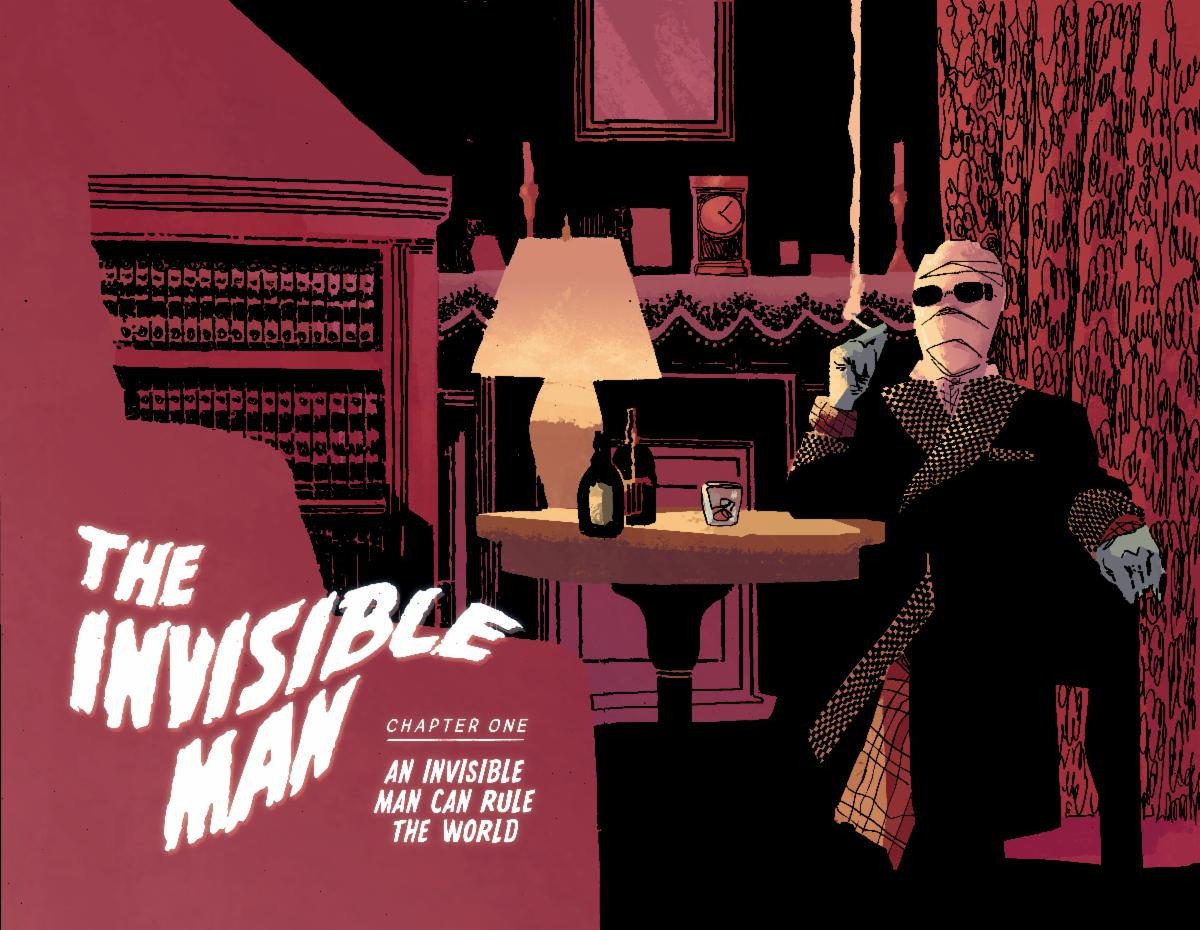
What we get here in this first issue is a kind of hybrid form: the visual narrative and iconography from the film along with the scope and flow of the original novel. But what we’re provided with here with this graphic adaptation is the interiority absent from either prior version of the story. For this adaptation, we see the world very firmly in Griffin’s eyes, while he still has them. We have captions akin to diary entries that break down his mental state in a way that, when coupled with Dani’s art, showcases a man already drunk on a power he doesn’t understand. We also see the effects of the monocaine fairly early on with the lab rat murdering its fellows when left alone too long. We know where the story is going, but it leaves us with hints and whispers different enough from its source material to firmly keep its true intentions a mystery.
The rabbit hole of adaptation is a strange thing. We’re seven years removed from the centennial of the original film, a film that has nestled itself firmly in the horror film zeitgeist, but that might be what keeps this comic adaptation fresh. We have our expectations of what the series can do, but it has the space to move away from its source much in the same way the film deviated from the original novel. The adaptation of the adaptation is a space where things can get strange.
Get excited. Get unseen.
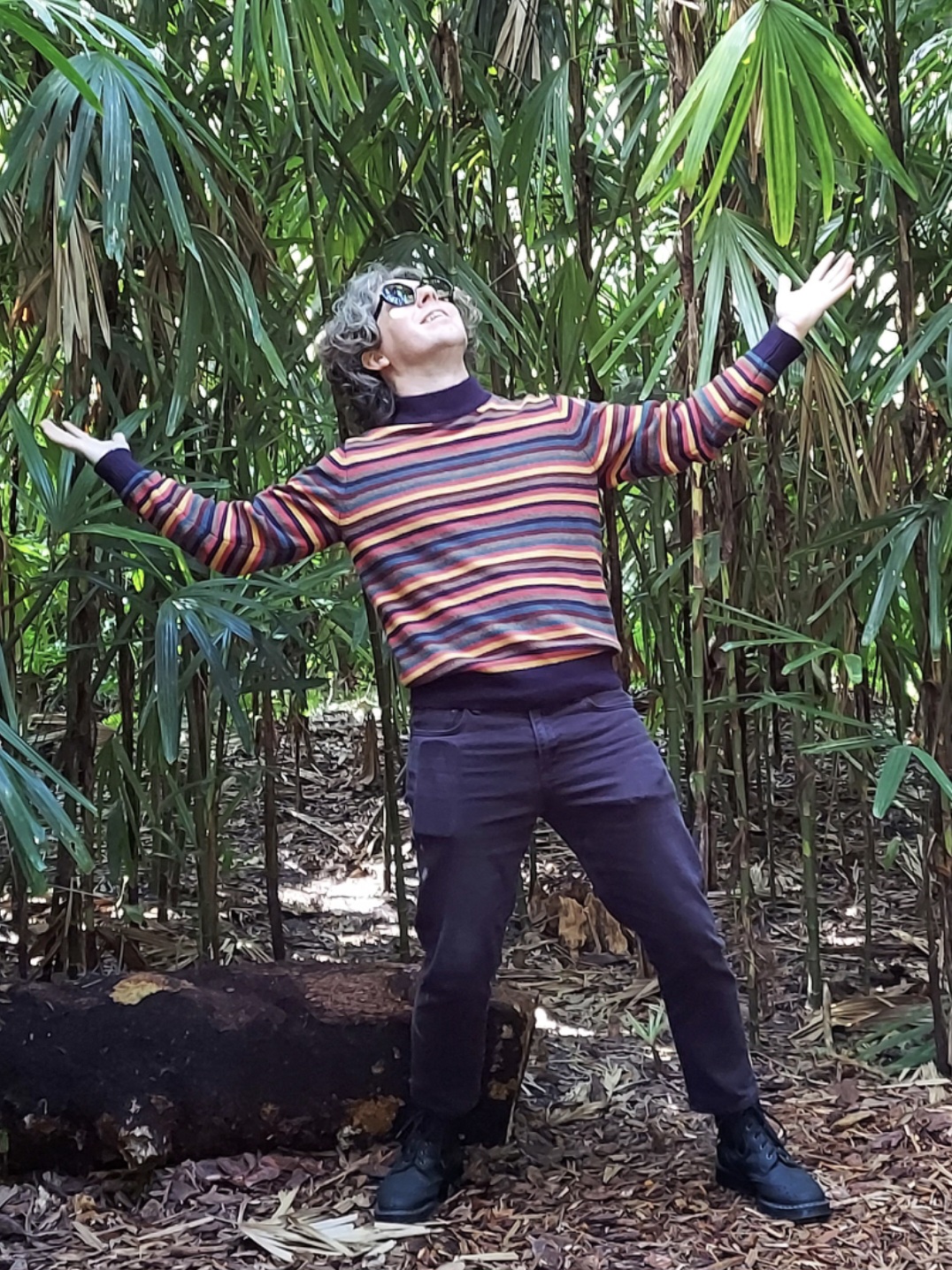
Drew Barth (Episode 331, 485, 510, 651, & 674) resides in Winter Park, FL. He received his MFA from the University of Central Florida.


Leave a Reply