
101 Horror Movie Nights
with Dmetri Kakmi
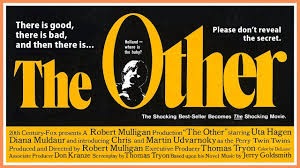
The Other
USA 1972
Director: Robert Mulligan
Cast: Uta Hagen, Martin Udvarnoky, Chris Udvarnoky, Diana Muldaur
Long-term readers of this terrifying column will have gathered I have a liking for the doppelgänger. Whether dead or alive, real or imagined, I am drawn to the evil twin, the unsavoury other, who emerges to wreak havoc on those who trespass.
It wasn’t me. It was him. I am innocent. He is guilty. I wasn’t even there. But he was. I know it, I… Such is the story of this much-maligned film adaptation of lantern-jawed Tom Tryon’s bestseller. Even Tryon and star Uta Hagen hated the end result. But Hagen was up herself, as we say in Australia, and Tryon proves the adage that an author should not be involved in a film adaptation of his work; they are two different media. At the end of the day, Tryon’s vision differed from director Robert Mulligan’s. Tryon wanted more blood and gore, while Mulligan opted for trademark bucolics that hide dark undercurrents. The latter approach is the reason the film still haunts the imagination.
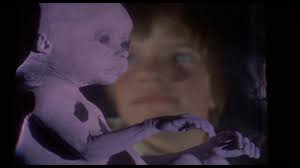
After their father dies in mysterious circumstances, twin brothers Holland and Niles spend an idyllic summer gallivanting around the farm, while their fragile mama hides in the big old farmhouse, mourning and prowling the garden in her neglige at night. Holland is the more mischievous of the two boys, while angel-faced Niles is kind and considerate. Their Russian grandmother Ada has taught Niles to play ‘the game’ in which he empathically projects himself into other people and animals as a harmless pastime. But when a series of nasty deaths strike family and friends, only Ada suspects the terrible truth, and the terrible endpoint of ‘the game’.
To say Tom Tryon was a wooden actor is an understatement and an insult to cigar store wooden Indians. But he was a talented author, with a creepy, textured style that captured the temperature of the times. Despite Tryon’s low opinion of the film, he is well served by Mulligan. Blood and guts was a genre staple at the time. Beautiful cinematography supplemented with understatement was not. The film stood out. Even so, it bombed at the box office, but it is fondly remembered by those who caught it years later on television.
The doppelgänger posits the notion that humankind is composed in equal measure of good and bad. It’s a riff on the classic Dr. Jeckyll and Mr Hyde trope, which can be traced to the Ancient Greek obsession with civilised man at war with the beast within. One or the other dominates at different times, coming to the fore to do what needs to be done before retreating to make way for the other. If we are too good, the bad steps forward to masturbate in a library. If we are too bad, the good steps in to clean up. In that regard the double is a metaphor for moderation in extremes—the capacity to be in two minds, virtuous and sinful, with little to no gradation in between.
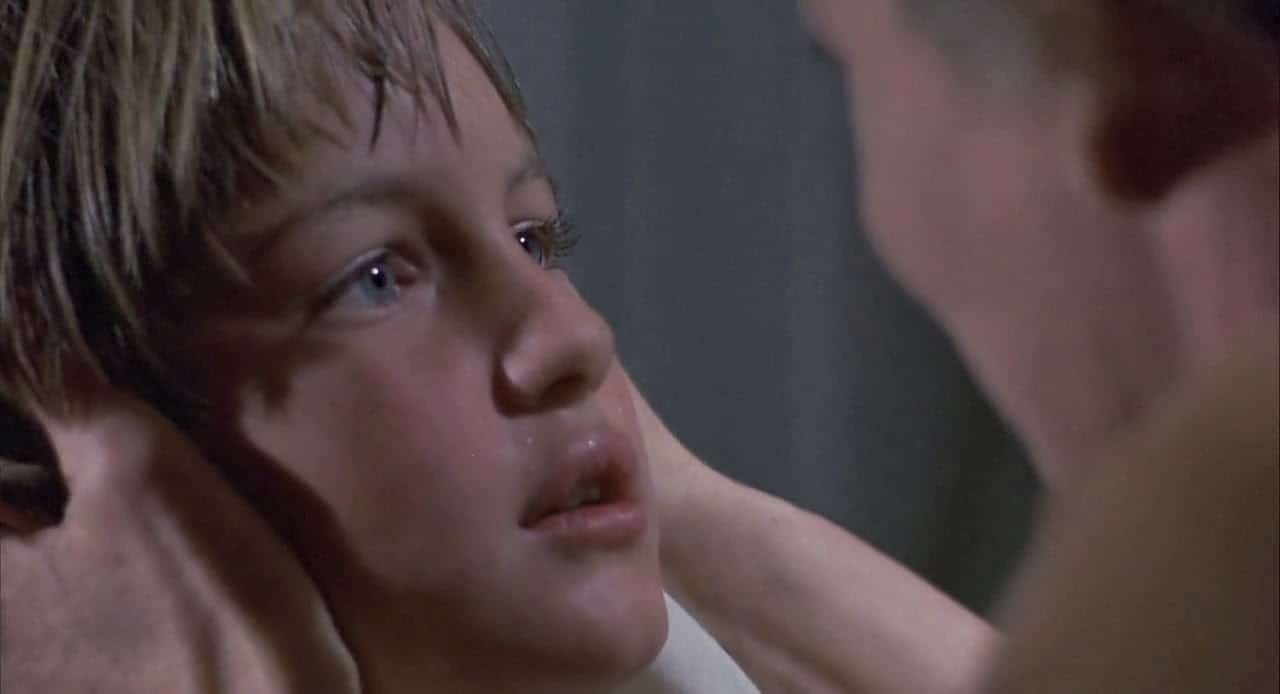
Mae West could be speaking for Niles when she says, ‘When I’m good, I’m very good, but when I’m bad, I’m better.’ Tired of being a goody-two-shoes all the time Niles projects his propensity for mischief into dead brother Holland and performs acts he might otherwise eschew. When he emerges from the stupor he remembers nothing; the memory is entombed with Holland. The wicked twin bears the full weight of guilt, if he feels it at all. How can he if he is not among the living?
We do not know if Holland was beastly when alive. We only see Niles’ perception of his brother and, just like Norman Bates thought his deceased mother was murderously jealous, Niles believes his exanimate twin has no compunctions in forever silencing those that displease. It’s an immature mind’s perception of the world. How it justifies antisocial behaviour to a claustral unexamined self.
Shot in lush soft focus in idyllic countryside that nevertheless reeks with spilled blood and dark secrets, The Other prefigures what is to come in the horror movie: deadly children. As we’ve seen, the cycle began with The Bad Seed (1956) and Children of the Damned (1964), but it found its feet with jeremiads like The Exorcist (1973), The Omen (1976) and my sweetheart Carrie (1976), to name a few.
Theories about this sub genre would have you believe it’s about adult fear of younger generations in the wake of 1950s rebellion and 1960s counterculture. I take it further. For me the deadly child touches on procreation’s primal elements. The progeny of such a bizarre symbiosis between host and parasite can only produce monsters that for a time are closer to elemental spirit than rational human. Anyway you look at it, children are uncanny. Most are socialised. The primitive is driven out of them via a process of parental nurture and the social contract they enter when they go to school. A small number remain demons for life. The Niles/Holland conglomerate is one to beware.
Dmetri Kakmi is the author of The Woman in the Well, The Door and Other Uncanny Tales, Mother Land, and When We Were Young (as editor). His essays and short stories appear in anthologies. He is working on a crime novel called The Perfect Room.


Leave a comment